 how-to
Are Second Opinions on HVAC Repairs Worth It?
Last Updated: October 26, 2026
Quick Summary
Getting a second opinion on hvac repairs confirms a diagnosis before you spend, since a separate qualified professional has no stake in the first company's recommendation. It is most valuable when the repair is expensive, the explanation is vague, or the technician pushes replacement over repair. Compare written diagnoses and readings before comparing prices.
- Ask for a written diagnosis with system readings, a line-item breakdown, and warranty terms.
- A diagnostic fee typically covers travel, inspection, readings, and a written diagnosis, not the repair.
- Repair usually wins when the system is under ten years old and the failed part is isolated.
- Verify the license with the state and ask whether the technician earns commission on repairs.
- If two diagnoses disagree, compare readings and get a third opinion only if the gap stays wide.
Table of Contents
- When a Second Opinion on HVAC Repairs Makes Sense
- How to Compare HVAC Repair Estimates Fairly
- What the HVAC Diagnostic Fee Actually Covers
- Questions to Ask an HVAC Technician Before You Commit
- HVAC Repair vs. Replacement: Weighing the Real Numbers
- How to Verify Technician Qualifications and Independence
- What to Do When the Two Opinions Disagree
- Book Your Free Second Opinion with Air CareSaver
- Frequently Asked Questions
When a Second Opinion on HVAC Repairs Makes Sense
The benefits of getting a second opinion on HVAC repairs come down to one thing: confirmation before you spend. A second opinion is a separate diagnostic assessment from a different qualified professional who has no stake in the first company's repair recommendation.
Not every HVAC diagnosis needs a second look. Some are obvious: a failed capacitor, a tripped breaker, a clogged filter. Others are worth confirming, especially when the repair bill is large or the recommendation feels rushed.
Signs You Should Get Another Diagnosis
Get a second opinion when the recommended repair is expensive, the explanation is vague, or the technician pushes replacement over repair. Those three signals cover most bad situations.
Other red flags worth watching:
- The quote arrives before any system readings are shown
- The technician won't put the diagnosis in writing
- You're told the whole system must go when one part failed
- The price changes between the phone call and the invoice
- You feel pressured to sign today for a discount
If you suspect the first company was dishonest, our guide to signs of a dishonest HVAC contractor walks through the specific behaviors to look for.
How to Compare HVAC Repair Estimates Fairly
Comparing HVAC repair estimates fairly means matching scope to scope, not comparing bottom-line totals. One quote may include parts, labor, refrigerant, and a service fee, while another lists only labor. A lower number can hide a bigger bill later.
Ask each company for the same three things:
- A written diagnosis with system readings
- A line-item breakdown of parts and labor
- A clear statement of what the repair does not cover
Build a Side-by-Side Comparison Sheet
The most reliable way to compare two diagnoses is to force both onto the same page. Create a simple comparison sheet with one column per company and one row per item below. Fill in each cell from the written report, not from memory or a phone conversation.
| Row to compare | Company A | Company B |
|---|---|---|
| Stated failure (part and symptom) | ||
| Measured readings that support it | ||
| Test performed to reach the diagnosis | ||
| Repair scope (what will be replaced or repaired) | ||
| Parts (name, model, quantity) | ||
| Labor (hours or flat fee) | ||
| Refrigerant (type and pounds) | ||
| Diagnostic fee and whether it is waived | ||
| Parts warranty term | ||
| Labor warranty term | ||
| Total price |
If a cell is blank, that is a finding, not a nuisance. A missing reading or an unnamed part tells you the estimate is less complete than the other one, regardless of price.
Compare the Diagnosis Before the Price
Two estimates can quote the same total and still describe different problems. Start with the stated failure and the readings behind it. If Company A says the compressor is failing and shows low suction pressure and high amp draw, while Company B says the same compressor is fine and blames a metering device, the price comparison is meaningless until the diagnosis is settled. Use the disagreement process in the section below to resolve it before you weigh cost.
Line-Item Breakdowns and What to Look For
A line-item breakdown should name each part, its cost, the labor hours, and any diagnostic fee. If a quote is one lump sum with no detail, ask for the breakdown before you decide anything.
Watch for these gaps:
- Bundled "miscellaneous" charges with no explanation
- Refrigerant listed without a quantity in pounds
- Labor quoted in flat fees that don't match the repair scope
- No mention of warranty on parts or labor
Normalize the Numbers Before You Judge Them
A fair comparison adjusts for what each quote actually includes. Add the diagnostic fee back in if one company waives it and the other does not. Note whether the parts warranty is a manufacturer warranty (often limited and registered by the installer) or a contractor workmanship warranty.
When one estimate runs much higher than another, the reason is often scope, not greed. Our breakdown of why HVAC repair estimates are high explains the common drivers so you can judge a quote on facts.
What the HVAC Diagnostic Fee Actually Covers
An HVAC diagnostic fee pays for the technician's time to test the system and identify the fault. It typically covers travel, a visual inspection, system readings, and a written diagnosis. It does not usually cover the repair itself.
Some companies waive the fee if you approve the repair. Others charge it separately. Ask which applies before anyone arrives, so the invoice holds no surprises.
What a fair diagnostic visit should include:
- Measured system readings, not guesses
- A written service report
- A clear repair recommendation with options
- A separate price for the repair
If you want to see how fees are usually structured, our HVAC diagnostic service cost breakdown covers what each part of the visit includes.
Questions to Ask an HVAC Technician Before You Commit
Ask for the diagnosis in writing, the repair options, the warranty terms, and the technician's license number. A qualified professional will answer all four without hesitation. Vague answers are your signal to slow down.
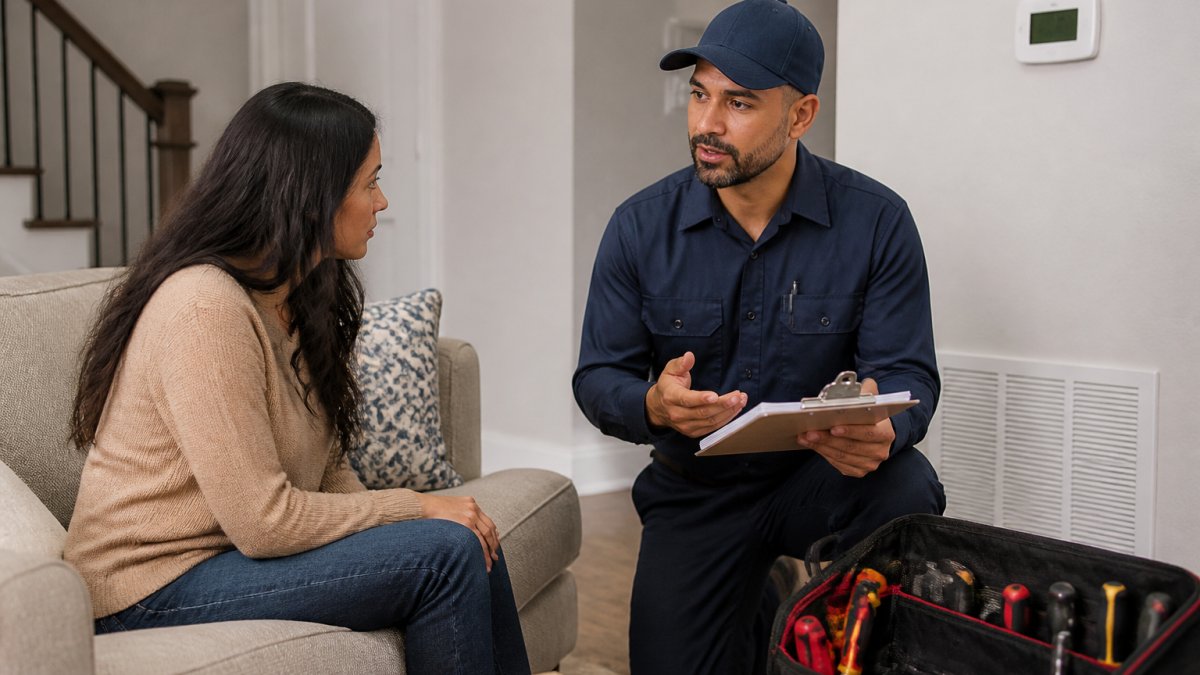
Use this list on the next visit:
- What readings show the fault, and can I see them?
- Is this a repair or a replacement situation, and why?
- What happens if this repair doesn't solve the problem?
- What warranty covers the part and the labor?
- Are you licensed, and what is your license number?
Write the answers down. Two diagnoses side by side are far easier to compare when both are on paper.
HVAC Repair vs. Replacement: Weighing the Real Numbers
Repair usually wins when the system is under ten years old and the failed part is isolated. Replacement makes more sense when the equipment is near the end of its service life and repairs start stacking up. The decision is about total cost over the next few years, not this month's bill alone.
Run this comparison before you decide:
| Factor | Lean Repair | Lean Replacement |
|---|---|---|
| Equipment age | Under 10 years | Near end of service life |
| Repair frequency | First major repair | Repeat failures |
| Repair cost vs. replacement | Small share of replacement cost | Large share of replacement cost |
| Efficiency | Matches your home's needs | Old system runs poorly |
| Parts availability | Readily available | Hard to source |
A second opinion is most valuable here. Two technicians looking at the same equipment age and service history can tell you whether a repair is a stopgap or a real fix. Our repair or replace guide goes deeper on the math for older systems.
How to Verify Technician Qualifications and Independence
Verification means checking the license number with the state, confirming the company is insured, and asking whether the technician earns commission on repairs. Independence matters as much as skill. A technician paid on sales has a reason to recommend more work.
Do these checks before the visit:
- Look up the license number on your state's licensing board site
- Confirm the company carries insurance
- Ask if the technician is an employee or a subcontractor
- Ask how the technician is compensated
What Each Credential Actually Tells You
A state license confirms the contractor met the state's minimum requirements for HVAC work; it does not by itself confirm diagnostic skill. Insurance protects you if something is damaged or someone is injured on the job. Manufacturer certifications (for example, factory-authorized dealer status) usually indicate training on specific equipment brands and can affect whether manufacturer warranties are honored. None of these replace a clear written diagnosis, but together they narrow the field to providers who can be held accountable.
How to Test Independence from Sales Incentives
Independence is the harder quality to verify, because compensation structures are not always public. Ask directly and listen for specifics:
- "Is the technician paid a commission or spiff on repairs or replacements?"
- "Does the company have a sales quota for replacements?"
- "Who performs the repair, the diagnosing technician or a separate crew?"
- "If the repair fails, what is the callback policy?"
A company that separates diagnosis from sales, pays technicians hourly, and offers a written callback policy has less structural reason to oversell. A company that bundles a "free" inspection with a same-day replacement discount has more. Neither answer is proof of dishonesty, but the pattern tells you how much weight to give the recommendation.
Check the Written Report for Signs of a Real Diagnosis
A qualified technician documents what was measured. Look for actual readings, temperatures, pressures, amp draw, voltage, static pressure, rather than adjectives. A report that says "system is failing" without numbers is an opinion.
The [FTC's guidance on home improvement scams | ftc.gov] is a useful starting point for spotting pressure tactics and unverifiable claims. For a step-by-step process, our guide to verifying an HVAC license shows exactly where to check.
What to Do When the Two Opinions Disagree
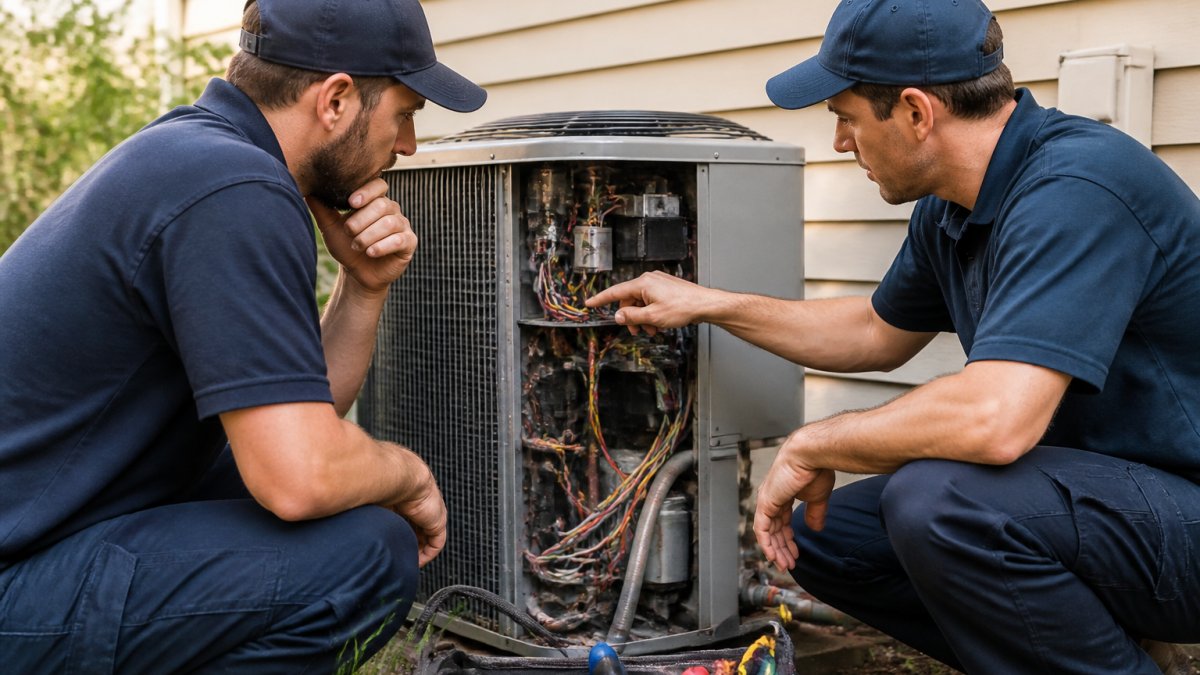
When two diagnoses disagree, ask both technicians to explain their readings in plain terms. The disagreement usually comes down to one of three things: a different test, a different interpretation, or a different repair scope. Line up the written reports and compare them point by point.
Work through it in this order:
- Compare the measured readings from each visit
- Identify which part each technician blames
- Ask what test would settle the question
- Get a third opinion only if the gap is still wide
If one report has no readings at all, weight the other one more heavily. A diagnosis without measurements is an opinion, not a diagnosis.
Book Your Free Second Opinion with Air CareSaver
Here is what you get with Air CareSaver:
- Free estimates on the recommended work
- Same-day response for urgent breakdowns
- Accurate diagnostics without unnecessary parts or guesswork
- 21+ years of licensed experience (#1054832), family owned and operated
Frequently Asked Questions
When should I get a second opinion on an HVAC repair?
Get a second opinion when the repair quote is high, the diagnosis feels vague, or the technician jumps straight to replacement without explaining the failed part. It also makes sense if you feel sales pressure or the estimate lacks a line-item breakdown. For routine fixes with clear evidence, a second visit may not be necessary, but for major repairs or full system replacement, confirming the diagnosis protects your wallet.
Is it worth getting a second opinion on an HVAC diagnosis?
A second evaluation can provide another perspective on the original diagnosis. The goal is an informed decision, not shopping around endlessly, so limit yourself to one additional opinion unless the two wildly disagree.
How do I compare HVAC repair estimates fairly?
Ask each contractor for a written, line-item estimate that separates parts, labor, and diagnostic charges. Check that both quotes address the same repair scope and use comparable equipment grades. Confirm whether warranties, permits, and follow-up visits are included. An HVAC repair estimate comparison only works when you are comparing identical work, so ask clarifying questions before deciding which quote is genuinely lower.
Should I get a second opinion before replacing my HVAC system?
Yes. Replacement is a major expense, and a second opinion can confirm whether the system is truly at the end of its life or whether a targeted repair would add years of service. Ask the second technician to review equipment age, service history, and system readings. If both agree replacement is needed, you can move forward with confidence and peace of mind rather than wondering whether a repair was possible.
If your first quote felt rushed or the number didn't add up, get a second set of eyes before you approve anything. Air CareSaver provides free estimates, same-day response, and diagnostics backed by more than two decades of licensed work. Get started with Air CareSaver and confirm the repair before you pay for it.