 listicle
Signs of a Dishonest HVAC Contractor: 7 Red Flags
Table of Contents
- Why Dishonest HVAC Contractors Target Homeowners
- 7 HVAC Contractor Red Flags to Watch For
- Signs of Unnecessary HVAC Repairs and False Diagnoses
- How to Verify an HVAC Contractor License and Insurance
- Your HVAC Repair Estimate Checklist
- What to Do During a Suspicious Service Visit
- Consumer Remedies After Suspected HVAC Fraud
- Frequently Asked Questions
Last Updated: October 17, 2026
Why Dishonest HVAC Contractors Target Homeowners
Most homeowners call an HVAC technician only when something breaks, so the decision happens under stress with no baseline for a fair diagnosis, exactly what a dishonest HVAC contractor counts on. This guide from Air CareSaver covers the signs of a dishonest HVAC contractor, the tactics bad operators rely on, and how to verify credentials, question a diagnosis, and protect your money before you sign anything.
A dishonest HVAC contractor is a heating and cooling provider who uses false diagnoses, pressure tactics, or missing credentials to sell work you don't need. The pattern is consistent, and once you know it, it's hard to miss.
7 HVAC Contractor Red Flags to Watch For
Seven behaviors separate a legitimate HVAC contractor from a risky one: no verifiable office or credentials, high-pressure sales, large upfront deposits, false diagnoses, missing licenses, no insurance, and vague contracts. Any single red flag deserves a question. Two or more should stop the job.
- No physical office or verifiable credentials. A P.O. box and a cell number aren't a business address.
- High-pressure sales tactics or scare claims. Urgency that blocks your ability to think is a sales tool, not a safety warning.
- Large upfront deposits or cash-only demands. Legitimate shops invoice for completed work.
- Diagnoses you can't see evidence for. A claim without a reading, photo, or part is an opinion, not a finding.
- No license number on the truck, invoice, or website. Licensing is public record in most states.
- No proof of liability insurance. If a technician damages your home, uninsured means unpaid.
- No written contract or warranty terms. Verbal promises vanish the moment the truck leaves.
No Physical Office or Verifiable Credentials
A legitimate HVAC contractor has an address you can visit, a license number you can look up, and a paper trail that predates your call. Fly-by-night operators often rebrand after a bad season, so an unfamiliar name with no physical location is a real warning sign.
High-Pressure Sales Tactics and Scare Claims
The most common tactic is manufactured urgency: "this has to be replaced today or you're in danger." Real safety issues exist, including a cracked heat exchanger, but a legitimate technician shows you the evidence and gives you time to decide.
Large Upfront Deposits and Cash-Only Demands
A deposit for specialty equipment is normal; a demand for most of the job cost in cash before work begins is not. Cash-only requests leave no record, making disputes and refunds nearly impossible, pay by card or check.
Signs of Unnecessary HVAC Repairs and False Diagnoses
Unnecessary repairs usually arrive with a dramatic diagnosis and a big number. The two most common are the cracked heat exchanger scare and the exaggerated refrigerant leak. Both involve real components and failure modes, which is what makes them convincing.
The Cracked Heat Exchanger Scare
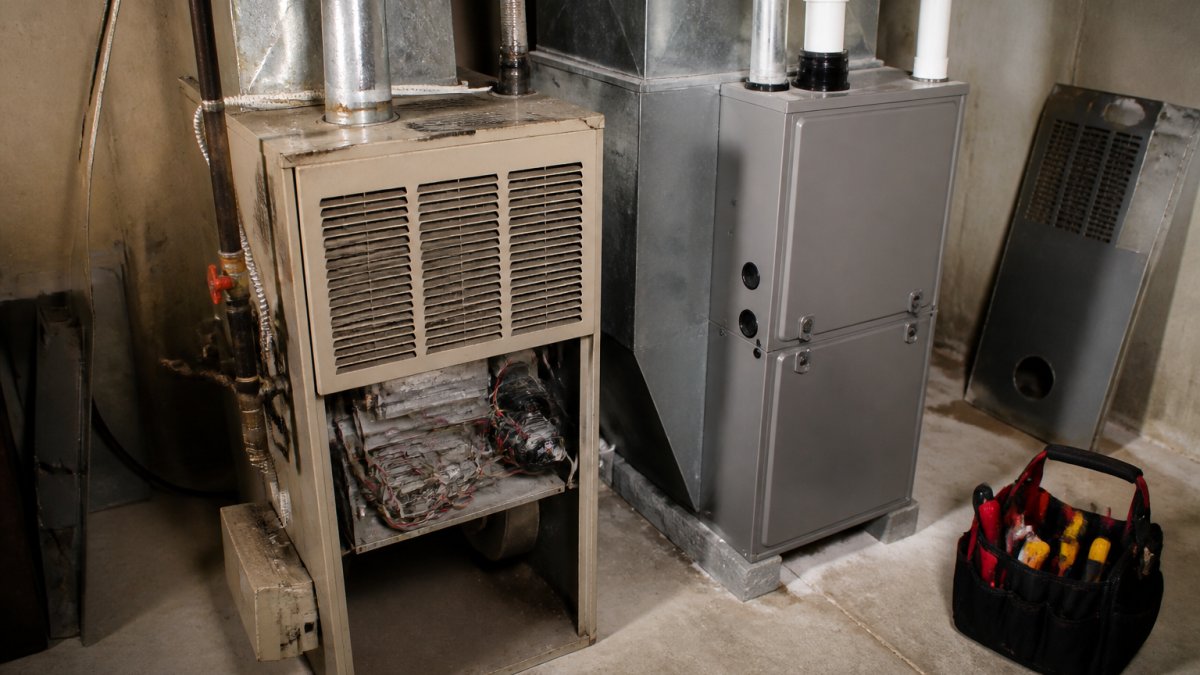
A cracked heat exchanger is a genuine safety concern because it can allow combustion gases into your living space. That makes it the perfect cover story for a replacement push. Ask the technician to show you the crack with a camera inspection, and get the finding in writing before agreeing to anything.
Exaggerated Refrigerant Leaks and Replacement Pushes
Refrigerant leaks happen, and a slow leak can often be located and repaired. The red flag is a technician who finds a leak and immediately recommends a full system replacement without offering a repair option or explaining the trade-off. Ask for the pressure readings and the leak location.
How to Verify an HVAC Contractor License and Insurance
Knowing where to look, what a valid record shows, and what a bad one looks like is the useful part. Verification takes ten to fifteen minutes and settles most doubts before anyone touches your system.
Step 1: Get the license number in writing
Ask for the license number before the visit, not after. It should appear on the website, the truck, the written estimate, and the invoice, and all four should match. In most states, HVAC work requires a license at the state or local level, and the number is public record.
Step 2: Look it up in the right database
Where you check depends on how your state regulates the trade:
- State contractor licensing board. Many states run a searchable database through a dedicated licensing board or a department of professional regulation. Search by license number and by the company's legal name, both should return the same record.
- State department of consumer affairs or professional regulation. Some states house HVAC licensing here rather than in a standalone board.
- County or city building department. In areas where licensing is local, the building department that issues HVAC permits is the authority. A quick call confirms whether the company is registered to pull permits in your jurisdiction.
Step 3: Read the record, not just the result
A search that returns a name is not a clean record. Confirm:
- License status is active, not expired, suspended, revoked, or probationary
- The license classification or endorsement covers the work being quoted (residential vs. commercial, heating vs. refrigeration)
- The name on the license matches the company on your estimate and invoice
A license that exists but is expired, suspended, or held by a different entity than the one billing you is not protection. Treat it as no license at all.
Step 4: Confirm insurance, not just a certificate
Ask for a certificate of insurance and read it. It should show:
- General liability coverage with the policy effective dates covering your service window
- Workers' compensation coverage, if the company employs technicians, this matters, because an injured worker on your property without coverage can create exposure for you
- The insured name matching the company on your contract
Then call the insurer's number printed on the certificate and ask two questions: is the policy current, and is the coverage still in force for this company? Certificates can be outdated or altered, and a two-minute call closes that gap. If the company cannot produce a certificate, or the insurer has no record of the policy, stop.
Step 5: Search for complaints in the right places
Credentials show whether a company is allowed to work; complaints show how it behaves. Check:
- Your state attorney general's consumer protection division
- Your state or local licensing board for disciplinary history
- The Better Business Bureau for complaint patterns, not just the letter grade
Look for patterns rather than single complaints. One disputed invoice is noise; a cluster of complaints about the same tactic, surprise charges, refused refunds, unfinished work, is a signal.
A contractor who volunteers a license number, a certificate of insurance, and a business address before you ask is usually the one worth hiring. Resistance to a simple license check is itself the answer.
Your HVAC Repair Estimate Checklist
An estimate is not a contract, and a contract is not a warranty, the gap between those documents is where most HVAC disputes begin. Compare bids line by line and lock down terms that protect your money after the technician leaves.
What a written estimate should contain
A usable estimate lets you compare apples to apples. Insist on these elements:
| What to Confirm | Why It Matters |
|---|---|
| Written diagnosis with readings | Proves the problem exists and ties the repair to a finding |
| Parts and labor listed separately | Prevents padded bundles and lets you compare bids |
| Model and serial numbers for proposed equipment | Confirms you are comparing the same equipment, not a downgrade |
| Permit responsibility stated | Shifts the permit obligation to the contractor in writing |
| Warranty terms, including labor vs. parts | Protects you after the visit and clarifies who pays for a callback |
| Payment schedule tied to milestones | Limits upfront exposure and ties money to completed work |
| License and insurance numbers | Confirms accountability and gives you something to verify |
| Change-order process described | Prevents surprise charges mid-job |
If an estimate is missing three or more of these, get a second opinion before signing.
Deposits: what is reasonable and what is not
A deposit for special-order equipment, a specific furnace model, a coil, a compressor, is normal, because the contractor is committing money to a supplier on your behalf. A demand for most of the job cost in cash before any work begins is not.
Red flags around deposits:
- Cash-only demands, which leave no record for a dispute or refund
- A deposit that exceeds the cost of the equipment being ordered
- Pressure to pay the full balance before the system is tested and running
Pay by card or check so you have documentation. If a company insists on cash, ask why in writing.
Change orders: how to stop mid-job surprises
A change order is a written amendment to the original scope, signed before the extra work begins. The most common HVAC dispute isn't the original price, it's the "we found something else while we were in there" charge on the final invoice with no prior approval. Require any work beyond the written scope to be documented in a change order with a price, signed by you, before it starts.
Payment milestones: tie money to completed work
For larger jobs, full system replacement, ductwork, multi-zone installs, structure payment around milestones: a deposit at signing, a progress payment when equipment is delivered or rough-in is complete, and final payment after the system is installed, tested, and running to your satisfaction. Hold back final payment until you have the invoice, warranty documents, and a working system, that payment is your leverage.
Warranty terms: read the exclusions
A warranty is only as good as its exclusions. Get it in writing and confirm:
- Whether labor is covered or only parts
- The duration of each, manufacturer parts warranties are often longer than the contractor's labor warranty
- Whether the warranty is transferable if you sell the home
A verbal "it's covered" is not a warranty. Get the terms on paper before you sign.
Ask for the diagnostic readings in writing: pressures, temperatures, and the exact part or location involved. A technician who can document a finding will happily do it. One who can't is guessing.
What to Do During a Suspicious Service Visit
Stay calm, ask for documentation, and don't sign under pressure. You can stop the work, request the diagnosis in writing, and say you'll think about it.
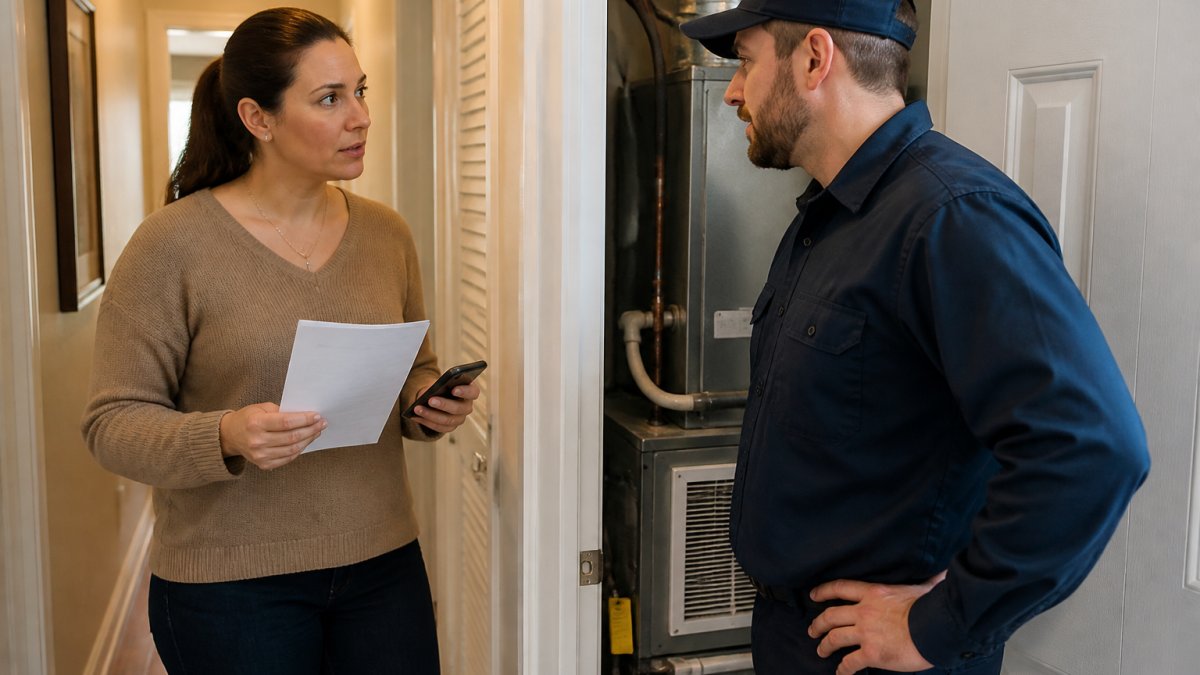
Document everything: photos of the unit, the invoice, the technician's name, and the truck's license plate. If you feel unsafe, ask the technician to leave and call the company from a recorded line.
Consumer Remedies After Suspected HVAC Fraud
You have options after a bad experience. Start by requesting a refund in writing from the company. The Federal Trade Commission's consumer complaint portal accepts reports on deceptive business practices, and the Better Business Bureau tracks patterns of complaints against a company.
HVAC problems are stressful enough without wondering whether the person at your door is being honest.
Frequently Asked Questions
What are the warning signs of a dishonest HVAC contractor?
The clearest warning signs include no verifiable license or insurance, a demand for a large upfront deposit in cash, scare claims about a cracked heat exchanger with no photos or readings, and pressure to replace a system when a repair would do. A dishonest HVAC contractor also avoids written estimates, refuses to show diagnostic readings, and pushes a signed contract before you have time to think. Ask for credentials, a written estimate, and evidence for any diagnosis before you agree to work.
How can I tell if an HVAC technician is recommending unnecessary repairs?
Ask the technician to show you the evidence: gauge readings, temperature splits, photos of the failed part, or a leak test result. Legitimate repairs come with a clear explanation of what failed and why. Signs of unnecessary HVAC repairs include a diagnosis that changes once you ask questions, a recommendation to replace a whole system for a single failed component, and no written estimate before work starts. A second opinion from another licensed contractor is a reasonable step for any repair above a few hundred dollars.
How do I verify an HVAC contractor license and insurance?
Ask for the license number in writing, then check it against your state's contractor licensing database to confirm the name, status, and classification match the company. Request a certificate of insurance for both general liability and workers' compensation, and call the insurer to confirm it is current. A reputable contractor will provide these without hesitation. Air CareSaver, for example, is licensed (#1054832) and has 21+ years of experience serving the San Gabriel Valley.
Should I get a second opinion on an HVAC repair?
Yes, for any diagnosis that involves a full system replacement, a cracked heat exchanger claim, or a repair bill that feels out of line. A second opinion costs far less than an unnecessary replacement, and a licensed contractor can confirm or dispute the first diagnosis with their own readings. Get the second opinion in writing and compare the specific findings, not just the total price. If the two diagnoses differ sharply, ask each technician to explain the evidence behind their conclusion.