 ultimate-guide
HVAC Diagnostic Service Cost Breakdown: What to Expect
Table of Contents
- What an HVAC Diagnostic Service Cost Breakdown Actually Includes
- Average HVAC Diagnostic Fee Ranges in 2026
- Why HVAC Companies Charge a Diagnostic Fee
- When You Qualify for an HVAC Diagnostic Fee Waiver
- Why Is My AC Running Constantly? Signs You Need a Professional Diagnosis
- Using a Repair vs Replace HVAC Calculator Before You Approve Work
- Conclusion: Getting an Honest HVAC Diagnostic Service Cost Breakdown
- Frequently Asked Questions
Last Updated: September 22, 2026
What an HVAC Diagnostic Service Cost Breakdown Actually Includes
An HVAC diagnostic service cost breakdown is the itemized explanation of what you pay for when a technician visits your home to find out why your heating or cooling system is failing. At Air CareSaver, we've seen too many homeowners confused by vague invoices that lump a "service call" and a "diagnostic" into one line. The breakdown should tell you what was charged, what was tested, and what happens next.
Diagnostic Visit vs. Trip Charge vs. Dispatch Fee
A diagnostic visit is the full inspection and testing appointment. A trip charge only covers sending a technician to your address. A dispatch fee is a scheduling or administrative charge some companies add on top.
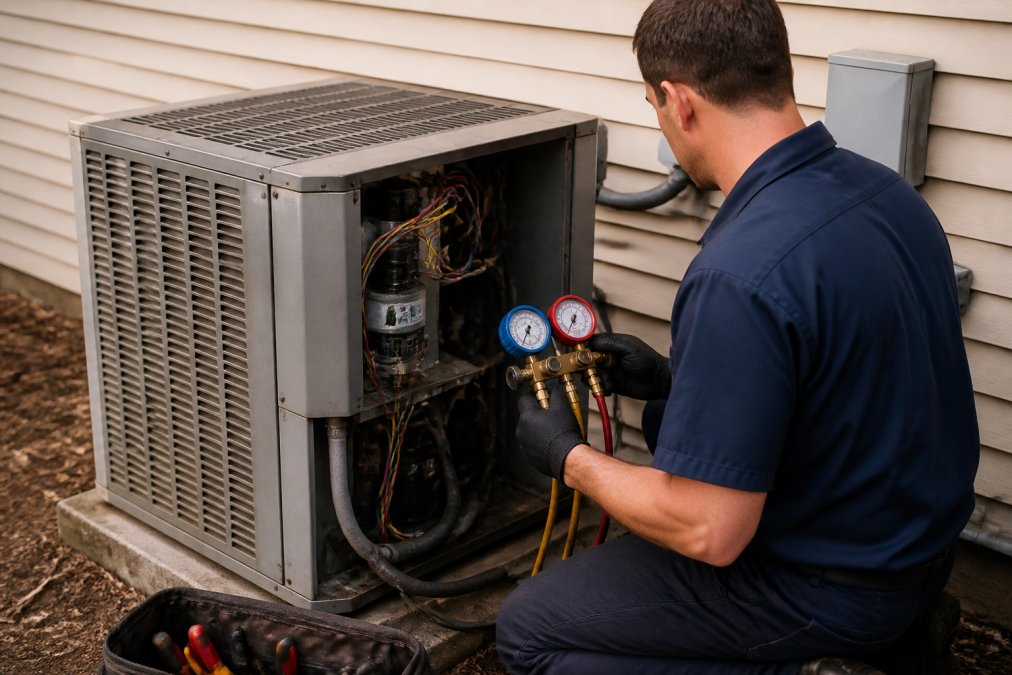
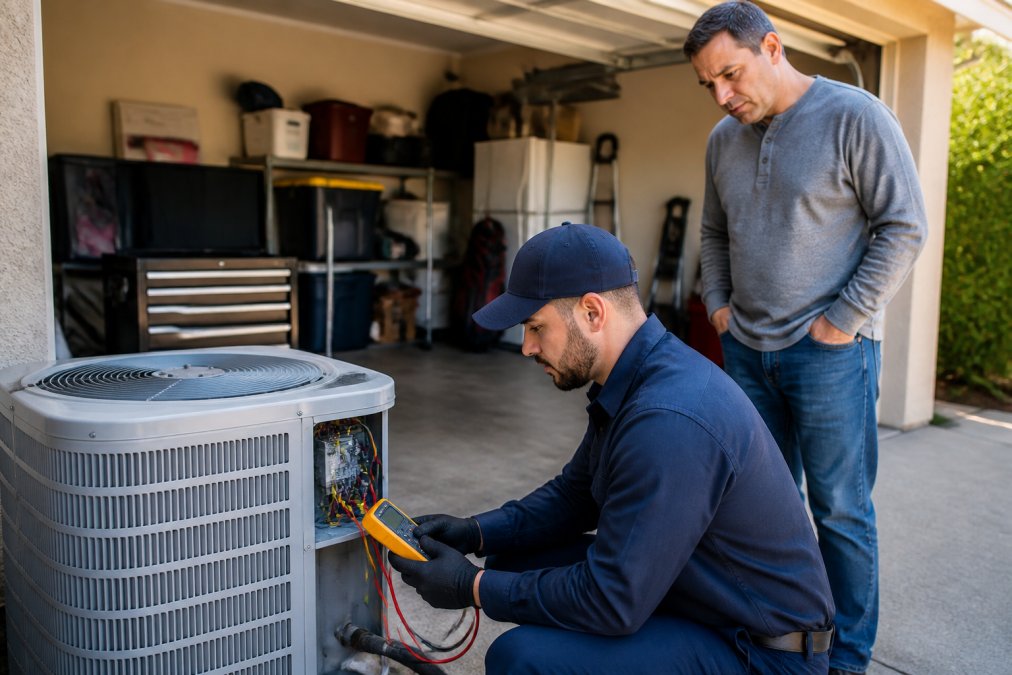
What Technicians Check During a Diagnostic Testing Visit
A proper diagnostic testing visit is a structured inspection of the components most likely to fail, not a quick glance at the unit.
- Refrigerant levels and pressure readings on the cooling side
- Capacitor condition and electrical components, including contactors and relays
- Compressor amp draw and startup behavior
- Airflow through the evaporator coil, filter, and ductwork
- Thermostat calibration and control board communication
- Heat pump reversing valve operation on dual-fuel systems
Average HVAC Diagnostic Fee Ranges in 2026
Diagnostic fees fall into a few broad tiers depending on your region, system type, and whether you call during business hours. The table below shows the typical shape of the market, not a quote for your home.
| Pricing model | How it works | Typical range |
|---|---|---|
| Flat diagnostic fee | One price covers the visit and the inspection | $75-$150 |
| Trip charge only | Covers the drive; testing billed separately | $50-$100 |
| Trip charge + hourly diagnostic | Dispatch fee plus time on site | $50-$100 plus $75-$150/hr |
| Hourly diagnostic only | Billed strictly by time | $75-$150/hr, 1-hour minimum common |
| After-hours / emergency | Standard fee plus a premium | Standard fee + $50-$200 |
- System type. A single-stage split system is fast to test. A variable-speed heat pump, dual-fuel setup, or multi-zone communicating system takes longer because there are more components and communication checks.
- Access. A unit in a crawlspace, attic, or closet with no service clearance adds time, as does a rooftop package unit requiring a ladder and safety setup.
- Region. Metro markets with higher labor and overhead run higher than rural markets.
- Season. Peak heating and cooling weeks push prices up and appointment availability down.
Weekday vs. After-Hours Pricing
Weekday diagnostic visits during business hours are almost always the least expensive option. After-hours pricing applies to evenings, weekends, and holidays, typically adding a premium on top of the standard fee.
Why HVAC Companies Charge a Diagnostic Fee
A diagnostic fee exists because the visit costs the company money whether or not you buy a repair. The technician's time, truck, tools, and fuel are spent before a single part is replaced. The fee is also a pricing signal, and understanding how it fits a company's business model tells you whether the quote is fair.
- Fee-credited model. The diagnostic fee is charged upfront and credited toward the repair if you approve it. The company makes its money on the repair, so the fee is really a commitment device. This is the most homeowner-friendly model and the easiest to verify.
- Fee-as-revenue model. The diagnostic fee is a standalone revenue line. The company may or may not credit it. This model is common with companies that do a high volume of second opinions and small jobs.
- Low-fee, high-markup model. The diagnostic fee is unusually low, sometimes free, but parts and labor carry higher markups. The fee is a lead-generation cost baked into the repair price.
How the Fee Interacts With Manufacturer and Labor Warranties
This is the part most pricing guides skip, and where homeowners get surprised.
- Manufacturer parts warranty. Covers the failed part, not the labor to diagnose or replace it. You will almost always still owe the diagnostic fee even when the part is covered.
- Manufacturer labor warranty. Covers the labor to replace a covered part, but usually only when the repair is performed by an authorized dealer. If you call a non-authorized company, the diagnostic fee and the labor may both fall on you.
- Extended home warranty or service contract. Terms vary widely. Some reimburse the diagnostic fee; many do not, and some require you to use their network of contractors. Read the contract before you book.
- Company labor guarantee. A company that warranties its own repair labor for 30, 60, or 90 days is not the same as a manufacturer warranty. Ask which one applies and for how long.
When You Qualify for an HVAC Diagnostic Fee Waiver
An HVAC diagnostic fee waiver is a policy where the company credits or refunds the diagnostic charge if you approve the recommended repair. It's common, but terms vary, so confirm them before the technician arrives.
You typically qualify for a waiver in these situations:
- You approve the repair the technician recommends during the same visit
- You're an active member of the company's service agreement or maintenance plan
- The issue turns out to be covered under an existing manufacturer warranty
- The company runs a seasonal promotion that includes a waived fee
Why Is My AC Running Constantly? Signs You Need a Professional Diagnosis
If your AC runs constantly without cooling the house, the system is working harder than it should, and that's a symptom worth diagnosing rather than ignoring. Constant runtime usually points to one of a handful of causes, and most get worse if you wait.
Using a Repair vs Replace HVAC Calculator Before You Approve Work
| Situation | Typical Recommendation | Why |
|---|---|---|
| System under 10 years old, single failed part | Repair | The rest of the system still has life left |
| System over 15 years old, compressor failure | Consider replacement | Major repair cost approaches replacement value |
| Frequent repairs over the past 2 years | Evaluate replacement | Repeated failures signal broader wear |
| System under warranty, covered part | Repair | Warranty covers the cost, no reason to replace |
| High energy bills, older inefficient unit | Evaluate replacement | Efficiency gains can offset the upfront cost |
If your system is old and you're weighing options, Air CareSaver provides free estimates so you can compare a repair quote against a replacement quote side by side.
Conclusion: Getting an Honest HVAC Diagnostic Service Cost Breakdown
The hardest part of an HVAC breakdown isn't the repair itself. It's knowing whether the invoice number is fair and whether the recommended work is necessary.
Frequently Asked Questions
How much should an HVAC diagnostic cost?
HVAC diagnostic fees vary depending on your region and the company. The fee typically covers a technician traveling to your home, inspecting your system, and identifying the problem. Some companies waive the fee if you approve the recommended repair, so always ask about that policy before booking. Pricing varies, so request a quote from your chosen provider.
What is the HVAC $5,000 rule for repairs vs. replacement?
The $5,000 rule is a general guideline: multiply your system's age by the repair cost. If the result exceeds $5,000, replacement is usually the smarter choice. For example, a 12-year-old system needing a repair that, when multiplied by its age, exceeds the guideline, leans toward replacement. This rule is not absolute. A repair vs replace HVAC calculator or a technician's assessment can give you a more accurate picture based on your system's condition, refrigerant type, and efficiency rating.
Why do HVAC companies charge a diagnostic fee if they perform the repair?
The diagnostic fee covers the technician's time, travel, and expertise. Diagnosing a problem involves testing electrical components, checking refrigerant levels, inspecting the compressor, and ruling out multiple potential causes. That work happens before any repair begins. Many companies, including Air CareSaver, offer a waiver or credit toward the repair cost when you proceed with the recommended work. Ask upfront whether the diagnostic fee is applied to your repair total.
How can I tell if an HVAC diagnostic fee is reasonable?
A reasonable diagnostic fee varies for standard weekday visits. Anything that seems unusually high for a basic residential diagnostic deserves scrutiny, especially if it does not include a written report. Compare local providers and ask what the fee covers: travel, inspection, testing, and a written estimate. Companies that offer free estimates or apply the fee toward repairs provide clearer value. Air CareSaver offers free estimates and same-day response.
What does a professional HVAC diagnostic service include?
A thorough diagnostic visit includes a system inspection of both indoor and outdoor units, electrical component testing (capacitors, contactors, wiring), refrigerant level checks, thermostat calibration, airflow measurement, and a written summary of findings with repair recommendations. For heat pumps and multi-zone systems, the technician also checks reversing valves and zone dampers. The goal is accurate diagnostics without unnecessary parts or guesswork, so you know exactly what is wrong before approving any repair.