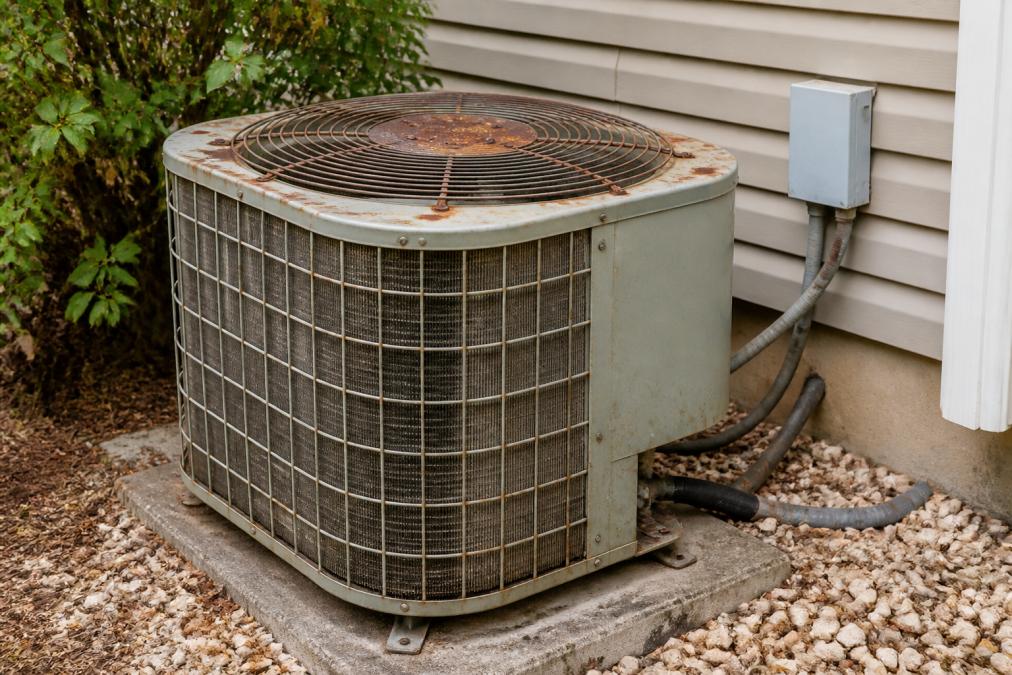
 ultimate-guide
Repair or Replace Old HVAC: A 2026 Guide
Table of Contents
- Is Your Old HVAC System Telling You It's Time?
- How to Decide: Repair or Replace Old HVAC
- HVAC Repair Cost vs Replacement Cost: The Real Math
- What Is the Average Lifespan of HVAC System Components?
- The Hidden Cost of Waiting: Why Inaction Gets Expensive
- Energy Efficient HVAC Tax Credits and Rebates for 2026
- Smart Home Integration and Other Upgrade Benefits
- Repair vs. Replace: A Decision Framework That Works
- Frequently Asked Questions
Last Updated: September 7, 2026
When a heating or cooling system approaches its fifteenth year of service, every homeowner eventually faces the same expensive question: should you repair or replace old HVAC equipment before it fails completely? The decision carries real financial weight, and the wrong choice can mean throwing money at a system that dies anyway or replacing a unit that had years of life left. At Air CareSaver, we've spent over 21 years diagnosing these exact situations across the San Gabriel Valley, and the answer almost always comes down to a few specific factors rather than guesswork. This guide walks through the actual math, the warning signs, and the financial incentives that should drive your decision in 2026.
The old HVAC systems we encounter in homes built during the 1980s and 1990s rarely fail without warning. They send signals months before a complete breakdown, and learning to read those signals is the first step toward avoiding an emergency replacement. The key is knowing which symptoms mean a simple fix and which ones indicate a system that has reached the end of its useful life.
Is Your Old HVAC System Telling You It's Time?
An HVAC system approaching the end of its lifespan typically shows several warning signs simultaneously, not just one isolated issue. A single repair is normal; a pattern of escalating problems points to a system that is no longer worth supporting.
Watch for these specific indicators that your equipment is failing:
- Age over 15 years with original components still in place
- Repair frequency increasing to more than once per year
- Rising utility bills despite consistent usage patterns
- Uneven temperatures between rooms or short cycling
- Strange noises like grinding, squealing, or rattling from the unit
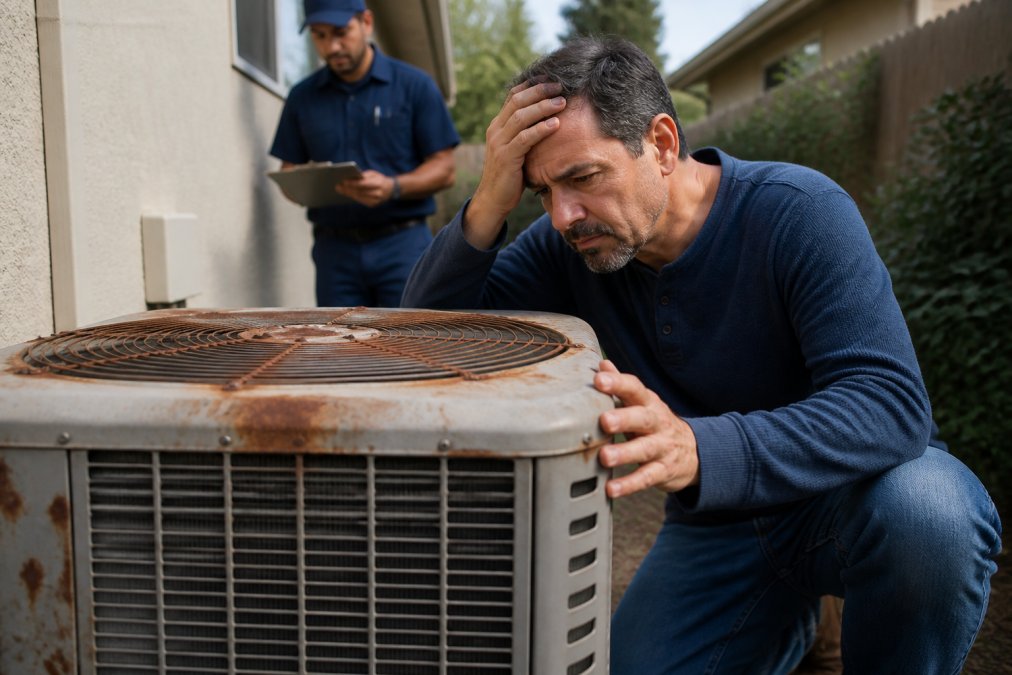
What most guides miss is that these symptoms rarely appear in isolation. If your system is old AND your energy bills are climbing AND you've called a technician twice this year, you're not looking at bad luck. You're looking at a pattern that predicts a major component failure, usually the compressor or the heat exchanger.
How to Decide: Repair or Replace Old HVAC
The decision to repair or replace old HVAC equipment comes down to three core questions about your specific situation. Answering these honestly will point you toward the right choice more reliably than any generic rule of thumb.
First, what is the system's age and warranty status? Most manufacturers design equipment for a 15-to-20-year lifespan, and parts warranties typically expire after 5 to 10 years. Once you're paying full price for parts and labor on a system past its prime, the calculus shifts dramatically.
Second, how often has the system needed repairs recently? One repair in a year is maintenance. Three repairs in a year is a pattern of failure that will continue. The money spent on those repeated service calls could have been applied toward a new, warrantied system.
Third, what is the current efficiency rating compared to modern standards? The efficiency difference between a 15-year-old system and a new one is substantial, and that gap shows up directly in monthly operating costs.
| Factor | Repair Makes Sense | Replacement Makes Sense |
|---|---|---|
| System age | Under 10 years | Over 15 years |
| Repair frequency | First major repair | 2+ repairs per year |
| Efficiency | Meets current standards | Significantly below modern SEER ratings |
| Warranty | Still covered | Expired |
| Refrigerant | Common R-410A | Phased-out R-22 |
HVAC Repair Cost vs Replacement Cost: The Real Math
The most common framework homeowners hear is the "$5,000 rule": if the repair estimate multiplied by the system's age in years exceeds $5,000, replacement is the smarter choice. That rule provides a useful starting point, but the real calculation requires more nuance.
A more practical approach compares the repair cost against the replacement cost as a percentage. If a single repair costs less than one-third of a new system's price and the unit is under 12 years old, repairing is often the financially sound move. If the repair exceeds that threshold, or if the system is older, replacement delivers better long-term value.
The hidden factor in this equation is the remaining lifespan of the repaired component versus the whole system. Replacing a failed blower motor on a 10-year-old system might buy you five more years of service. Replacing that same motor on an 18-year-old system might buy you one year before the compressor fails. The repair cost is identical; the value is completely different.
What Is the Average Lifespan of HVAC System Components?
The average lifespan of HVAC system components varies significantly by type, and knowing these numbers helps you set realistic expectations. A well-maintained furnace typically lasts 15 to 20 years, while a central air conditioner or heat pump generally serves 12 to 15 years before major components begin failing.
The compressor is the heart of the cooling system and the most expensive single component to replace. When a compressor fails on an older unit, the repair cost often approaches half the price of a new system, making replacement the logical choice in most cases. The heat exchanger in a furnace presents a different issue entirely: a crack here is a safety hazard, not just a performance problem.
Preventative maintenance plays a decisive role in extending these lifespans. Systems that receive annual tune-ups and regular filter changes routinely outlast those that are ignored. The U.S. Department of Energy guidance on maintaining your HVAC system recommends regular maintenance to keep equipment running at peak efficiency and to catch minor issues before they become major failures.
| Component | Average Lifespan | Common Failure Point |
|---|---|---|
| Furnace | 15-20 years | Heat exchanger, blower motor |
| Central AC | 12-15 years | Compressor, capacitor |
| Heat Pump | 12-15 years | Compressor, reversing valve |
| Ductwork | 20-25 years | Leaks, poor insulation |
The Hidden Cost of Waiting: Why Inaction Gets Expensive
Delaying the decision between repair and replacement carries its own financial penalty that most homeowners never calculate. Every month an aging, inefficient system continues operating, it consumes more energy than a modern replacement would, and the cumulative difference adds up quickly.
An old HVAC system operating at a SEER rating of 10 or below uses substantially more electricity than a modern unit rated at 16 or higher. The ENERGY STAR central air conditioner comparison tool shows that upgrading from a 10 SEER unit to a 16 SEER unit can cut cooling energy use by roughly 40 percent. Over a hot summer in Southern California, that difference represents real money on every monthly bill.
The risk of catastrophic failure also grows with each passing season. A system that dies during a heat wave or cold snap creates an urgent situation where you have limited time to research options, compare quotes, and schedule installation. Homeowners who plan their replacement during the off-season have the luxury of choice. Those who wait until the system dies in August do not.
Energy Efficient HVAC Tax Credits and Rebates for 2026
Replacing an old HVAC system in 2026 carries financial incentives that significantly reduce the net cost of upgrading. The federal government offers tax credits for qualifying high-efficiency equipment, and many local utilities provide additional rebates that stack on top.
The Inflation Reduction Act extended federal tax credits for energy-efficient home improvements, including central air conditioners and heat pumps that meet specific efficiency criteria. These credits apply to qualifying equipment installed through 2032, and the IRS guidance on Energy Efficient Home Improvement Credit outlines the current credit amounts and eligibility requirements.
Beyond federal incentives, California residents often qualify for rebates through their local utility providers. These programs change periodically, so checking current offerings before purchasing is essential. A qualified HVAC contractor should be able to help you identify which rebates apply to your specific equipment choice and installation scenario.
Smart Home Integration and Other Upgrade Benefits
Modern HVAC systems offer capabilities that simply did not exist when older equipment was installed, and these features change the value proposition of replacement. Smart thermostats, zoning systems, and variable-speed compressors deliver comfort and efficiency gains that a 20-year-old system cannot match regardless of how well it is maintained.
A smart thermostat learns your schedule and adjusts temperatures automatically, reducing energy consumption when you are away and pre-cooling before you return. When paired with a modern variable-speed system, the combination provides consistent temperatures without the short cycling that plagues older single-stage equipment. Many utility rebate programs also offer incentives specifically for smart thermostat installation.
Indoor air quality is another upgrade benefit that homeowners rarely consider when weighing repair versus replacement. Modern systems integrate better filtration, humidity control, and ventilation options that address allergens and comfort issues. For households with respiratory sensitivities, these features provide value that goes beyond simple heating and cooling.
Repair vs. Replace: A Decision Framework That Works
Rather than relying on a single rule of thumb, use this step-by-step framework to evaluate your specific situation. It combines the financial math with the practical realities of equipment age and condition.
Step 1: Get an accurate diagnostic. A professional inspection should identify the exact problem, the condition of major components, and the remaining estimated lifespan of the system. Accurate diagnosis prevents unnecessary replacements and identifies systems that are truly beyond economical repair.
Step 2: Calculate the repair-to-replacement ratio. Divide the repair estimate by the cost of a replacement unit. If the repair exceeds 30 to 40 percent of replacement cost and the system is over 12 years old, replacement generally wins.
Step 3: Factor in efficiency and incentives. Add the estimated energy savings and available tax credits or rebates to the replacement side of the equation. These incentives can close the gap between a repair and a new system considerably.
Step 4: Consider the intangibles. Warranty coverage on a new system, improved comfort, quieter operation, and smart home compatibility all carry value that a repair cannot provide.
The decision to repair or replace old HVAC equipment ultimately comes down to whether you are investing in the future or paying for the past. If your current system is old, inefficient, and requiring frequent repairs, every dollar spent on it delays the inevitable while costing more in energy waste. A new, high-efficiency system with warranty coverage, smart features, and lower operating costs represents a genuine upgrade rather than a maintenance expense.
For homeowners in the San Gabriel Valley facing this decision, Air CareSaver provides accurate diagnostics without unnecessary parts or guesswork, so you know exactly where your system stands before making a costly choice. Our licensed technicians (License #1054832) deliver same-day response and free estimates, helping you compare repair versus replacement with honest, straightforward numbers. Get your free quote today and make the HVAC decision that protects both your comfort and your budget.
Frequently Asked Questions
Is it worth fixing a 20-year-old AC unit?
Usually, no. A 20-year-old AC unit has exceeded its expected lifespan of 15-20 years. It likely uses R-22 refrigerant, which is being phased out and is costly to recharge. Frequent breakdowns and high utility bills are common at this age. Before paying for a major repair, get a professional diagnostic. A licensed technician can assess the compressor and coil condition. In most cases, the money spent on a new, energy-efficient system offers better long-term value and reliability.
How does the $5,000 rule apply to HVAC repairs?
The $5,000 rule is a common guideline: multiply the age of your system by the repair cost. If the result exceeds $5,000, replacement is usually the smarter financial choice. For example, a 10-year-old system needing a $600 repair equals $6,000, suggesting you should replace it. This is a starting point, not a hard rule. You should also factor in your system's efficiency, warranty status, and how often you've needed repairs before deciding.
Can old HVAC systems be repaired if parts are discontinued?
Yes, often they can. Many older systems use standardized parts that remain available for years. However, for systems using R-22 refrigerant or those over 20 years old, finding specific components like circuit boards or compressors can be difficult and expensive. A reputable HVAC contractor can source used or aftermarket parts, but this is a clear sign your system is near the end of its life. The cost and wait time for these parts often tip the scale toward replacement.
What are the signs that my HVAC system needs to be replaced?
Key signs include an aging system over 15 years old, frequent and costly breakdowns, rising utility bills despite maintenance, and uneven heating or cooling. Strange noises like grinding or squealing, or a system that short cycles, also point to serious problems. If your unit uses R-22 refrigerant or your repair costs are approaching the $5,000 rule threshold, replacement is likely the most cost-effective choice for long-term comfort and efficiency.
How much does a typical HVAC repair cost versus a full replacement?
Repair costs vary widely depending on the part. A simple fix like a capacitor might be a few hundred dollars, while a compressor failure can cost over $1,500. A full system replacement involves the unit, installation, and ductwork adjustments, making it a much larger investment. The decision isn't just about the upfront price. Compare the repair cost to the replacement cost, factoring in your system's age, its efficiency rating, and potential energy savings from a new model.