 how-to
7 Signs It's the Best Time of Year to Replace Your Furnace
Last Updated: October 27, 2026
Quick Summary
The best time of year to replace furnace equipment is spring or early fall, when heating demand drops and contractors have open installation slots. That window lets you compare options and schedule around your life instead of making a rushed decision at peak winter pricing. If your system is already failing, though, waiting for September is the wrong call.
- Off-season timing is a scheduling advantage, not a rule; a furnace can be replaced in any season.
- Safety signals like a tripping CO alarm or suspected heat exchanger crack mean stop and call for emergency service.
- Plan replacement in the next off-season if the system is 15 to 20 years old or you have called for repair twice in two seasons.
- Ask for a line-item quote separating equipment, labor, venting, ductwork, and permits so you can compare bids.
- Book a fall install in September or October, before heating season, for moderate temps and open slots.
Table of Contents
- Why Timing a Furnace Replacement Matters More Than You Think
- Spring and Early Fall: The Off-Season Window for Furnace Replacement
- Signs You Need a New Furnace Before the Cold Arrives
- Furnace Repair vs Replacement: How to Decide
- What Furnace Replacement Cost Really Depends On
- How Long Does Furnace Installation Take?
- A Month-by-Month Guide to Planning Your Replacement
- Schedule Your Free Replacement Estimate Today
- Frequently Asked Questions
Why Timing a Furnace Replacement Matters More Than You Think
The best time of year to replace furnace equipment is spring or early fall, when heating demand drops and contractors have open installation slots. That window matters because a failed furnace in January forces a rushed decision at peak pricing. Air CareSaver has more than 21 years of licensed expertise.
Timing is not just about convenience. A furnace replacement planned for moderate weather lets you compare options, confirm sizing, and schedule around your life. An emergency swap in peak winter gives you neither.
Below, we break down the seasonal windows, the warning signs, and the decision points that separate a planned upgrade from a panic purchase.
Spring and Early Fall: The Off-Season Window for Furnace Replacement
seasonal timing guidance from Anthony & Son Heating and Cooling notes that lower heating demand in spring and early fall leaves more open installation slots.
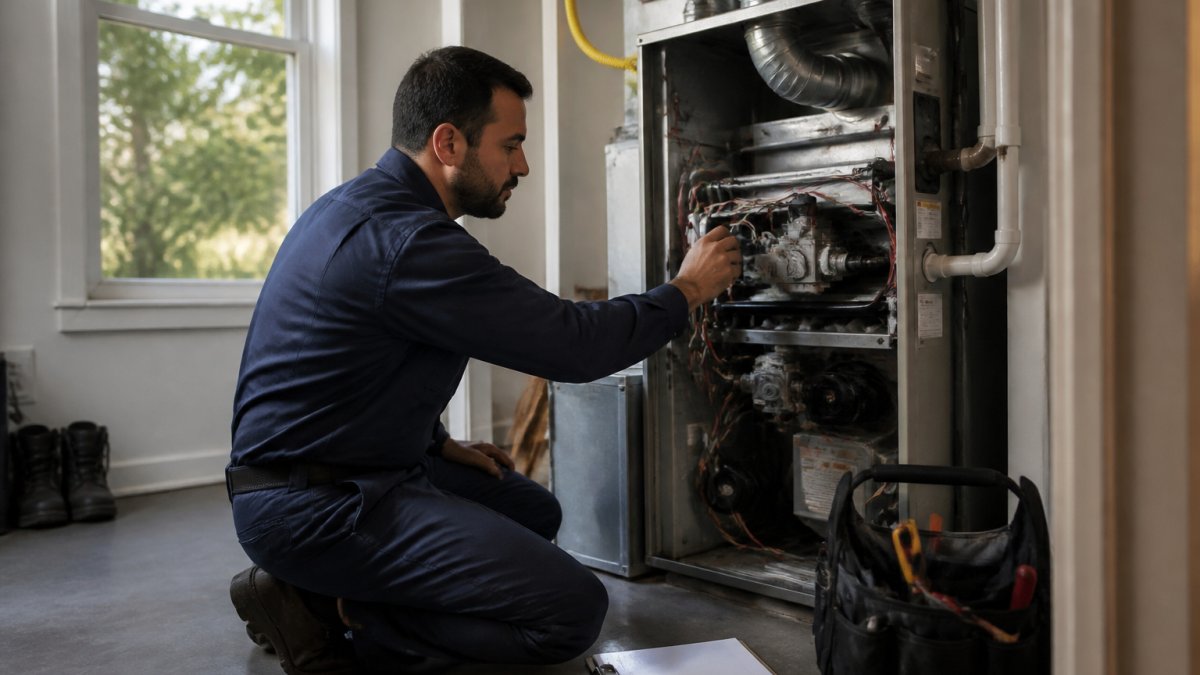
One caveat: off-season timing is a scheduling advantage, not a rule. A furnace can be replaced in any season. If your system is already failing, waiting for September is the wrong call.
Signs You Need a New Furnace Before the Cold Arrives
But not every warning sign means the same thing.
Safety-first signals: act now, do not wait for the off-season
- Carbon monoxide alarms sounding, or a CO detector that keeps triggering after reset
- Yellow or lazy burner flames instead of a crisp blue flame
- Soot streaks, scorching, or corrosion around the flue or burner compartment
- A persistent rotten-egg or exhaust smell near the unit
- Backdrafting, flue gases spilling back into the room instead of venting outside (the EPA)
- Cracks in the heat exchanger, which a technician can confirm with a combustion analysis and visual inspection
Reliability signals: plan replacement in the next off-season
- The system is 15 to 20 years old and nearing the end of its expected lifespan
- You have called for furnace repair twice in two seasons
- Utility bills climb while usage stays the same
- Some rooms stay cold while others overheat
- The furnace short-cycles or makes new noises
- Repairs are approaching a meaningful share of replacement cost
The triage decision: replace now or wait for the off-season
- Is there a safety signal? If yes, stop using the furnace and get emergency service. Do not wait for a quote.
- Is the furnace completely down in cold weather? If yes, you are in emergency-replacement territory. Get same-day diagnostics, and if the fix is major, replace now rather than pay for a repair you will repeat in spring.
- Is the furnace running but unreliable? If repairs are recurring and the unit is past 15 years, schedule replacement in the next off-season window and keep a service plan in place until then.
- Is the furnace running reliably but aging? If it is 15-plus years old with no symptoms, start budgeting and get quotes during the off-season so you are ready before a failure.
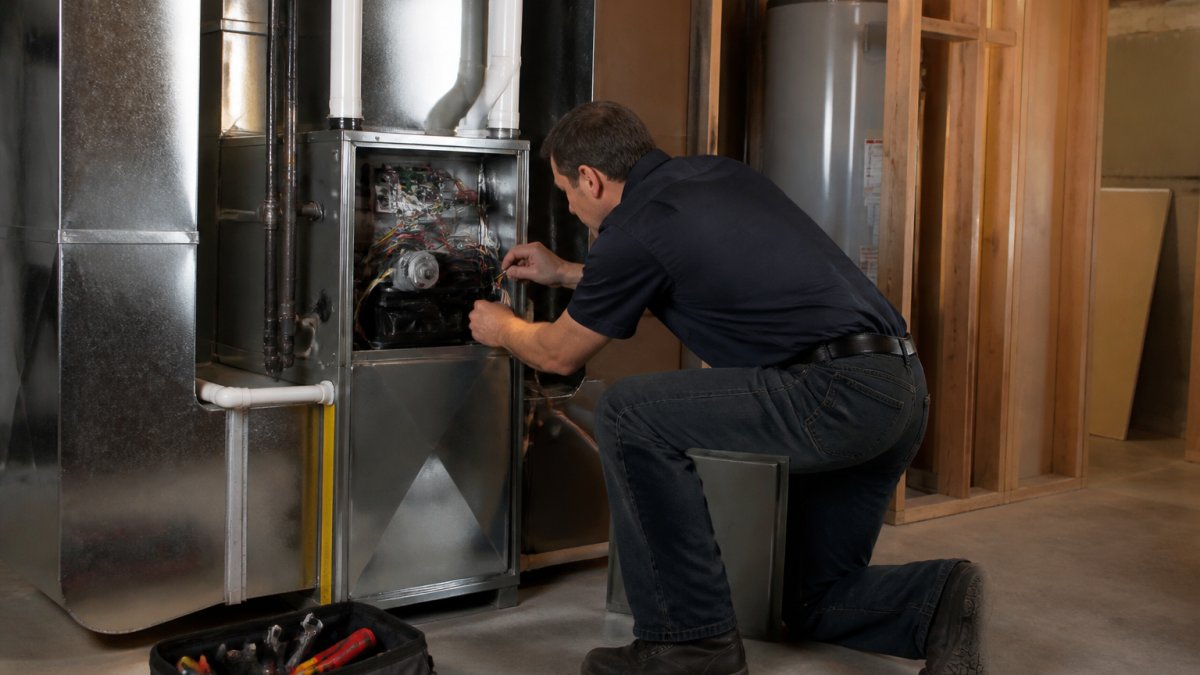
What a professional inspection should confirm
For a deeper walkthrough of each warning sign, read our guide on furnace replacement warning signs.
Furnace Repair vs Replacement: How to Decide
| Situation | Better Choice | Why |
|---|---|---|
| Under 10 years old, one failed part | Repair | Plenty of service life left |
| 10-15 years, first major repair | Repair or plan ahead | Start budgeting for replacement |
| Over 15 years, repeated repairs | Replace | Repair money rarely pays back |
| Rising bills, uneven heat | Replace | Efficiency loss is the real cost |
If you want the numbers behind that comparison, our repair vs replacement cost analysis walks through the math.
What Furnace Replacement Cost Really Depends On
Furnace replacement cost depends on system size, efficiency rating, fuel type, ductwork condition, and installation complexity, not on the calendar alone. Seasonal demand shifts contractor availability, but the equipment and labor scope drive most of the total. Most top-ranking guides stop at that sentence. This section goes further: it breaks down what actually moves the number, whether off-season pricing is real, and how to plan the spend without guessing.
The four cost buckets
- Equipment: The furnace itself. A builder-grade single-stage gas furnace sits at the low end; a modulating, high-AFUE unit with a variable-speed blower sits at the top. Efficiency rating is the single biggest equipment lever.
- Labor: Removal, placement, gas and electrical connections, venting, startup, and commissioning. Labor scales with access, a tight closet or a basement with a finished ceiling takes longer than an open utility room.
- Materials and venting: Flue pipe, combustion air, condensate handling for high-efficiency units, transitions, and any gas-line resizing. High-efficiency condensing furnaces often need new PVC venting and a condensate drain, which a standard-efficiency swap does not.
- Ductwork and ancillary work: Sealing, resizing, adding returns, or correcting a system that was never sized right. This is where "while we're in there" scope creeps in, and where a low quote usually hides its shortcuts.
Does off-season pricing actually exist?
The savings are usually in scope and scheduling, not a published seasonal discount. Treat any "off-season sale" claim the same way you would a holiday promotion on equipment: ask what the baseline price was, and get the itemized quote in writing.
Rebates, tax credits, and financing
- Financing: Most full-service contractors offer installment plans through third-party lenders. Compare the APR against a home equity line or a credit union loan; promotional "no interest" periods frequently revert to a high rate if the balance is not cleared.
Red flags in a low quote
- No room-by-room load calculation (a Manual J or equivalent sizing analysis)
- No duct inspection or static-pressure check
- No permit pulled
- No combustion analysis at startup
- A furnace sized by square footage alone
How to budget the project
Plan the total as equipment plus labor plus a contingency for ductwork and venting, then layer rebates and financing on top. Because installed prices vary widely by region, home age, and scope, the honest way to plan is to collect two or three itemized bids during the off-season window and compare scope line by line. For ballpark figures to anchor that comparison, see our HVAC installation cost estimate.
How Long Does Furnace Installation Take?
- Removal and disposal of the old unit
- Placement and connection of the new furnace
- Venting, gas, and electrical checks
- Startup, airflow testing, and thermostat calibration
A Month-by-Month Guide to Planning Your Replacement
| Month | What to Do | Why |
|---|---|---|
| March-May | Get quotes, schedule spring install | Off-season availability |
| June-August | Confirm sizing, budget for fall | Avoid peak summer AC load |
| September-October | Book fall install before heating season | Moderate temps, open slots |
| November-February | Emergency replacement only | Peak winter demand, slower scheduling |
| Any month | Check age and repair history | Decide urgency early |
Schedule Your Free Replacement Estimate Today
Air CareSaver offers free estimates, same-day response, and accurate diagnostics. Air CareSaver is licensed (#1054832), has more than 21 years of experience, and has a 4.9 Google rating across 270+ reviews.
Get started with Air CareSaver and request your furnace installation estimate before the cold arrives.
Frequently Asked Questions
What is the best month to replace a furnace?
Spring and early fall are the most commonly recommended windows. Heating demand is lower, contractors have more open installation slots, and you avoid the peak winter rush. September and October are often cited as ideal because you beat the first cold snap without competing for emergency service. That said, replacement is possible in any season. If your furnace is over 15 years old or showing frequent repair issues, waiting for a perfect month is not worth the risk of a mid-winter breakdown.
Is it cheaper to replace a furnace in the spring or fall?
Both spring and early fall fall outside peak heating season, when contractors are less booked and scheduling is more flexible. CBS News identifies late summer or early fall as typically the most affordable period for furnace purchases. Pricing also depends on system size, efficiency rating, and installation complexity, so get a written estimate rather than assuming a seasonal discount. Ask your contractor directly about off-season availability and any scheduling incentives.
How do I know if I need a new furnace or just a repair?
ENERGY STAR advises considering replacement once a furnace is more than 15 years old, and frequent repairs are another signal. If you are facing a third repair in two seasons, putting that money toward a new system often makes more sense. Uneven temperatures, rising utility bills, and unusual noises also point toward replacement. A diagnostic visit can confirm whether a repair will restore reliable performance or whether you are postponing the inevitable.
How long does furnace replacement take?
A standard furnace replacement typically takes one day for a straightforward swap, though complex installations can stretch to two. Factors include whether you are changing fuel type, modifying ductwork, or upgrading to a higher-efficiency unit that needs new venting. Scheduling during spring or early fall helps because contractors have more availability and can accommodate unexpected delays without leaving you without heat. Ask for a timeline in writing before work begins.
Aging equipment rarely fails on a convenient schedule. If your furnace is past 15 years or repairs are stacking up, book a free estimate with Air CareSaver. Our licensed technicians size and install the right system, and our same-day response means you are never left waiting in the cold.