 how-to
How to Tell If Your AC Unit Is Too Small for Your House
Quick Summary
An AC unit is likely too small if it runs nonstop yet never reaches the set point, especially on hot afternoons, and bills keep rising. Several symptoms appearing together point to an ac unit too small problem. Rule out filters, ducts, and insulation first, then confirm with a Manual J load calculation.
- Check for nonstop run times and a house that stays above 78 to 80 degrees on hot days.
- Replace the air filter and clear return grilles before assuming the unit is undersized.
- A common target is a 15 to 20 degree split between return and supply air.
- Square footage alone cannot confirm sizing; a Manual J load calculation is the standard method.
- Ask a contractor for room-by-room load results before accepting a replacement recommendation.
Table of Contents
- Undersized Air Conditioner Symptoms to Check First
- Why Your AC Runs Constantly but Doesn't Cool the House
- How to Calculate AC Size for Your House
- Undersized vs Oversized Air Conditioner: Why Both Cause Problems
- Safe Homeowner Checks You Can Do This Week
- Repair, Airflow Upgrades, or Replacement: Deciding Your Next Step
- Booking a Load Calculation and Sizing Check With Air CareSaver
- Frequently Asked Questions
Undersized Air Conditioner Symptoms to Check First
An AC unit that is too small for a house, which is usually the sign of an "ac unit too small" problem, shows itself through a cluster of signs, not a single one. The most common pattern is a system that runs nonstop but never reaches the thermostat set point, especially on the hottest afternoons.
Here are the symptoms to check first:
- The system runs for long stretches without shutting off
- The house struggles to stay below 78 to 80 degrees on hot days
- Some rooms stay hot while others feel fine
- Airflow from the vents feels weak or uneven
- Monthly cooling bills rise without a clear reason
- Indoor humidity feels heavy or sticky
- The system cycles on and off more frequently than it used to
- Parts fail more often than expected for the unit's age
Each sign alone can have more than one cause. A single hot room, for example, may point to blocked ductwork rather than a small unit. The real question is whether several signs show up together and whether they persist after you rule out the common non-sizing causes below.
A practical diagnostic checklist: undersizing vs. duct, insulation, or equipment problems
Before assuming the unit is too small, work through this checklist.
1. Check the air filter and return airflow. A clogged filter or a blocked return grille restricts how much air the system can move.
2. Measure the temperature split. Use a simple thermometer at a supply vent and at the return grille.
**3.
4. Check insulation and air sealing. Thin attic insulation, missing knee-wall insulation, and gaps around windows and doors let heat pour in.
**5.
**6.
**7.
If several signs persist after you have ruled out airflow, duct, insulation, and equipment problems, the unit deserves a closer look, including a load calculation to confirm whether its capacity actually matches the house.
The article lists several common signs that a unit may be too small, which are summarised below for quick scanning.
| Symptom | What it may indicate | Check first |
|---|---|---|
| System runs nonstop | Capacity may be falling short | Compare run time to outdoor temperature |
| House stays above 78 to 80 degrees | Unit not keeping up on hot days | Note indoor readings each day |
| Some rooms hot, others fine | Duct design or balancing issue | Compare room-by-room comfort |
| Weak or uneven vent airflow | Duct or airflow restriction | Replace filter and clear returns |
| Bills rising without cause | System working harder than normal | Compare to same month last year |
| Sticky, heavy indoor humidity | Possible sizing or airflow issue | Track humidity during hot periods |
Why Your AC Runs Constantly but Doesn't Cool the House
When an AC runs all day and still cannot keep up, the unit may be working as hard as it can and still falling short. That is the core of the undersizing problem. The system simply lacks the cooling capacity to handle the heat that enters the home.
This does not always mean the unit itself is too small. Other problems can produce the same symptoms, so it helps to rule them out first.
Rule out duct, insulation, and airflow problems
Before blaming the unit, check the parts that move cool air through the house.
- Ductwork: Leaks or crushed ducts let cool air escape into attics or crawl spaces
- Insulation: Thin or missing attic insulation lets heat pour into the living space
- Airflow: Dirty filters, closed vents, or blocked returns restrict how much air the system can move
- Windows and doors: Gaps and older glass allow outside heat to build up indoors
Fixing these problems often improves comfort without touching the unit at all. If the house cools better after a duct repair or a filter change, the system was never too small to begin with.
When long run times are normal
Long run times are not always a warning sign. On very hot days, a properly sized system may run for hours at a time because it is working to hold the temperature steady against strong heat gain. A system that runs long on a 100-degree afternoon but still reaches its set point is usually doing its job.
The concern is a unit that runs constantly and never reaches the set point, even on mild days. Compare run time against outdoor temperature and whether the house actually cools down.
How to Calculate AC Size for Your House
Many people try to size an AC with a quick rule of thumb, such as a fixed number of square feet per ton. These shortcuts can be a starting point, but they often miss important details about the home. For modern, well-insulated homes, a general guideline is roughly 600 to 700 square feet per ton of cooling capacity. Older or poorly insulated homes may need more capacity, and homes with large windows facing the afternoon sun may need still more.
Why rules of thumb fall short and what Manual J requires
A rule of thumb ignores the factors that actually drive heat gain. The proper way to check whether an ac unit too small for the house is causing the problem is a Manual J load calculation. It is the standard approach that licensed contractors use to estimate how much cooling a house needs.
A Manual J calculation looks at:
- Square footage and ceiling height
- Insulation levels in walls, attics, and floors
- Window size, type, and direction, including shading
- Air leakage and infiltration rates
- Local climate design conditions
- Number of occupants and internal heat sources such as appliances and lighting
- Duct location and condition, since ducts in unconditioned spaces affect delivered capacity
The result is a room-by-room cooling load in British thermal units per hour (BTU/h), which is then matched to equipment tonnage. One ton of cooling equals 12,000 BTU/h. A house that needs 36,000 BTU/h, for example, calls for a 3-ton system, but only after the load calculation confirms that number.
How to verify a contractor's sizing recommendation
When a contractor recommends a new unit, ask these questions before you sign:
- Did you perform a full Manual J load calculation, and can I see the room-by-room results?
- Did you account for my windows, insulation, and air leakage, or did you use square footage only?
- How did you evaluate my existing ductwork, and will it handle the airflow the new unit requires?
- What equipment model and tonnage are you recommending, and why does it match the calculated load?
- Will you commission the system after installation, including checking refrigerant charge and airflow?
A contractor who cannot answer these questions is guessing. A proper sizing recommendation is based on the house, not on a shortcut.
Undersized vs Oversized Air Conditioner: Why Both Cause Problems
A unit that is too small struggles to keep up. A unit that is too big causes a different set of problems. Oversizing is a common mistake, and it can be just as harmful.
An oversized unit cools the air quickly and shuts off before it has removed enough humidity. The house may feel cold but damp and clammy. This pattern, called short cycling, also puts extra wear on the compressor and can shorten the equipment's life.
Undersizing and oversizing both reduce comfort and waste energy. The goal is a unit that matches the house, not the biggest or cheapest option.
Safe Homeowner Checks You Can Do This Week
Several checks are safe to do yourself and can give useful clues before you call a professional.
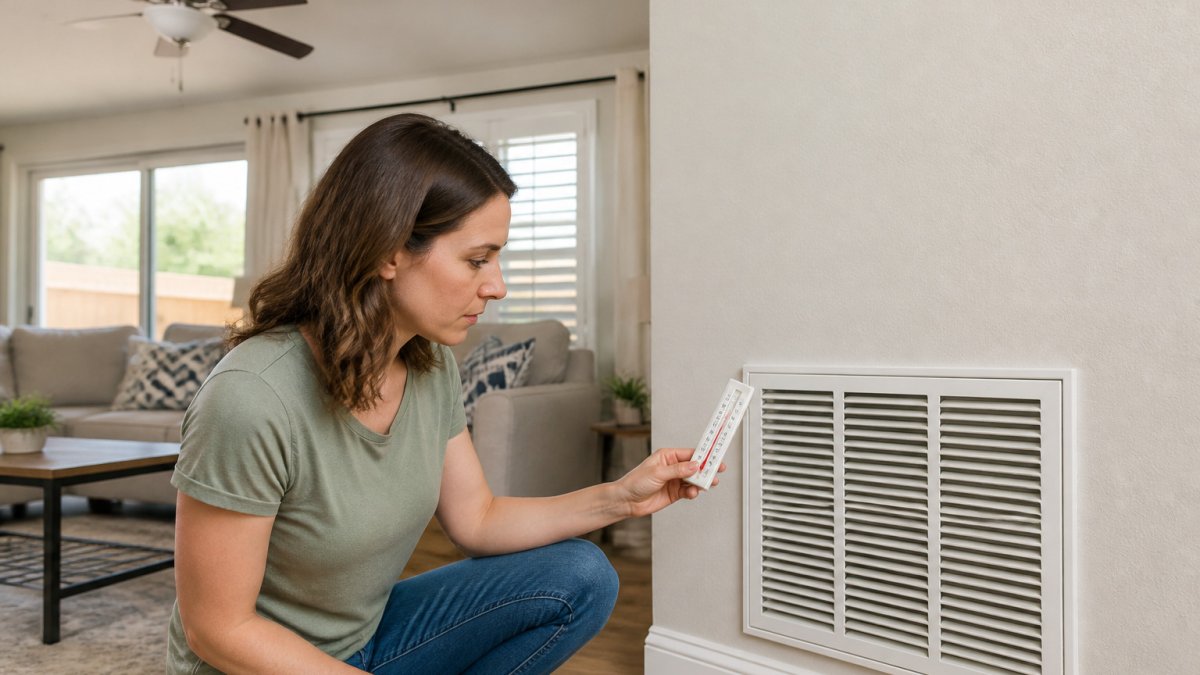
- Measure the temperature: Use a simple thermometer in the main living area and in the hottest room. Note the readings at the same time each day.
- Check the vents: Hold a hand near each supply vent and feel whether the airflow is strong and even.
- Replace the air filter: A clogged filter can mimic a sizing problem, so change it first.
- Track run time: Note how long the system runs during a hot afternoon and whether the house reaches the set point.
- Look at your bills: Compare this month's cooling costs with the same month last year.
Record what you find. Clear notes help a technician diagnose the problem faster.
Repair, Airflow Upgrades, or Replacement: Deciding Your Next Step
If the checks suggest a real problem, the next step depends on what is causing it. If a load calculation shows the existing unit is genuinely too small, see how a packaged unit replacement is matched to your building's load. A repair may solve a failing part. Airflow upgrades, such as sealing ducts or adding insulation, may fix the house without touching the unit. Replacement makes sense only when a proper load calculation shows the existing unit is genuinely too small or worn out.
For older central systems, our guide on when to replace an old central air unit explains the factors that help decide between repair and replacement.
Booking a Load Calculation and Sizing Check With Air CareSaver
A load calculation is the most reliable way to confirm whether your AC is the right size. Before booking, you can review what a diagnostic visit typically costs. Our team is family owned and operated, licensed under #1054832, and has more than 21 years of experience serving the San Gabriel Valley.
To request a free estimate, contact Air CareSaver for a sizing check and let our team take a look at your home.
Last Updated: October 29, 2026
Frequently Asked Questions
What are the signs that an AC unit is too small for a house?
The most common signs are a system that runs almost nonstop yet never reaches the thermostat setting, rooms that stay noticeably warmer than the rest of the house, and indoor temperatures that climb above about 79 degrees during the hottest part of the day. Humidity that lingers, cooling bills that keep rising, and frequent wear on the compressor can also point to a unit that lacks the capacity for the home. Several of these symptoms can overlap with duct leaks or poor insulation.
Can an undersized AC unit run all day?
Yes. An undersized unit can run for hours or even continuously in peak heat because it is always playing catch-up with the heat entering the house. Continuous operation is not automatically a sign of undersizing, though. A correctly sized system can also run long cycles during heat waves, so the key question is whether it reaches and holds the set temperature. If it runs all day and still cannot maintain comfort, sizing deserves a closer look.
How big should an AC unit be for a 2,000-square-foot house?
Rules of thumb suggest roughly 600 to 700 square feet per ton of cooling for a modern, well-insulated home, which would point to a three-ton system for 2,000 square feet. Older homes, homes with large west-facing windows, or homes with poor insulation often need more capacity. The only reliable answer comes from a Manual J load calculation that accounts for insulation, windows, air leakage, and local climate, so treat any square-footage estimate as a starting point rather than a final spec.
Is it better to undersize or oversize an AC unit?
Neither is ideal, but undersizing usually causes the more obvious problems: constant run times, uneven cooling, and higher bills. Oversizing causes short cycling, where the unit shuts off before it has removed enough humidity, leaving the home clammy even when the temperature is correct. Both mistakes reduce efficiency and comfort, which is why the goal is a unit matched to the calculated cooling load rather than a slightly larger safety margin.