 how-to
Why HVAC Repair Estimates Are High: 7 Common Reasons
Table of Contents
- Common HVAC Problems That Drive Up Repair Costs
- Understanding HVAC Repair Cost Factors
- How to Compare HVAC Repair Estimates
- HVAC Repair vs. Replacement: Making the Right Decision
- Getting a Second Opinion on Your HVAC Estimate
- Seasonal and Regional Pricing Variations
- How to Avoid Unnecessary Repair Costs
- Frequently Asked Questions
Last Updated: October 12, 2026
Common HVAC Problems That Drive Up Repair Costs
When your AC or heating system breaks down, high HVAC repair estimates can feel like sticker shock, hundreds for a simple fix, thousands for a major one.
The priciest repairs involve components that must be replaced, not repaired: compressor failures, refrigerant leaks (repair plus costly refill), blower motors, capacitors, and evaporator coils.
Age matters too. Older systems often reveal secondary issues during diagnosis, a 15-year-old furnace may have multiple simultaneous failures, which explains the higher estimate.
At Air CareSaver, homeowners are often surprised by the gap between the quick fix they expected and what the repair requires, usually because they don't understand what's broken and why it costs what it does.
Understanding HVAC Repair Cost Factors
A high estimate is rarely one number, it's a stack of line items. Read the stack and you can tell whether the total reflects real complexity or padding.
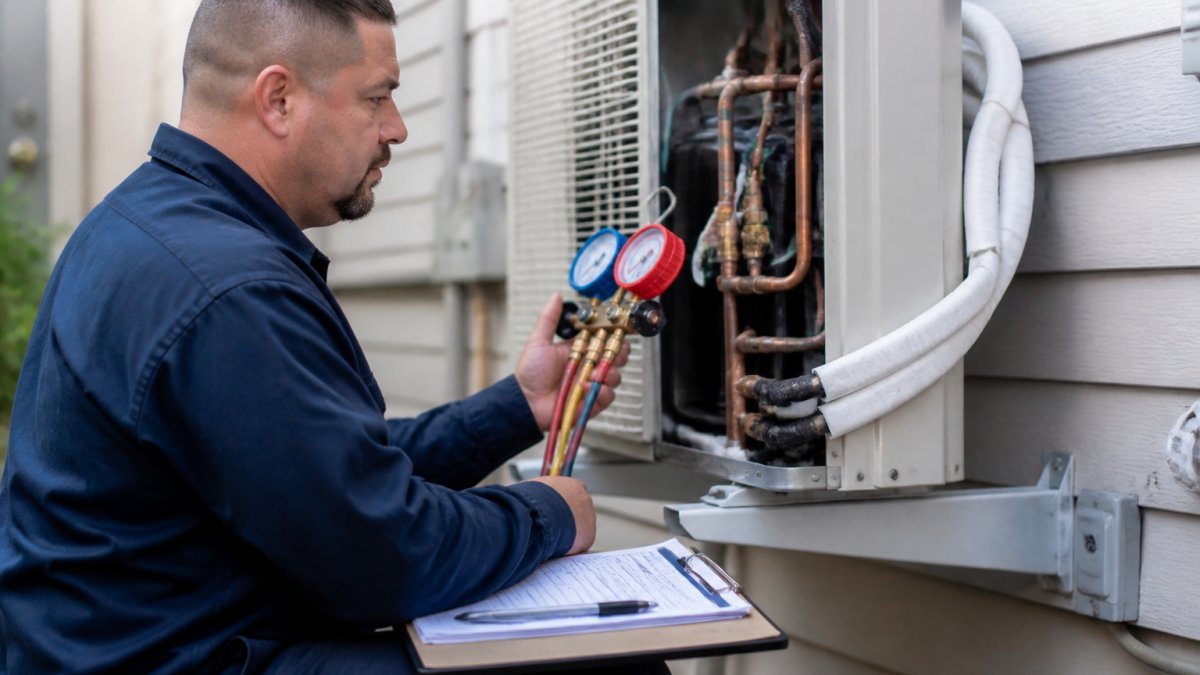
Reading the Estimate Line by Line
Most residential HVAC estimates break into five or six categories. Ask for each one to be listed separately.
Diagnostic or trip fee. Typically $75 to $150. Some companies waive or credit it if you approve the repair.
Parts. The part plus markup.
Labor. Hourly ($75 to $150 by market) or a flat book rate. Flat rates give certainty; hourly rates can drift.
Refrigerant. Charged per pound, priced by type.
Permits and inspections. Some jurisdictions require permits for refrigerant handling, gas line work, or equipment replacement.
Warranty and follow-up. A reputable estimate states the parts warranty (often a year or more) and labor warranty period.
Equipment Age and System Type
Newer systems are cheaper to repair because parts are current and widely stocked, a system under five years old uses standard components any supply house carries. A 1990s system may need discontinued parts, adding cost and lead time.
System type changes the labor math. A window unit is a bench repair; a central split system involves refrigerant recovery, brazing, evacuation, and recharge. Heat pumps, mini-splits, and hybrids often need manufacturer-trained techs, and that scarcity raises rates.
Warranty status is the biggest swing factor, a covered part can turn a $1,200 estimate into a $300 labor-only bill.
Replacement Parts and Refrigerant Costs
Parts costs vary widely by component:
- Capacitors and contactors: inexpensive parts, but labor to access them can dominate the bill.
- Blower motors: mid-range parts cost plus labor to pull the assembly.
- Evaporator and condenser coils: among the most expensive common repairs, the coil is costly and the job requires evacuation and recharge.
- Compressors: the highest-cost single component, often the tipping point toward replacement.
Refrigerant pricing has its own dynamics. R-22 is phased out under federal rules, so supply is limited and expensive; R-410A and R-32 are more available but still a meaningful line item. If a technician proposes a recharge without fixing the leak, ask why, a recharge alone is temporary, and you'll pay again.
Parts availability matters too. Common models ship same-day from local supply houses; discontinued models may need ordering, extending the timeline and sometimes adding freight.
Repair Severity and Diagnostic Time
Severity shows up in labor hours, not just parts. An accessible refrigerant leak might be sealed in an hour; one inside a wall or under a slab can take multiple visits and specialized leak-detection equipment. Electrical faults and mechanical wear requiring disassembly add hours.
That's why two technicians can diagnose the same symptom and reach very different estimates, usually a difference in how much disassembly and testing each budgets for. Ask what they tested; a diagnosis backed by readings (superheat, subcooling, amp draw, static pressure) is far more credible than a guess.
How to Compare HVAC Repair Estimates
Getting multiple estimates is standard practice. But comparing them effectively requires understanding what each line item means.
What to Look for in an Estimate
A good estimate breaks high HVAC repair estimates into clear categories, parts, labor, refrigerant, and fees, each listed separately so you can see where your money goes.
Look for itemized part descriptions. "Run capacitor, 40/5 microfarad, 370 volt" shows the technician knows exactly what needs replacing; "capacitor" does not.
Labor should be stated as an hourly rate or flat fee. Hourly rates typically run $75 to $150 by region and company; flat fees are preferable because they give certainty about the total cost.
Check whether the estimate includes parts and labor warranty. Most reputable companies offer at least a one-year parts warranty and matching labor warranty.
Red Flags and Consumer Protections
Vague estimates are a warning sign. If it says "repair as needed" without specifying what needs repair, ask for clarification, don't pay for undefined work.
Unusually low estimates deserve skepticism. If one company quotes $300 and another $900 for the same repair, either the low estimate is incomplete or the high one is inflated. Ask what accounts for the difference.
Be wary of companies pushing full replacement when repair is viable.
Most states have consumer protection laws governing HVAC work. Many require written estimates before work begins; some cap the diagnostic fee or require it waived if you hire the company.
HVAC Repair vs. Replacement: Making the Right Decision
Most articles reduce this to one rule: replace if the repair costs more than half of a new system. That's a starting point, not a decision. A better framework weighs five factors together, because a system can fail one test and still be worth repairing, or pass every test and still be a poor investment.
The Five-Factor Framework
Score your system on each factor. The more factors that point toward replacement, the stronger the case.
1. Age versus expected service life. Furnaces and air conditioners commonly last 15 to 20 years with proper maintenance; heat pumps land in a similar range.
2. Repair frequency. One repair in ten years is normal; three in two years is a pattern.
3. Repair cost as a share of replacement cost. Treat the 50% rule as a range.
**4.
5. Warranty status and remaining coverage. A system under a parts warranty changes the math dramatically, a covered compressor turns a replacement-level repair into a labor-only bill.
Applying the Framework to Common Scenarios
Young system, single failed component. Repair. A capacitor, contactor, or blower motor failure on a system under ten years old is routine, and the rest of the system has years left.
Mid-life system, first major repair. Usually repair, but get the full picture.
Older system, compressor or coil failure. The classic replacement scenario, high repair cost, near end of life, and the next major failure likely not far behind.
Older system, minor repair, otherwise healthy. Repair can still make sense if the system has been reliable and the repair is inexpensive. Age alone is not a reason to replace a working system.
What to Ask Before You Decide
Ask the technician three questions before you sign anything:
- What is the diagnosis, and what readings support it?
- What is the expected remaining life if I make this repair?
- If I repair, what is the next most likely failure, and roughly what would that cost?
A technician who answers all three is giving you a decision, not a sales pitch. One who can't, or pivots straight to a replacement quote, is giving you a reason to get a second opinion.
The Cost of Waiting
Delaying a needed repair is not free. A failing capacitor can take a compressor with it; a small refrigerant leak becomes a large one; a system running on a failing component works harder, draws more power, and wears out faster. The cheapest path is usually fixing the problem while it's small, which is why an accurate diagnosis matters more than a low quote.
Getting a Second Opinion on Your HVAC Estimate
A second opinion is always reasonable when facing a large repair bill, and most reputable companies expect it.
Sometimes a second technician finds a different solution, one company might replace a component, another might repair it, and both could be valid. A second opinion helps you understand your options.
Be specific about what you're asking the second company to evaluate. If the first estimate recommends full replacement, ask whether repair is possible; if it recommends a specific part replacement, ask whether that's the correct diagnosis.
Avoid shopping purely on price. The cheapest estimate isn't always the best value, a significantly lower quote might cut corners on parts quality or warranty coverage.
Seasonal and Regional Pricing Variations
HVAC repair costs vary by season and geography. Understanding these variations helps you plan and budget.
Summer is peak season for AC repairs, demand is high, technicians are busy, and emergency calls cost more. If your AC fails in July, expect a premium for same-day service.
Regional differences are significant. Labor costs are higher in urban and coastal areas than rural ones, and parts costs vary with local supplier availability and distribution distances. A repair costing $800 in one region might cost $1,000 in another.
Competition affects pricing too. Areas with many HVAC companies tend to be more competitive; rural areas with fewer options may cost more because homeowners have fewer alternatives.
How to Avoid Unnecessary Repair Costs
Prevention is cheaper than repair. Regular maintenance catches problems before they become expensive.
Change your air filter every one to three months.
Have your system professionally inspected annually. A technician can spot worn components, refrigerant leaks, and electrical issues before a breakdown.
Keep your outdoor unit clear of debris. Leaves, dirt, and vegetation block airflow and make the system work harder; clearing the area takes minutes and prevents stress on components.
Address small problems immediately. A minor refrigerant leak worsens over time, and a failing capacitor will eventually fail completely. Catching these early means a smaller repair bill.
Consider a maintenance plan.
Understanding why HVAC repair estimates are high is the first step toward smart decisions about your comfort system. Our 21+ years of licensed experience means we've seen every type of HVAC problem and can explain your options clearly. Get your free estimate today and understand exactly what your repair will cost.
Frequently Asked Questions
What factors make an HVAC repair estimate high?
High estimates typically reflect equipment age, replacement parts scarcity, refrigerant costs, repair complexity, and labor time. Older systems often need specialized parts that cost more and take longer to source. Refrigerant leaks add expense due to EPA regulations and material costs. Diagnostic fees, service-call charges, and the severity of the failure all contribute. Getting multiple estimates helps you understand whether pricing reflects genuine complexity or unnecessary upselling.
How can I tell if an HVAC repair estimate is fair?
A fair estimate includes itemized labor costs, specific replacement parts with prices, diagnostic fees, and refrigerant charges if applicable. Compare at least two quotes from licensed technicians. Check that the estimate explains what failed and why that failure requires the proposed repair. Be wary of vague language, pressure to decide immediately, or recommendations to replace the entire system without justification. Licensed contractors should provide written estimates with warranty terms.
Should I get a second opinion on a high HVAC repair estimate?
Yes, especially if the estimate exceeds $1,500 or recommends full system replacement. A second opinion from another licensed technician can confirm the diagnosis and help you compare pricing. Many contractors offer free or low-cost diagnostics. Getting multiple quotes protects you from overcharging and ensures you understand the actual problem. If two independent technicians agree on the repair, you can move forward with confidence.
When should I replace my HVAC system instead of repairing it?
The 50% rule is a common guideline: if annual repair costs exceed 50% of replacement cost, replacement is often smarter. Systems over 15 years old typically become less efficient and break down more frequently. If repairs are needed on multiple components, replacement may offer better long-term value and energy savings. A licensed technician can help you weigh repair costs against replacement, considering your system's age, efficiency rating, and remaining lifespan.