 how-to
When to Replace Old Central Air Unit: A 2026 Guide
Table of Contents
- Central Air Conditioner Lifespan: What to Expect
- Signs You Need a New Air Conditioner
- The $5,000 Rule for AC: Repair or Replace Air Conditioner
- When to Replace Old Central Air Unit: Decision Framework
- Replacement Timing and Cost Planning
- Common Mistakes Homeowners Make
- Frequently Asked Questions
Last Updated: October 6, 2026
Central Air Conditioner Lifespan: What to Expect
A central air conditioner typically lasts 10 to 15 years with proper maintenance. Some systems push toward 20 years, but that's the upper limit.
At Air CareSaver, we've diagnosed thousands of systems. Systems installed in the early 2010s are now reaching their breaking point: they still cool, but they're inefficient and fragile.
Lifespan depends on several factors. Climate matters: running your AC hard nine months a year ages the system faster.
Here's the practical reality: you don't have to replace your central air unit the moment it hits 10 years. But you should start thinking about it.
Signs You Need a New Air Conditioner
Your system sends clear signals when it's time to move on, warnings you can't ignore.
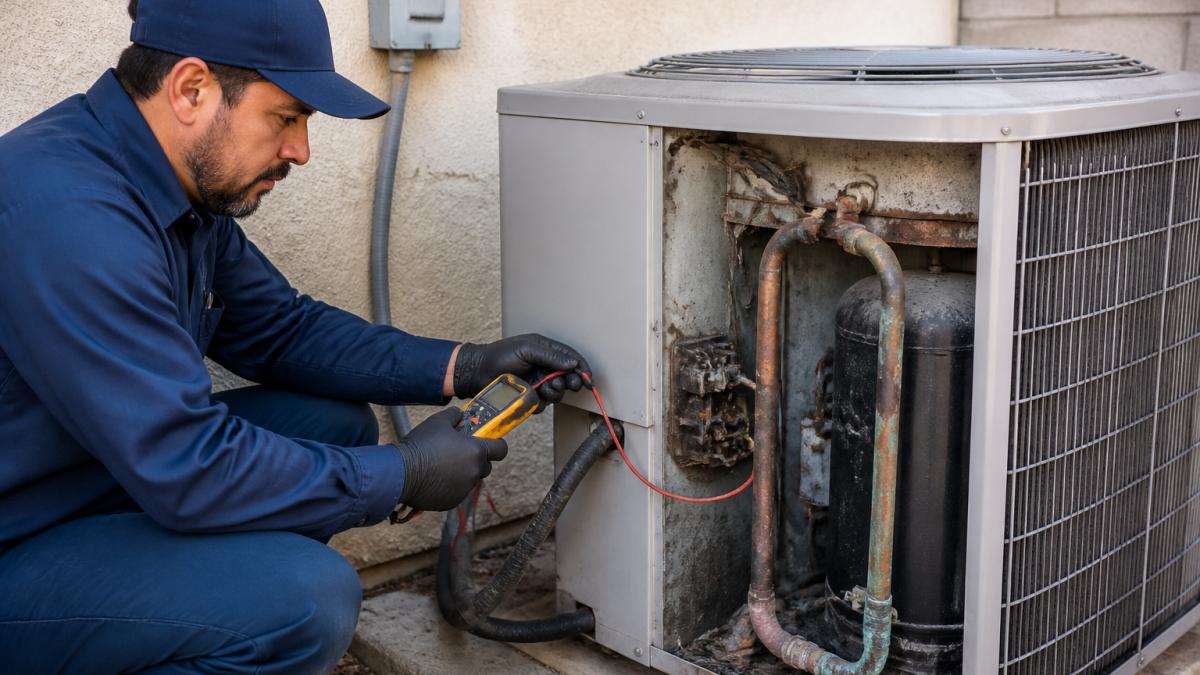
Frequent Repairs and Breakdowns
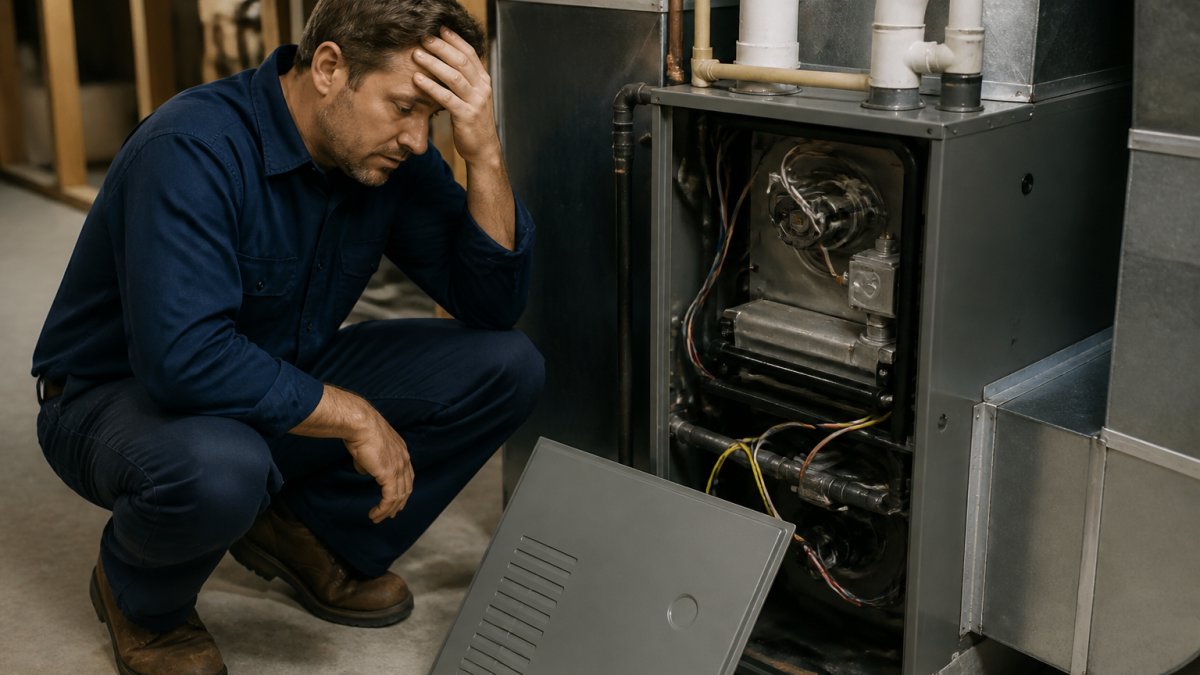
If your air conditioning system breaks down twice in one season, that's a red flag. Once a year is normal wear. Twice in a few months? Your system is failing.
When you're replacing the same part repeatedly, replacement makes sense. A capacitor dies, you pay $300, and six months later another fails. You're not fixing the problem, you're throwing money at symptoms.
A good rule: if you've spent $1,500 on repairs in the last two years, start shopping for a replacement. You're past the point where fixes make financial sense.
Rising Energy Bills and Declining Efficiency
Your cooling costs shouldn't jump 20 percent year over year when nothing else changed. But that's exactly what happens with aging equipment.
Older central air units lose efficiency gradually: refrigerant leaks, the compressor works harder, the thermostat runs longer, and the system cycles more often. Your utility bill reflects all of it.
Compare your summer bills from three years ago to today. If they've climbed steadily and your usage hasn't changed, your system is deteriorating. Efficiency doesn't recover. It only gets worse.
Uneven Cooling or Inadequate Temperature Control
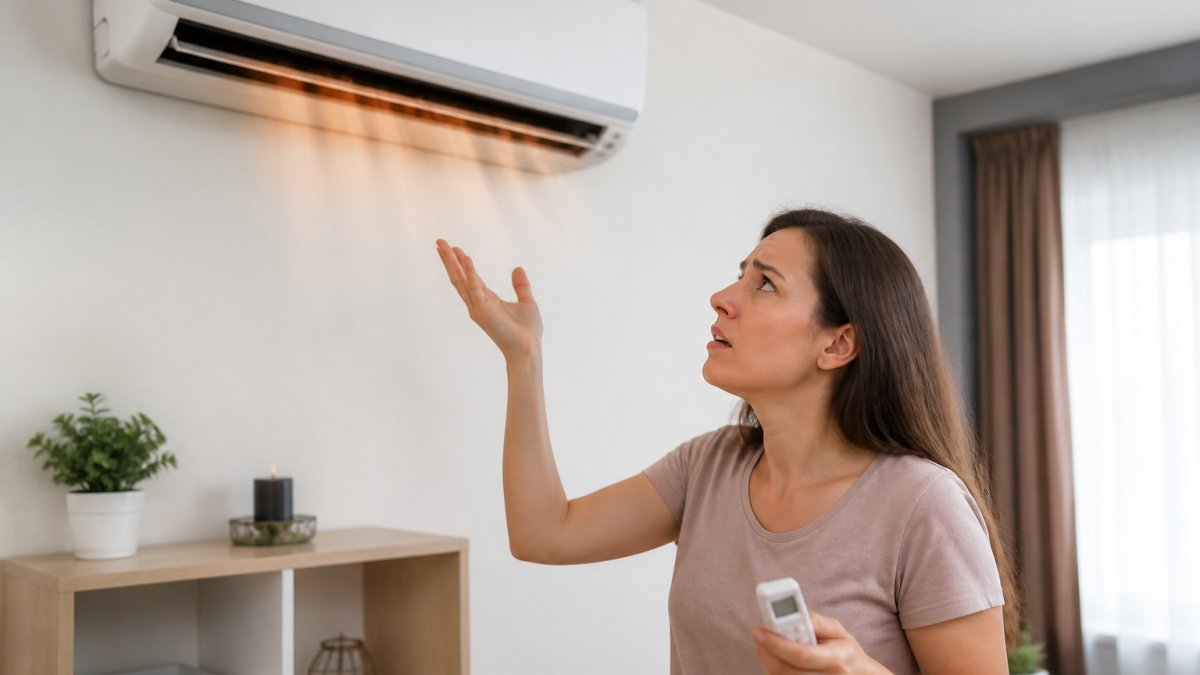
Some rooms stay comfortable. Others feel like an oven. Your thermostat says 72 degrees, but the upstairs feels like 78.
This signals a failing air conditioning system. The compressor can't maintain consistent pressure. Ductwork has leaks. The blower motor is weakening. Whatever the cause, your system can't do its job anymore.
You adjust the thermostat lower, your electric bill goes up, and the problem spreads. You're chasing comfort instead of achieving it, that's a system in decline.
Strange Noises and Unusual Odors
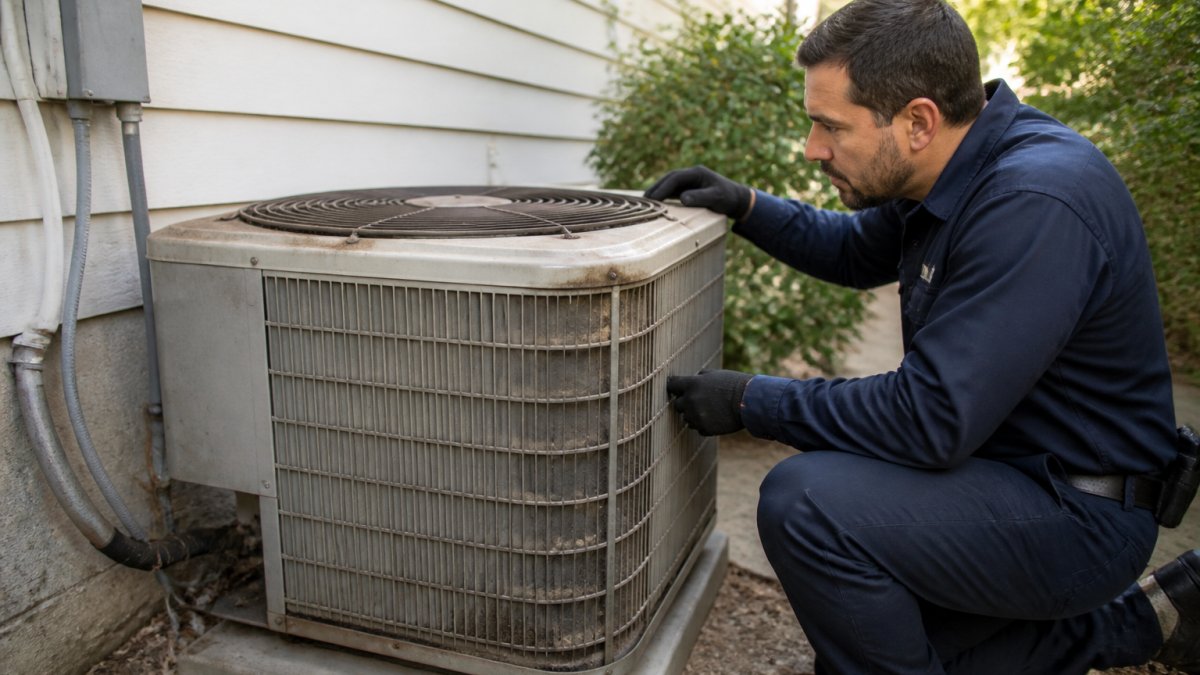
A grinding sound from the outdoor unit means the compressor is struggling. Squealing suggests a belt issue. Rattling indicates loose components.
These noises don't fix themselves. They get louder. They signal mechanical wear that's advancing. A technician can diagnose the specific problem, but the underlying issue is age.
Unusual smells are equally serious. A musty odor inside suggests mold in the ductwork or evaporator coil. A burning smell means electrical components are overheating. Neither is safe to ignore. Both often signal that replacement is cheaper than repair.
The $5,000 Rule for AC: Repair or Replace Air Conditioner
The $5,000 rule is a quick screen, not a verdict. It works like this: multiply the quoted repair cost by the age of the system in years. If the result tops $5,000, lean toward replacement.
Example: a 12-year-old system with an $800 repair gives you $800 × 12 = $9,600. That points to replacement. A 6-year-old system with a $600 repair gives you $600 × 6 = $3,600.
The rule is popular because it folds age into the math, but it ignores three things: how much life the system has left, how much efficiency you're losing monthly, and what a new system costs to install.
A Practical Repair-Versus-Replace Calculation
Instead of relying on age alone, compare four numbers side by side.
1. Repair cost versus replacement cost. Get a written repair quote, then at least two replacement quotes. A single repair exceeding roughly one-third of the replacement cost signals replacement, especially past the midpoint of expected life.
2. Remaining useful life. A central air conditioner typically runs 10 to 15 years.
3. Efficiency loss. Older units carry lower SEER ratings than today's equipment, and efficiency degrades with age.
4. Payback period. Divide the net replacement cost (after any incentives) by the estimated annual savings.
When Repair Still Makes Sense
Repair is often right even on an older system. If the failure is a single inexpensive component, a capacitor, contactor, or blower motor, and the rest is sound, fixing it can buy several more years. A qualified technician can tell you whether the part is an isolated wear item or a symptom of a compressor or coil problem that will cascade.
When Replacement Wins
Replacement tends to win when repairs are recurring, when the compressor or evaporator coil is the failure point, when the system uses R-22 refrigerant, or when the unit is past 15 years and the repair bill is climbing. Then the repair is a down payment on the next breakdown, not a fix.
When to Replace Old Central Air Unit: Decision Framework
Deciding when to replace old central air unit requires looking at multiple factors together. No single indicator tells the whole story.
System Age and Remaining Lifespan
If your central air unit is 15 years old, you're past the typical life expectancy. Replacement should be a priority, not a question.
At 10 to 12 years old, you're in the gray zone: the system might last another 5 years or fail next summer. Assess other factors.
Under 10 years old, repairs almost always make sense unless the repair cost is extreme, you have time on your side.
Age alone doesn't determine replacement. But it shapes the context for every other decision.
Repair History and Frequency
Pull your maintenance records: how many repairs in the last three years?
One repair: normal. Two repairs: concerning. Three or more: your system is failing.
Each repair tells you something. Replacing the same component twice means the underlying system is weakening; different repairs each time means wear is spreading. Either way, the pattern matters more than any single breakdown.
Energy Efficiency Ratings and Operating Costs
Older central air units operate at lower efficiency ratings. A system from 2010 might have a SEER rating of 10. Modern units hit SEER 16 or higher.
Higher SEER means lower cooling costs. A new system could cut your summer electric bill by 30 percent. That savings compounds over the system's lifespan.
Calculate the payback period. If a new unit costs $7,000 and saves $100 per month, you break even in 70 months, under 6 years. For a system lasting 15 years, that's a solid investment.
System Compatibility and Whole-Home Considerations
Your central air unit doesn't work alone. It connects to your furnace, ductwork, and thermostat.
If your furnace is also aging, replacing just the AC unit creates a mismatch. A new air conditioning system paired with an old furnace leaves efficiency on the table. You might want to replace both.
Ductwork sealed with mastic tape lasts about 15 years. If your ducts and AC are both original, both might need attention, leaky ducts waste cooled air, and a new system can't perform well through damaged ductwork.
Consider the whole system. Sometimes replacing just the central air unit makes sense. Sometimes you need a broader upgrade.
Replacement Timing and Cost Planning
Timing and budget are the two questions homeowners ask right after "do I need to replace it." Here's how to plan both.
When to Schedule the Replacement
Contractors carry lighter schedules from late fall through early spring, when you're more likely to get competitive quotes, faster scheduling, and more attention to installation detail. In peak summer, demand spikes and emergency replacements command premium pricing.
The smarter play is to plan ahead rather than wait for a failure, which forces an emergency replacement at peak pricing with limited availability. If your unit is in the gray zone, say 12 to 14 years old with a repair history, get quotes in spring and schedule installation for early fall to replace on your schedule instead of the system's.
What Drives the Cost of a Replacement
The equipment is only part of the bill. A full replacement quote typically includes:
- The outdoor condenser unit and indoor coil, the matched pair that determines efficiency.
- Labor, removal of the old system and installation of the new one.
- Permits and inspection, required in most jurisdictions and often overlooked in rough estimates.
- Ductwork modifications, sealing, repairing, or resizing ducts so the new system can actually deliver its rated performance.
- Thermostat and controls, a compatible thermostat, sometimes a smart model.
- Line set and electrical work, new refrigerant lines and any electrical upgrades the new unit requires.
Because these variables swing widely by home, the only reliable number is a written, itemized quote. Ask each contractor to break out equipment, labor, permits, and ductwork so you can compare apples to apples.
Financing and Incentives
A lump-sum replacement isn't the only path. Many contractors offer payment plans or financing, letting you spread the cost over months or years. Manufacturer rebates and utility efficiency programs are also common, higher-efficiency equipment sometimes qualifies for rebates or tax credits, lowering the net cost and shortening payback. Ask your contractor which incentives apply to your specific model, and confirm eligibility before you sign.
Budget Beyond the Install
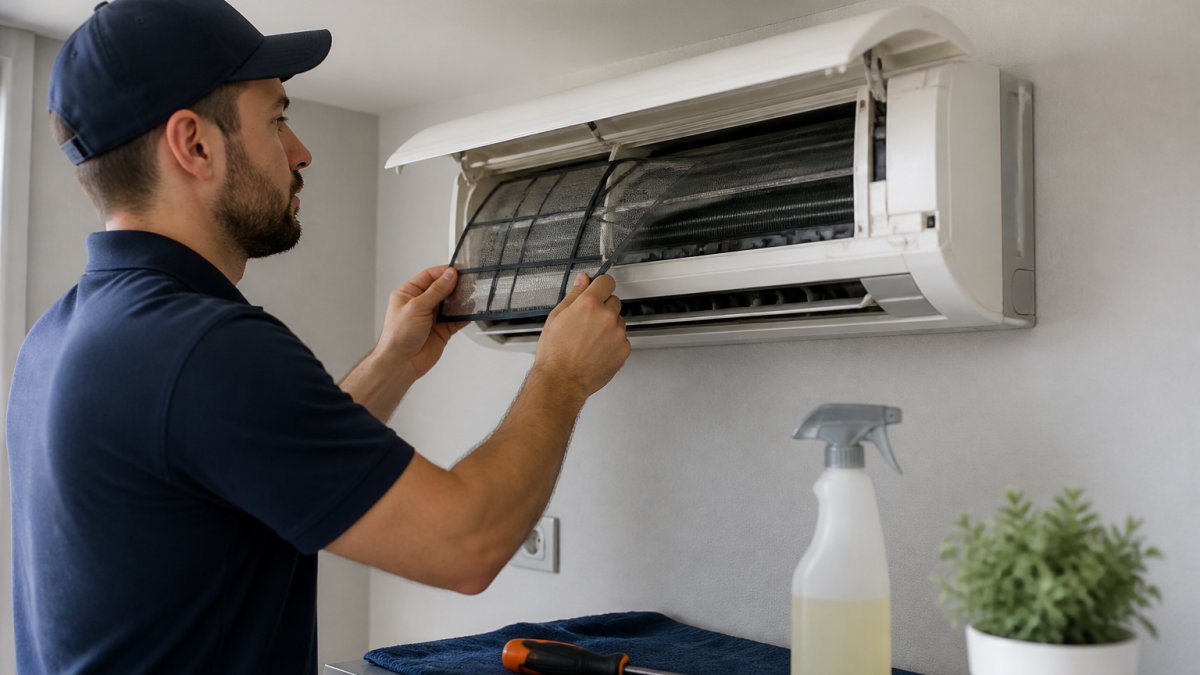
Plan for maintenance after replacement. Annual inspections, filter changes, and refrigerant checks keep a new system at rated efficiency and protect the warranty. Skipping maintenance is the fastest way to shorten the life of the system you just paid to install.
Common Mistakes Homeowners Make
Waiting too long is the biggest mistake.
Don't do that. Plan ahead. Replace on your schedule, not the system's schedule.
Another mistake is choosing the cheapest unit. The lowest-priced central air unit often has lower efficiency ratings and shorter warranties.
Skipping the professional inspection is another trap.
Finally, many homeowners forget about maintenance after replacement. A new system needs annual inspections, filter changes, and refrigerant checks.
Replacing your central air unit is a significant decision, but it doesn't have to be complicated.
When replacement makes sense, Air CareSaver can help.
Frequently Asked Questions
What is the $5,000 rule for AC units?
The $5,000 rule is a practical guide to decide between repair and replacement. Multiply your system's age by the repair cost. If the result exceeds $5,000, replacement is often more cost-effective than repair. For example, a 12-year-old system needing a $500 repair costs $6,000 by this calculation, suggesting replacement may be the better choice. However, this is a starting point, consider your system's repair history, energy efficiency, and remaining lifespan alongside this rule.
How long does a central air conditioner usually last?
Most central air conditioner systems last 10-15 years with regular maintenance, though some well-maintained units reach 15-20 years. Lifespan depends on usage, climate, maintenance frequency, and system quality. Systems in hot climates or those running constantly tend to wear faster. Annual inspections and preventative maintenance extend equipment life and help you plan replacement before major breakdowns occur.
Is it worth repairing an old central air conditioner?
Repair is worthwhile if your system is under 10 years old, repair costs are reasonable, and it has a solid maintenance history. For systems over 15 years old, frequent repairs, or those consuming high energy, replacement often saves money long-term. A service technician can diagnose the issue and help you weigh repair costs against replacement, factoring in your system's age and condition.
What are the warning signs that a central AC unit is failing?
Key warning signs include frequent breakdowns requiring multiple repairs per season, rising utility bills despite normal usage, uneven cooling across rooms, inability to maintain a comfortable temperature, short cycling (constant on-off switching), strange noises or unusual smells from the outdoor unit, and refrigerant leaks. Any combination of these suggests your system needs professional evaluation to determine whether repair or replacement is the best path forward.