 how-to
9 HVAC Maintenance Moves That Protect Home Resale Value
Last Updated: October 25, 2026
Quick Summary
Routine HVAC maintenance helps protect resale value but does not add a fixed dollar amount to your asking price. Buyers and inspectors reward a system that works, and a documented service history reduces the odds of a repair credit at closing. A well-kept system removes a negotiating weapon but rarely becomes a selling point on its own.
- Claims that HVAC work adds 5-10% to home value usually describe replacement, not maintenance.
- Schedule a pre-sale tune-up at least two weeks before your first showing.
- Systems under 10 years old read as manageable risk and draw fewer repair requests.
- Compile installation dates, service invoices, a filter log, and warranty documents for buyers.
- Keep records in chronological order with the most recent invoice on top.
Table of Contents
- Does HVAC Maintenance Increase Home Resale Value?
- What the Resale-Value Claims Get Wrong
- HVAC Maintenance Before Selling a House: What Actually Helps
- How System Age and Energy Efficiency Shape Buyer Appeal
- Your HVAC Inspection for Home Sale: What Buyers and Inspectors Look For
- Repair or Replace HVAC Before Selling: A Seller's Decision Framework
- HVAC Service Records for Home Buyers: How to Document Your System
- Book a Pre-Sale HVAC Tune-Up With Air CareSaver
- Frequently Asked Questions
Does HVAC Maintenance Increase Home Resale Value?
Here's the honest answer: routine HVAC maintenance helps protect resale value, but it does not add a fixed dollar amount to your asking price. For the hard numbers behind that claim, see our HVAC inspection cost vs value ROI guide.
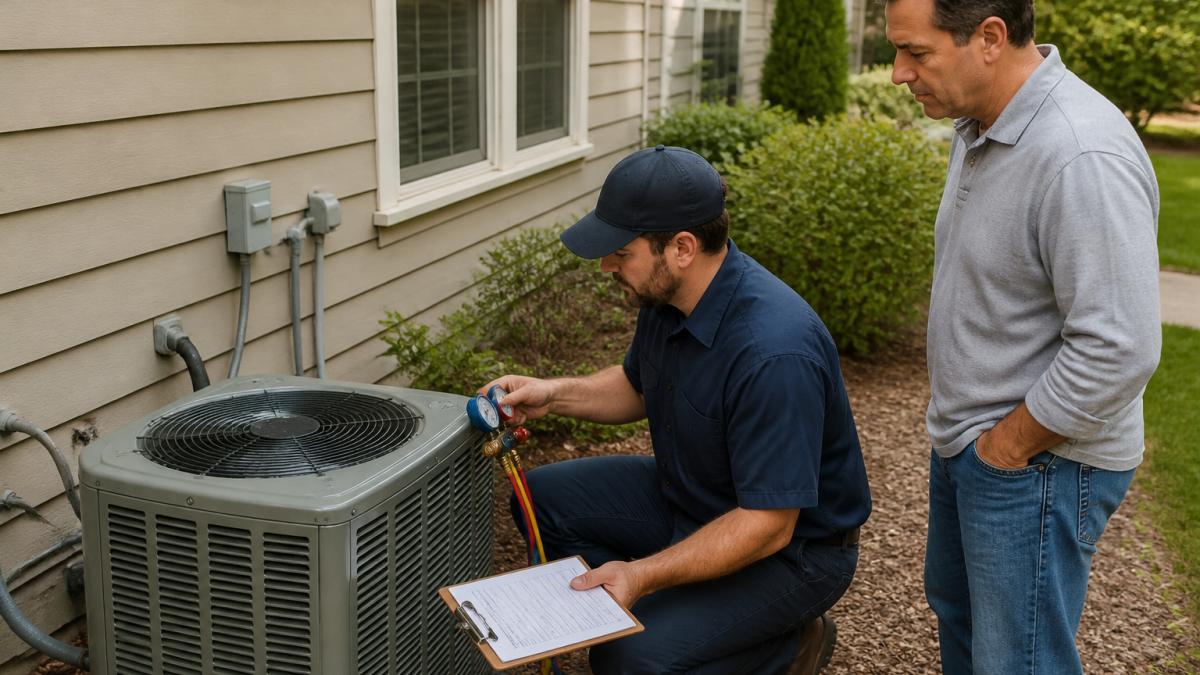
That distinction matters because HVAC maintenance is often marketed as a value booster. The evidence is thinner than the marketing suggests.
HVAC maintenance is the scheduled work of cleaning, testing, and adjusting a heating and cooling system so it runs safely and efficiently. It includes filter changes, coil cleaning, refrigerant checks, and electrical inspections.
Below, we'll show you exactly what maintenance does for a sale, what it doesn't, and the nine moves that actually protect your position at the closing table.
What the Resale-Value Claims Get Wrong
Most articles on this topic blur two very different things: replacing a system and maintaining one. That blur is where the inflated numbers come from.
Replacement claims get repeated as if they apply to maintenance. They don't. A new system is a capital improvement. A tune-up is upkeep. Conflating them sets sellers up for disappointment.
There's a second problem. A real estate discussion thread on HVAC value makes a fair point: repairing a basic system often just brings a home up to the condition of comparable homes. It closes a gap. It doesn't leapfrog the competition.
Where the 5-10% Numbers Come From, and What They Actually Measure
You'll see claims that HVAC work adds 5-10% to a home's value. Treat those figures with caution for three reasons.
First, most describe replacement, not maintenance. A new condenser and air handler is a capital improvement that can show up in an appraiser's cost approach and in buyer comparisons.
Second, the percentages are often marketing estimates, not measured sale-price effects.
Third, appraisals and sale prices are different animals. An appraiser using the sales-comparison approach values the home against recent comparable sales (appraisalfoundation.org).
A Seller's Decision Framework: Maintain, Repair, or Replace
The keyword asks about maintenance, but the honest answer requires separating three spending decisions. Here's how to think about each before listing.
| Decision | Typical Cost Range | What It Buys You | When It Makes Sense |
|---|---|---|---|
| Routine tune-up | Modest, one-time service call | Clean system, written findings, fewer inspection flags | System is functional and under roughly 12-15 years old |
| Targeted repair | Varies by component | Removes a specific objection before showings | A single failed part on an otherwise sound system |
| Full replacement | Highest of the three | Removes the age objection entirely | System is near end of life, failing, or in a hot climate where cooling is non-negotiable |
A practical rule to consider: spend on maintenance first, because it is an affordable way to learn what you actually have.
One caution on replacement: installing a new system right before listing without documentation can backfire. Buyers see a brand-new unit and assume the rest of the home was neglected.
If you want a balanced look at whether the spend is worth it at all, our breakdown of whether HVAC preventative maintenance is worth it covers the cost side honestly.
HVAC Maintenance Before Selling a House: What Actually Helps
When you're prepping a home for sale, the goal shifts. You're not optimizing for twenty years of comfort. You're optimizing for the inspection and the walkthrough.
HVAC maintenance before selling a house should focus on three things: a clean system, a working system, and proof of both.
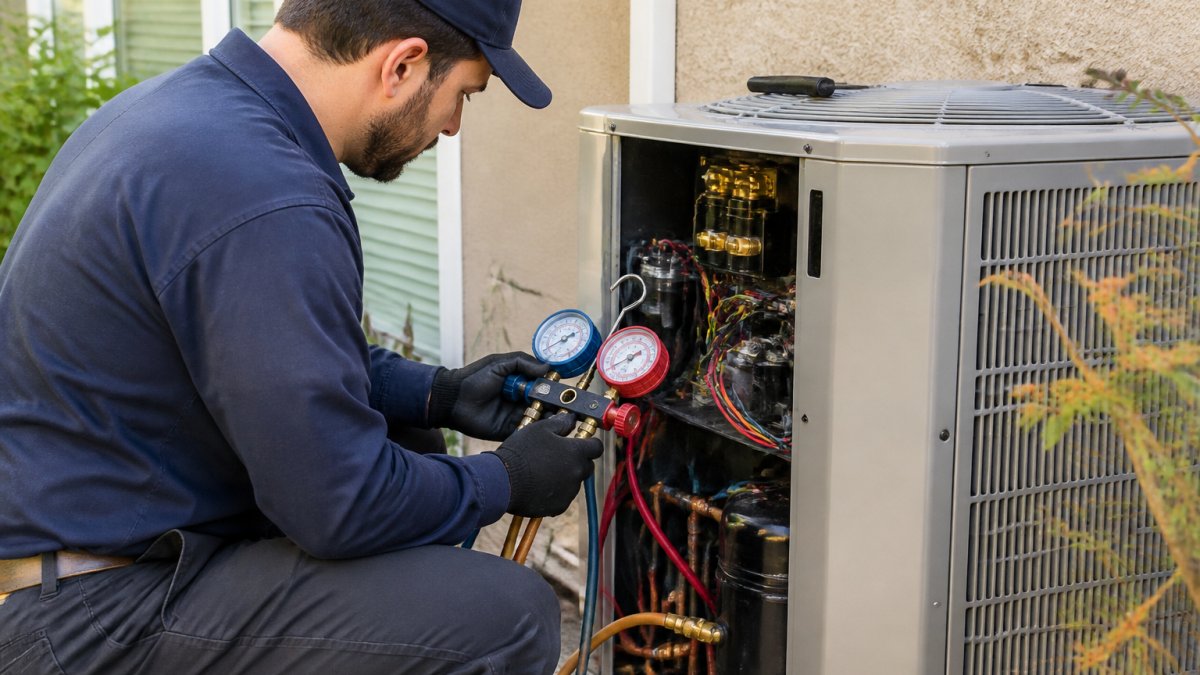
A standard pre-sale tune-up covers more than most sellers expect. Here's what to ask for:
- Fresh filters installed before showings begin
- Condenser and evaporator coils cleaned
- Refrigerant charge checked and documented
- Electrical connections tightened and tested
- Condensate drain line cleared
- Thermostat calibrated and tested in both modes
- Blower motor inspected and lubricated
- Written summary of findings
If you want to know exactly what a tune-up should include so you can hold a technician to it, our guide to what is included in a standard HVAC tune-up spells out each step.
Timing matters. Schedule the service at least two weeks before your first showing.
How System Age and Energy Efficiency Shape Buyer Appeal
System age does real work on buyer appeal.
Age is a common question from buyers' agents. They often ask for the install date early in the process.
Energy efficiency follows close behind.
Here's how the pieces connect:
| What Buyers See | What They Assume | Effect on Negotiation |
|---|---|---|
| System under 10 years old | Manageable risk | Fewer repair requests |
| System 15+ years old | Pending replacement | Credits requested |
| Recent service records | Cared-for home | More buyer confidence |
| No records at all | Unknown risk | Inspection scrutiny increases |
| High SEER rating | Lower utility bills | Stronger buyer appeal |
The pattern is clear. Buyers aren't paying for your maintenance history. They're using it to decide how hard to push.
Central air deserves its own note. In hot climates, a working central air system is not a bonus feature. It's a baseline expectation, and a failing one dominates the conversation.
Your HVAC Inspection for Home Sale: What Buyers and Inspectors Look For
An HVAC inspection for home sale is not a deep diagnostic. It's a visual and functional check that takes less time than most sellers expect.
What gets flagged most often:
- Dirty filters, which suggest deferred upkeep
- Rust or debris around the condenser
- Missing or damaged insulation on refrigerant lines
- A system that short-cycles or struggles to reach setpoint
- No visible service history
Most of these are cosmetic or documentation issues, good news, since they can be more affordable to address before an inspection than to explain after one.
The inspection report is where buyer confidence is won or lost. A clean HVAC section reads as a well-maintained home.
Repair or Replace HVAC Before Selling: A Seller's Decision Framework
This question is a common concern for sellers, but the answer depends on fewer variables than one might think.
Use this framework:
If the system is under 10 years old and the repair is minor: repair it. You'll recoup the cost in a smoother negotiation.
If the system is 15+ years old and needs a major component: replacement usually wins.
If the system is failing during the listing period: replace it. A system that dies mid-showing kills momentum.
If you're in a hot climate and the system is marginal: lean toward replacement. Cooling is not optional there.
For a fuller comparison of the trade-offs, our repair or replace HVAC guide walks through the decision step by step.
HVAC Service Records for Home Buyers: How to Document Your System
HVAC service records for home buyers are the cheapest value protection available to a seller. They cost nothing to compile and they change how buyers read the whole house.
Here's what to gather:
- Installation date and equipment model numbers from the data plate
- Every service invoice for the past three to five years
- Filter change log, even a handwritten one
- Warranty documents, transferable if possible
- Any repair receipts with the technician's notes
Put it in a folder, physical or digital, and leave it on the counter during showings. Mention it in the listing disclosure.
Why Records Work: The Evidence Mechanism
A buyer who sees records stops asking questions; a buyer who sees nothing imagines the worst. Records do three specific jobs during a sale.
They shorten the inspection conversation. An inspector who sees a recent tune-up report with a documented temperature split and a clean condensate line has less reason to flag the system.
They preempt the repair credit. Most HVAC credits are requested because a buyer's contractor found something the seller never mentioned.
They support the condition rating in an appraisal. An appraiser's condition rating reflects the overall upkeep of the home.
How to Organize and Present the File
A practical system sellers can assemble:
- Start with a one-page summary. List the equipment make, model, install date, and the date of the most recent service. Put it on top.
- Order invoices newest to oldest. Staple the technician's findings page to each invoice if they were separate.
- Include the filter log. A handwritten calendar note is fine. It shows cadence, which is what buyers are really reading for.
- Add warranty paperwork and transferability terms. If the warranty transfers, say so explicitly in the listing.
- Note any repairs with dates and parts. A documented capacitor replacement is a selling point, not an admission.
- Keep a digital copy. Scan or photograph everything and be ready to email a PDF to a buyer's agent on request.
A common mistake is treating maintenance as a private matter. In a sale, it's evidence. A clean file tells the buyer, in their own language, that the home was cared for, worth more at the closing table than any single tune-up.
Book a Pre-Sale HVAC Tune-Up With Air CareSaver
The gap between a smooth closing and a tense negotiation often comes down to one afternoon of preventive work.
If you're listing a home in the San Gabriel Valley and want the HVAC side handled before it becomes a bargaining chip, Air CareSaver can help. We're family-owned, licensed (#1054832), and we've been doing this for over 21 years.
Here's what you get:
- Same-day response when timing is tight
- Free estimates so there are no surprises
- Accurate diagnostics without unnecessary parts or guesswork
- Honest recommendations on repair versus replacement
We also handle HVAC replacement in Walnut when repair no longer makes sense, and we'll tell you plainly which side of that line you're on.
Get started with Air CareSaver and walk into your inspection with a system that holds up.
Frequently Asked Questions
Does regular HVAC maintenance increase home resale value?
Not directly. Routine HVAC maintenance keeps a system running at its rated efficiency and lowers the chance of a breakdown during inspection, but it does not add a measurable dollar amount to an appraisal the way a new system might. What it does do is protect the value you already have by preventing a failed inspection, a repair concession, or a buyer walking away. Think of it as risk reduction, not appreciation.
Will a new HVAC system increase appraisal value?
An appraiser compares your home to similar homes nearby, so a new system usually brings your property up to the condition of comparable homes rather than pushing it above them. Some sources suggest potential gains for new installations, but these figures can vary widely and are often marketing estimates rather than measured sale-price effects. A recently serviced system with clean records is what supports the condition rating.
What HVAC issues can reduce a home's resale value?
A system past its expected lifespan, refrigerant leaks, a failed compressor, rusty drain pans, or a unit that cannot hold a temperature split during inspection all give buyers negotiating leverage. Missing service records make it worse because the buyer assumes the worst. In a hot market, an aging system in a home priced for a new one can trigger repair credits or a price reduction at the negotiating table.
Should I repair or replace my HVAC before selling?
Repair when the system is under roughly 10 years old, the fix is a single component, and it will pass inspection afterward. Replace when the unit is near the end of its lifespan, needs a compressor or evaporator coil, or uses refrigerant that is being phased out. Get a written diagnosis first so you are deciding on the actual fault, not a sales pitch. A free estimate makes that comparison easier.