 ultimate-guide
Is HVAC Preventative Maintenance Worth It?
Table of Contents
- What HVAC Preventative Maintenance Actually Covers
- The Real Benefits: Energy Bills, Lifespan, and Fewer Emergencies
- Average Cost of HVAC Tune-Up: Is the Price Justified?
- HVAC Maintenance Checklist: What Technicians Should Inspect
- How Often to Change HVAC Filters (and Why It Matters)
- Age, Warranties, and When HVAC Preventative Maintenance Pays Off Most
- Signs Your System Needs Attention Right Now
- Frequently Asked Questions
Last Updated: August 14, 2026
What HVAC Preventative Maintenance Actually Covers
HVAC preventative maintenance is a scheduled service program that addresses wear and tear before it becomes a breakdown, keeping your heating and cooling system running efficiently year-round. Most homeowners don't think about their system until it stops working, usually during the hottest week of August or the coldest night of January. That reactive approach consistently costs more than the alternative.
At Air CareSaver, we've spent over 21 years diagnosing systems that could have been saved with a simple annual inspection. The pattern repeats: a skipped tune-up leads to a clogged coil, a clogged coil strains the compressor, and suddenly a $150 service call turns into a $1,800 repair.
Understanding what preventative maintenance actually covers is the first step to deciding whether it's worth the investment for your home or business.
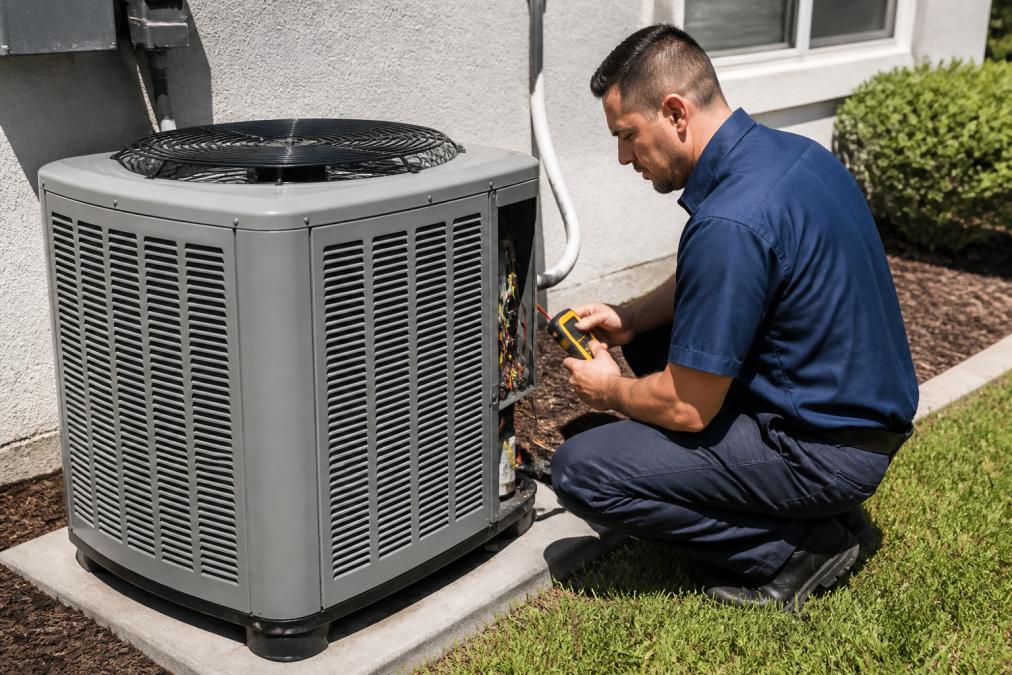
What a Standard Tune-Up Includes
A professional tune-up is more than a filter swap. A thorough visit typically covers:
- Checking and adjusting refrigerant levels
- Cleaning condenser coils and evaporator coils
- Inspecting and lubricating moving parts to reduce friction
- Testing thermostat calibration and accuracy
- Inspecting electrical connections and capacitors
- Measuring airflow across the air handler
- Checking the condensate drain for blockages
- Evaluating overall system performance under load
Each of these tasks directly affects energy consumption, indoor air quality, and the operational reliability of your system. Skipping any of them is how small problems become expensive ones.
Maintenance Plans vs. One-Time Service Visits
A one-time service visit addresses your system today. A maintenance contract, sometimes called a service plan or service agreement, schedules those visits automatically, often at a discount, and typically includes priority scheduling.
The practical difference matters. With a service plan, your seasonal inspection happens before peak demand season, not during it. One-time visits, while useful, often get booked reactively. For homeowners who want consistent system performance without managing the calendar themselves, a maintenance plan removes the friction.
The Real Benefits: Energy Bills, Lifespan, and Fewer Emergencies
The case for regular HVAC maintenance isn't philosophical, it comes down to three measurable outcomes: lower utility bills, longer equipment life, and fewer emergency repair calls.
Energy Efficiency and Utility Bill Savings
A dirty or poorly calibrated system works harder than it needs to. Condenser coils coated in debris transfer heat less efficiently. A miscalibrated thermostat runs cycles longer than necessary. Low refrigerant levels force the compressor to compensate. Each of these issues increases energy consumption, and those costs appear on your utility bill every month.
According to the U.S. Department of Energy's guidance on HVAC efficiency, regular maintenance can meaningfully reduce a system's energy consumption compared to a neglected unit. The department specifically identifies air filter replacement and coil cleaning as high-impact maintenance tasks.
The thing nobody tells you: the efficiency loss from a dirty system builds gradually. You won't notice it month to month, but the cumulative cost over a year can be substantial.
Extending Equipment Lifespan
Most residential HVAC systems are rated for 15 to 20 years under normal operating conditions. "Normal" means properly maintained. A system that runs with dirty coils, low refrigerant, or worn components operates under chronic stress. That stress shortens the compressor's life, accelerates wear on the blower motor, and degrades electrical components faster than the manufacturer's design accounts for.
Lifespan extension is where the ROI on preventative care becomes clearest. Replacing a full system costs far more than years of maintenance visits. Every additional year you get from a well-maintained system is a year you're not financing a replacement.
Average Cost of HVAC Tune-Up: Is the Price Justified?
The average cost of an HVAC tune-up varies based on your system type, the scope of the inspection, and your service provider. For accurate pricing specific to your equipment and situation, contact a licensed technician directly, Air CareSaver offers free estimates, so you can get a real number without a commitment.
What's worth understanding is the cost structure: a tune-up is a preventative measure. You're paying a known, manageable amount to avoid unknown, potentially large repair costs.
ROI Framework: Maintenance Cost vs. Repair and Replacement Cost
Here's a practical way to think about the return on maintenance spending:
| Scenario | Likely Outcome | Relative Cost |
|---|---|---|
| Annual tune-up, no issues found | System runs efficiently all season | Low (scheduled cost) |
| Annual tune-up catches failing capacitor | Capacitor replaced during visit | Low-moderate (parts + labor) |
| No maintenance, capacitor fails mid-summer | Compressor overheats, possible damage | High (repair or replacement) |
| No maintenance for 3+ years | Compressor failure, full system replacement | Very high |
| Maintained system reaches year 18 | Extended lifespan, delayed replacement | Net positive over time |
The framework is straightforward: maintenance costs are predictable and bounded. Repair costs, especially for compressor or heat exchanger failures, are not. Emergency repairs also carry premium labor rates that scheduled visits don't.
HVAC Maintenance Checklist: What Technicians Should Inspect
A thorough HVAC maintenance checklist covers both the mechanical and electrical systems. When evaluating a service provider, this list is your baseline for what a professional inspection should include.
Cooling System Inspection:
- Clean or replace air filter
- Inspect and clean condenser coils
- Check refrigerant levels and inspect for leaks
- Test capacitors and contactors
- Inspect blower motor and belt condition
- Clear condensate drain line
- Measure supply and return air temperatures
Heating System Inspection:
- Inspect heat exchanger for cracks or corrosion
- Test igniter and flame sensor
- Check gas pressure and burner operation
- Inspect flue and venting for blockages
- Test safety controls and limit switches
- Verify carbon monoxide levels in flue gas
System-Wide Checks:
- Calibrate thermostat
- Inspect ductwork for visible leaks or damage
- Test all electrical connections and tighten loose terminals
- Measure system operating pressures
- Document system performance for year-over-year comparison
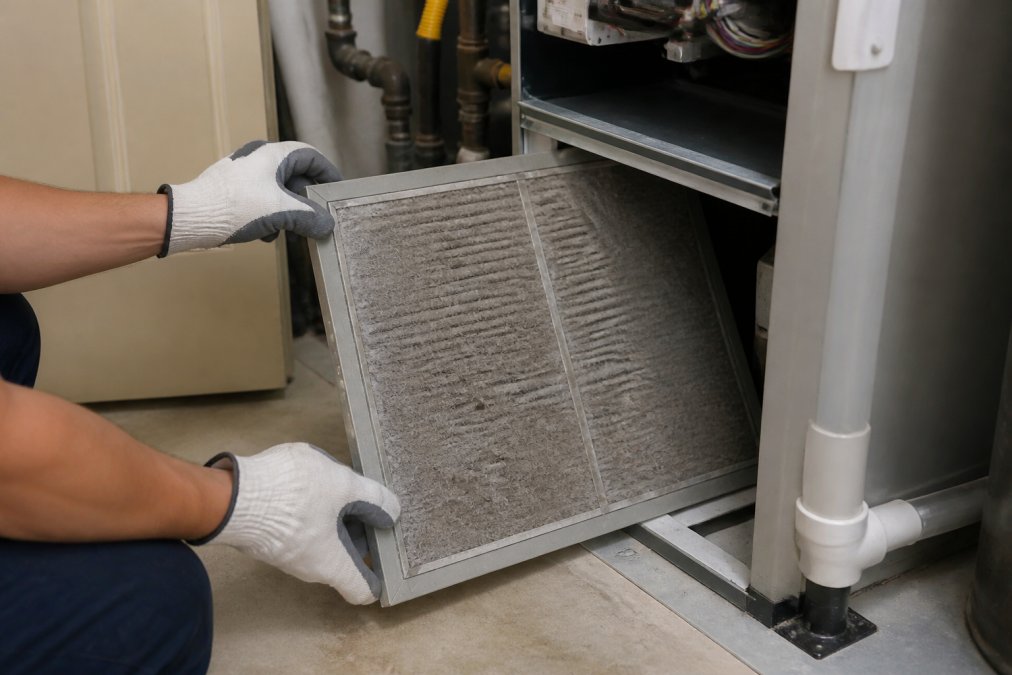
A provider who skips more than a few of these items isn't delivering a real tune-up. Ask for a written inspection report after every visit, any reputable technician will provide one.
How Often to Change HVAC Filters (and Why It Matters)
How often to change HVAC filters depends on the filter type, the household, and how hard the system runs. As a general guide:
- Standard 1-inch filters: Every 30-60 days
- Thicker 4-5 inch media filters: Every 6-12 months
- Homes with pets or allergy sufferers: More frequently, regardless of filter type
- Vacation properties or low-occupancy spaces: Every 3-6 months minimum
The EPA's guidance on indoor air quality and HVAC filtration identifies clogged air filters as a leading contributor to poor indoor air quality and reduced system performance. A restricted filter forces the blower motor to work harder, reduces airflow across the evaporator coil, and can cause the coil to ice over.
Most homeowners change filters too infrequently. The common mistake is treating filter replacement as an annual task when it's actually a monthly or bimonthly one for most households. A clogged filter is one of the few maintenance failures you can cause yourself without touching anything else on the system.
Age, Warranties, and When HVAC Preventative Maintenance Pays Off Most
Not every system has the same maintenance calculus. Age and warranty status change the equation significantly, and most guides skip this entirely.
Older Systems: Repair, Maintain, or Replace?
A system that's 10 years or older benefits most from consistent preventative maintenance, but also requires a more honest evaluation. For systems in the 10-15 year range, maintenance extends useful life and defers replacement costs. For systems past 15-18 years, the calculation shifts.
The practical test: if a repair costs more than half the value of a new system, replacement usually makes more financial sense. If the system is otherwise running well and the repair is minor, maintenance still wins. The key is getting an accurate diagnostic, not a sales pitch.
Many homeowners with older homes ask the right question: "Is it worth fixing at this point?" The honest answer depends on the specific failure, the system's overall condition, and the cost of replacement. A licensed technician who gives you a straight answer without pushing an unnecessary upgrade is worth finding and keeping.
Warranty Implications You Cannot Ignore
This is the angle most service providers don't emphasize: skipping preventative maintenance can void your manufacturer warranty.
Most HVAC manufacturers require documented annual maintenance as a condition of their warranty coverage. According to guidance on HVAC warranty requirements from the Air Conditioning Contractors of America, failure to maintain a system per manufacturer specifications is one of the most common grounds for warranty claim denial. If your compressor fails at year four and you have no maintenance records, the manufacturer may decline the claim.
The implication is direct: a maintenance plan doesn't just protect your equipment, it protects your warranty coverage. That's a financial backstop worth preserving.
Signs Your System Needs Attention Right Now
Preventative maintenance works best when it's truly preventative. But some signs indicate your system needs attention before the next scheduled visit.
Act quickly if you notice:
- Unusual noises: grinding, squealing, or banging from the air handler or outdoor unit
- Weak or uneven airflow from supply vents
- Ice forming on the refrigerant lines or outdoor unit
- Utility bills spiking without a change in usage patterns
- The system short-cycling (turning on and off rapidly)
- Warm air from a cooling system or cool air from a heating system
- Visible moisture or water pooling around the indoor unit
- A burning smell or persistent musty odor from vents
Any of these symptoms points to a condition that will worsen under continued operation. Running a struggling system doesn't just risk further damage, it increases energy consumption while delivering less comfort.
The Air CareSaver team responds same-day to service calls for exactly these situations. With 270+ reviews and a 4.9 Google Rating, the record speaks for itself: fast diagnostics, honest assessments, and no unnecessary upsells.
Deferred maintenance is the most expensive HVAC decision most homeowners make without realizing it. A system that runs without regular service loses efficiency, accumulates wear, and eventually fails at the worst possible time. Air CareSaver provides scheduled preventative maintenance backed by 21 years of licensed experience, accurate diagnostics, and free estimates, so you know exactly what your system needs before it becomes an emergency. Get My Free Quote and keep your system running the way it was designed to.
Frequently Asked Questions
Is HVAC maintenance really necessary if my system seems to be running fine?
A system that appears to run fine can still have dirty condenser coils, low refrigerant levels, or a poorly calibrated thermostat quietly driving up your utility bills and accelerating wear and tear. HVAC preventative maintenance catches those issues before they become emergency repairs. Most system failures don't announce themselves in advance, they show up as a breakdown on the hottest day of the year. Routine seasonal inspections are the most reliable way to avoid that outcome.
How often should you do preventative maintenance on an HVAC system?
Most HVAC technicians recommend two service visits per year: one in spring before cooling season and one in fall before heating season. Each visit covers the components most stressed by that season, the compressor and condenser coils in summer, the heat exchanger and burners in winter. Older systems and those running in dusty or high-use environments may benefit from more frequent inspections. Annual check-ups at minimum are standard for keeping a manufacturer warranty valid.
Are HVAC maintenance agreements worth the cost?
A maintenance contract typically covers scheduled tune-ups, priority scheduling, and sometimes discounts on parts or labor. For homeowners who want predictable service costs and don't want to remember to book seasonal inspections, a service plan offers real convenience. The cost-effectiveness depends on your system's age, how often it has needed repairs, and what the agreement actually covers. Review what's included carefully, a plan that covers only the visit fee but not parts has limited value compared to one with broader coverage.
What does a standard HVAC tune-up include?
A standard tune-up covers air filter replacement or inspection, thermostat calibration, checking refrigerant levels, cleaning condenser coils, inspecting electrical connections, lubricating moving parts, and testing overall system performance. A thorough technician will also check the compressor, measure airflow, and note any HVAC components showing early signs of failure. The goal is to confirm the system is operating safely and efficiently, not just that it turns on. Ask for a written HVAC maintenance checklist so you know exactly what was done.
This article was written using GrandRanker