 how-to
What Is Included in a Standard HVAC Tune-Up?
Table of Contents
- What Is Included in a Standard HVAC Tune-Up?
- The Core Tasks Every Tune-Up Covers
- The Complete HVAC Maintenance Checklist
- Benefits of Annual HVAC Maintenance
- How Long Does an HVAC Tune-Up Take?
- Average Cost of an HVAC Tune-Up
- DIY vs. Professional Maintenance
- Seasonal Differences: Spring vs. Fall Tune-Ups
- Warranty Implications of Skipping Tune-Ups
- Frequently Asked Questions
Last Updated: September 24, 2026
What Is Included in a Standard HVAC Tune-Up?
A standard HVAC tune-up is a scheduled service visit where a technician inspects, cleans, and tests your heating and cooling system to keep it running safely and efficiently. At Air CareSaver, we've performed these visits for more than 21 years, and the same core tasks show up every time.
The Core Tasks Every Tune-Up Covers
Every reputable tune-up follows a similar structure, whether it's a furnace or a heat pump. The technician works through three phases: inspect, clean, and test.
Here's what that looks like in practice:
- Visual inspection of all major components, wiring, and connections
- Cleaning of coils, drains, and filters to restore airflow
- Testing of electrical parts, refrigerant charge, and temperature output
- Lubrication of moving parts like the blower motor and fan bearings
The Complete HVAC Maintenance Checklist
A full HVAC maintenance checklist splits into two halves: the indoor unit and the outdoor unit. Both need attention, and skipping either one shortens the life of your system.
Indoor Unit Inspection
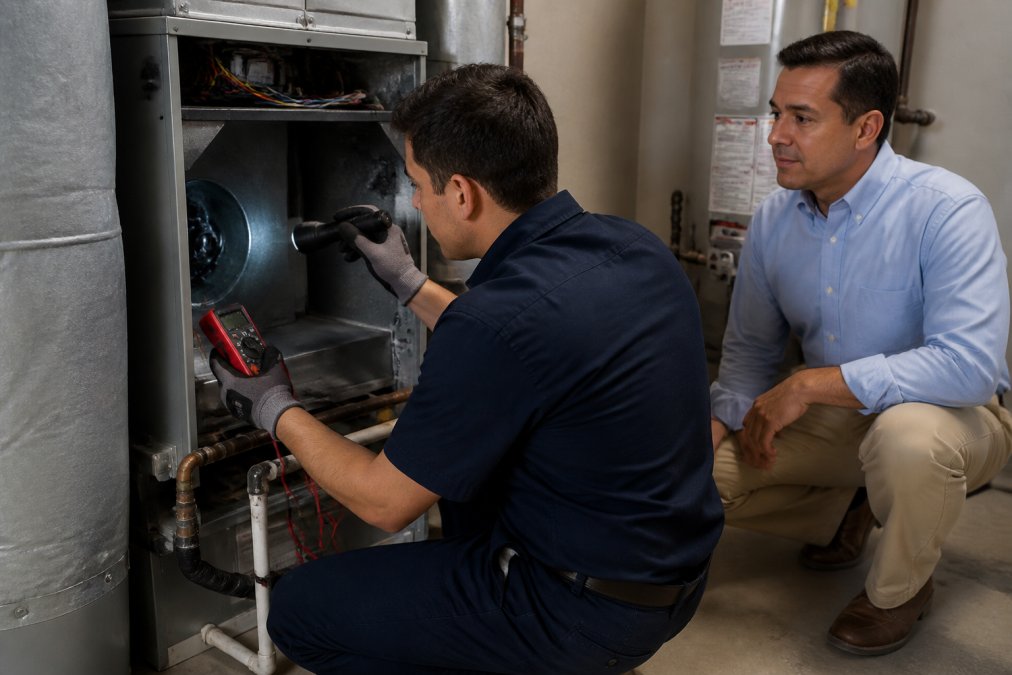
The indoor air handler is where airflow starts, so it gets the most attention. A technician will:
- Inspect and replace the air filter if it's dirty
- Clean the evaporator coil and check for buildup
- Flush the condensate drain line to prevent clogs
- Test the blower motor and lubricate moving parts
- Check electrical connections for tightness and wear
- Test the capacitor and measure voltage and amperage
- Calibrate the thermostat for accurate readings
Outdoor Unit Inspection
The outdoor condenser coil takes a beating from dirt, leaves, and pollen. The technician will:
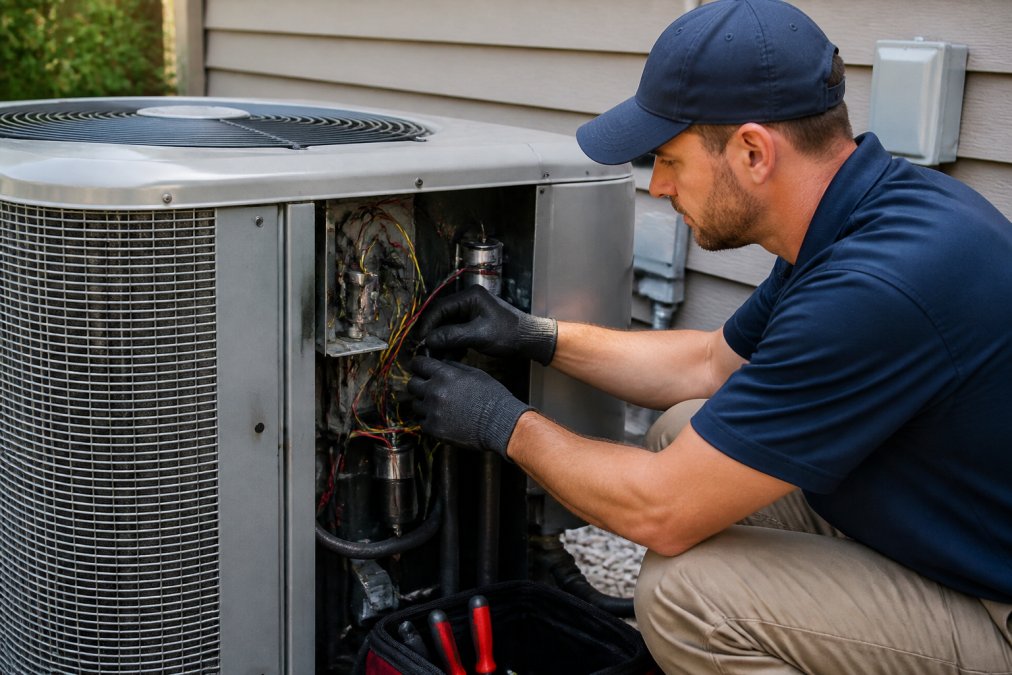
- Clean the condenser coil and clear debris from the cabinet
- Check the refrigerant charge and look for leaks
- Test the compressor and capacitor
- Inspect the fan belt and motor
- Measure the temperature split between supply and return air
- Confirm the disconnect and safety switches work
Benefits of Annual HVAC Maintenance
Regular maintenance pays you back in three ways: lower bills, fewer breakdowns, and a longer-lasting system. Many homeowners find that annual visits cost far less than a single mid-summer repair.
Here's what consistent preventative care delivers:
- Better system efficiency as coils and filters stay clean
- Fewer emergency calls because weak parts get replaced early
- Longer system longevity since moving parts stay lubricated
- Safer operation through electrical and safety inspections
- Valid warranties that require documented service
Energy Efficiency ROI
A well-maintained system uses less energy to hit the same temperature. When airflow is restricted or the refrigerant charge is off, the compressor runs longer and pulls more power.
The biggest gains come from simple fixes:
- Clean filters and coils restore airflow
- Correct refrigerant charge lowers compressor strain
- A calibrated thermostat stops short cycling
- Sealed ductwork stops conditioned air from leaking
How Long Does an HVAC Tune-Up Take?
A standard HVAC tune-up takes about 60 to 90 minutes for a single system. Larger homes, dual-system setups, or systems that haven't been serviced in years can take longer.
Here's a rough breakdown:
| Task | Time |
|---|---|
| Filter check and replacement | 5-10 minutes |
| Indoor unit inspection and cleaning | 20-30 minutes |
| Outdoor unit inspection and cleaning | 20-30 minutes |
| Testing and calibration | 15-20 minutes |
| Walkthrough and report | 5-10 minutes |
Average Cost of an HVAC Tune-Up
Pricing for an HVAC tune-up depends on several factors, including the type and number of systems, their age and condition, and any additional services required. For current pricing and a personalized estimate, please contact us for a free quote.
Here's how the pricing typically breaks down:
| Service Type | Typical Price Range |
|---|---|
| Single-system tune-up (one-time) | $75-$200 |
| Two-system tune-up (one-time) | $150-$350 |
| Annual service plan (one system, two visits) | $150-$300 per year |
| Annual service plan (two systems, two visits) | $250-$500 per year |
| Refrigerant top-off (R-410A, per pound) | $50-$150 |
| Ductwork inspection add-on | $75-$250 |
What Actually Moves the Price
- System type: Heat pumps and dual-fuel systems take longer to test than a straight AC or furnace because the technician has to verify both heating and cooling modes.
- Number of systems: A two-story home with separate upstairs and downstairs units doubles the labor.
- System age and condition: A unit that hasn't been serviced in three years may need coil cleaning, a new capacitor, or a condensate line flush, each adds time and parts.
- Refrigerant type: R-22 systems (pre-2010) cost far more to service than R-410A because R-22 is phased out under the Clean Air Act and supplies are limited.
- Region and season:
- Add-ons: Duct leakage testing, blower door testing, and combustion analysis on gas furnaces are separate line items.
How to Read a Quote
A trustworthy quote lists the tasks included, the parts (if any), and the labor separately. Watch for these patterns:
- A flat "tune-up" price with no task list usually means a 20-minute filter swap and nothing else.
- Quotes that bundle a "free" tune-up with a repair estimate often inflate the repair to cover the visit.
- Refrigerant is priced per pound, ask for the per-pound rate and the amount added before authorizing the work.
DIY vs. Professional Maintenance
Some tasks are safe for homeowners. Others are not. Knowing the line keeps you safe, protects your warranty, and, in the case of refrigerant, keeps you on the right side of federal law.
What You Can Safely Do Yourself
These tasks require no special tools, no license, and won't affect your manufacturer's warranty as long as you don't damage anything in the process:
- Replace the air filter every 1-3 months. This is the single highest-impact DIY task. A clogged filter restricts airflow, raises compressor strain, and can freeze the evaporator coil.
- Clear debris from around the outdoor unit. Keep at least 2 feet of clearance on all sides. Leaves, grass clippings, and shrubs choke the condenser coil.
- Keep vents and returns unblocked. Furniture, rugs, and curtains over registers force the blower to work harder.
- Wipe down the outdoor cabinet and rinse the coil fins with a garden hose (power off at the disconnect first).
- Check the condensate drain pan for standing water and clear visible algae with a shop vac.
- Replace the thermostat batteries annually and confirm the schedule matches your routine.
What Requires a Licensed Technician
The following tasks involve refrigerant, high-voltage electrical components, or the sealed system. Attempting them yourself is dangerous and, in several cases, illegal:
- Handling refrigerant. Under Section 608 of the Clean Air Act, anyone who services, maintains, or disposes of equipment containing regulated refrigerants must hold an EPA Section 608 certification. Venting refrigerant to the atmosphere is a federal violation with fines that can reach tens of thousands of dollars per day.
- Testing capacitors and electrical connections. Capacitors hold a lethal charge even after power is cut. Technicians discharge them safely and test with a multimeter.
- Cleaning the evaporator coil. This requires opening the air handler, which exposes you to sharp fins and live wiring.
- Checking compressor amp draw and refrigerant charge. Both require gauges and meters that cost more than the service call.
- Any work on the sealed system, brazing, evacuating, or recharging, is off-limits without certification and specialized equipment.
- Combustion analysis on gas furnaces. Measuring flue gas CO levels and verifying the heat exchanger requires a calibrated analyzer and training to interpret the results.
How DIY Work Affects Your Warranty
This is where most homeowners get surprised. Under the Magnuson-Moss Warranty Act, a manufacturer cannot void your warranty simply because you performed your own maintenance. But the manufacturer can deny a claim if it can show your work caused the failure.
In practice, that means:
- Changing your own filter is safe. If the compressor fails from a refrigerant leak, the filter change is irrelevant.
- Cleaning the outdoor coil with a hose is safe. If you bend the fins or short the fan motor, that repair is on you.
- Opening the sealed system or adding refrigerant without certification is not safe. If the compressor fails afterward, the manufacturer will almost certainly deny the claim.
Seasonal Differences: Spring vs. Fall Tune-Ups
Spring and fall tune-ups aren't the same visit. Each season puts different demands on your system, so the focus shifts.
Spring tune-up (cooling focus):
- Clean the condenser coil before heavy AC use
- Check refrigerant charge for summer load
- Test the capacitor under heat stress
- Flush the condensate drain before humidity rises
Fall tune-up (heating focus):
- Inspect the furnace heat exchanger for cracks
- Test the ignition system and safety switches
- Check the blower motor for winter load
- Confirm the thermostat switches to heat mode correctly
Warranty Implications of Skipping Tune-Ups
Skipping tune-ups can void your manufacturer's warranty. Most major brands require documented annual maintenance, and if you file a claim without service records, they can deny it.
Here's what that means in plain terms:
- Keep receipts and service reports from every visit
- Note the date, technician name, and tasks performed
- Store records where you can find them fast
- Ask for a written summary after each tune-up
Frequently Asked Questions
How often should you schedule an HVAC tune-up?
Schedule a tune-up once a year for each system. If you have separate heating and cooling equipment, book one in spring for the AC and one in fall for the furnace. Homes with heavy use, pets, or dusty conditions may benefit from a second visit. Regular tune-ups keep your system running efficiently and help you avoid surprise breakdowns during peak season.
Are HVAC tune-ups actually worth the investment?
Yes. A tune-up costs far less than a major repair or early system replacement. It restores lost efficiency, extends equipment life, and catches small issues like a weak capacitor or dirty condenser coil before they cause a breakdown. Many manufacturers also require annual maintenance to keep your warranty valid, so skipping it can cost you coverage on expensive parts.
What is the difference between an HVAC tune-up and a repair?
A tune-up is preventive maintenance: cleaning, inspecting, testing, and adjusting components that are still working. A repair fixes a specific failure, like a bad compressor or a refrigerant leak. Tune-ups reduce the chance you will need repairs, but they cannot fix a part that has already failed. If your system is not heating or cooling, you need a diagnostic visit, not a standard tune-up.
Can I do an HVAC tune-up myself?
You can handle simple tasks like replacing the air filter, clearing debris around the outdoor unit, and keeping vents open. But tasks like checking refrigerant charge, testing capacitors, measuring voltage and amperage, and cleaning the evaporator coil require licensed tools and training. Attempting them yourself can void your warranty or risk injury. A professional tune-up covers the full checklist safely and thoroughly.
Your HVAC system works hardest when you need it most, and that's exactly when a breakdown hurts. Air CareSaver helps homeowners and businesses across the San Gabriel Valley avoid that with licensed, same-day service and free estimates. Our preventative maintenance plans use accurate diagnostics to catch problems early, improve energy efficiency, and extend the life of your system. Get started with Air CareSaver and keep your home comfortable year-round.