 how-to
How to Improve Furnace Energy Efficiency: 7 Proven Steps
Last Updated: October 23, 2026
Quick Summary
Improve furnace energy efficiency by changing the filter every 1 to 3 months, scheduling annual professional service, and using 7-10°F thermostat setbacks for 8 hours a day. Sealing air leaks and ducts also cuts heat loss so the furnace runs less.
- Most homes need a new furnace filter every 1 to 3 months.
- ENERGY STAR recommends tuning up heating equipment once a year.
- A 7-10°F setback for eight hours saves roughly 5-15% on heating costs.
- Sealing and insulating ducts can improve system efficiency by up to 20%.
- If two or more replacement checklist boxes are checked, replacement usually wins.
Table of Contents
- Start With the Furnace Filter: The Cheapest Efficiency Win
- Furnace Maintenance Tips That Actually Lower Heating Costs
- Tune Your Thermostat Settings and Setbacks
- Seal Air Leaks and Improve Insulation to Stop Heat Loss
- Address Duct Leakage and Distribution Losses
- High-Efficiency Furnace Benefits: When an Upgrade Pays Off
- Furnace Repair or Replacement: How to Decide
- Frequently Asked Questions
Start With the Furnace Filter: The Cheapest Efficiency Win
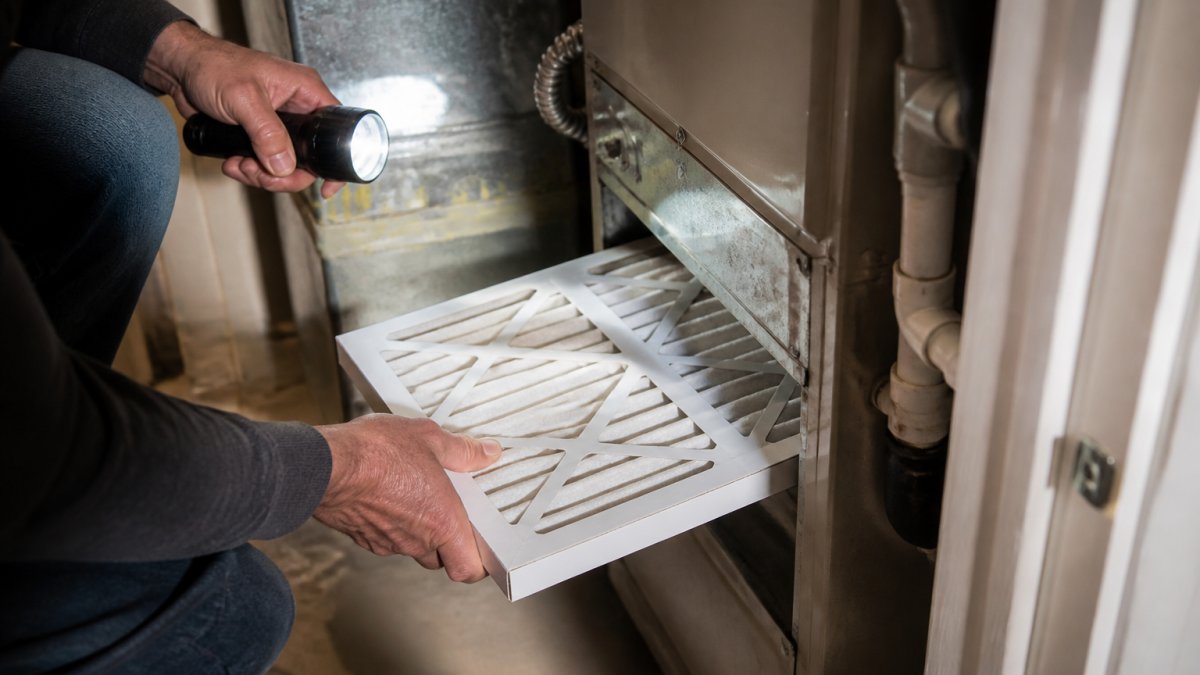
A clogged furnace filter is the most common threat to furnace energy efficiency we see in San Gabriel Valley homes. According to ENERGY STAR's heating and cooling guidance, changing air filters regularly is one of the core steps to cut home energy use. A dirty filter chokes airflow, so the blower runs longer and burns more fuel for the same warmth. At Air CareSaver, we treat filter checks as the first move in any furnace energy efficiency plan. It costs the least and often delivers the fastest result.
How Often to Change Your Filter
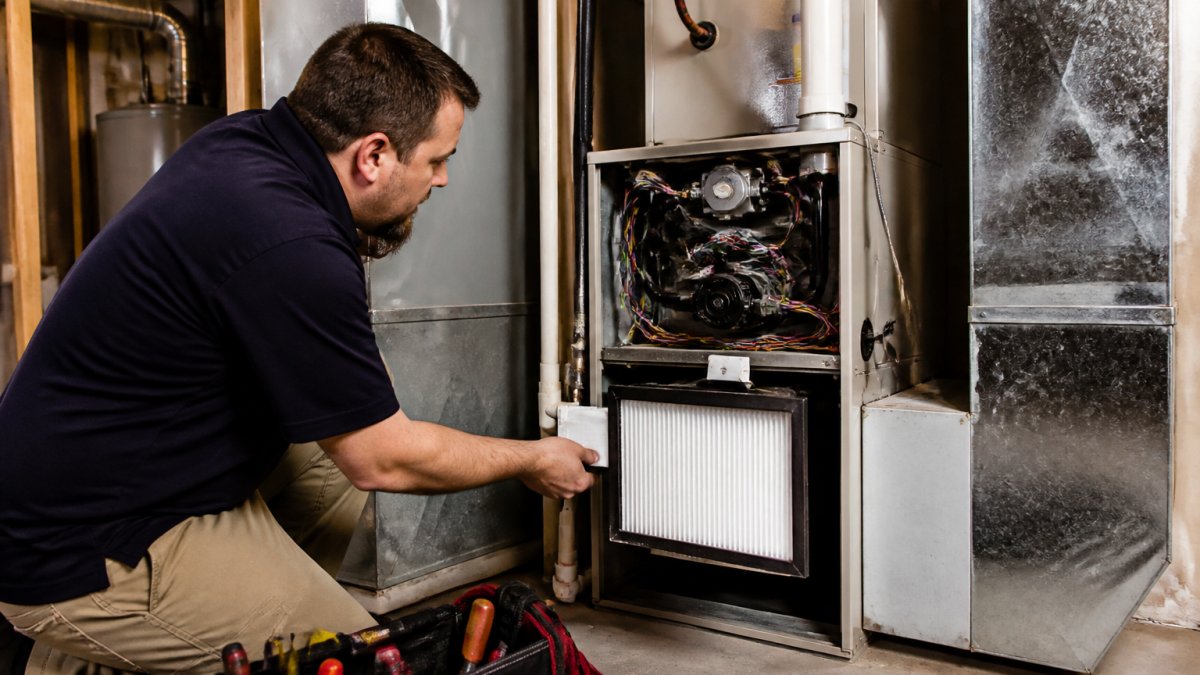
Most homes need a new filter every 1 to 3 months. Check it monthly and replace it sooner if it looks gray or matted. Homes with pets or heavy dust need more frequent swaps.
Signs of a Dirty Filter
- The filter looks dark or coated in lint
- Rooms feel cold while the furnace runs nonstop
- Dust settles on vents within days of cleaning
- The blower sounds louder or strained
If you want a step-by-step walkthrough, our guide on how to clean HVAC air filters properly covers cleaning and replacement in plain terms.
Furnace Maintenance Tips That Actually Lower Heating Costs
Annual service keeps a furnace running near its rated efficiency. ENERGY STAR recommends tuning up heating equipment once a year, and we agree: a neglected furnace loses efficiency quietly, long before it fails. Here are the furnace maintenance tips that deliver real savings:
- Replace the filter on schedule
- Keep the blower and burners clean and free of dust
- Clear the area around the furnace and vents
- Schedule a professional inspection each fall
- Watch for odd smells, sounds, or short cycling
What Homeowners Can Safely Do Themselves
You can change filters, clear vents, and wipe down exterior surfaces. You can also check that the furnace switch and breaker are on.
What Requires a Licensed Technician
Leave gas lines, the heat exchanger, burners, and electrical components to a pro. Carbon monoxide risks are real. Our technicians are licensed (#1054832) and can inspect safely. If you want to know what a visit covers, see what is included in a standard HVAC tune-up.
Tune Your Thermostat Settings and Setbacks
Thermostat setbacks are the cheapest efficiency measure that does not touch the furnace at all: you lower the setpoint when the house is empty or everyone is asleep, and the furnace simply runs fewer cycles. The savings come from the temperature difference between indoors and outdoors, a smaller gap means less heat escaping and less fuel burned to replace it.
Setback Numbers That Actually Work
A common starting pattern is 7-10°F lower for 8 hours a day, typically overnight and while the house is empty. Most practitioners find that a 7-10°F setback for eight hours saves roughly 5-15% on heating costs, with the larger end of that range in colder climates and leakier homes. The exact number depends on your climate, insulation, and how long the house stays empty.
- Overnight: 62-65°F while sleeping, back to 68-70°F in the morning
- Workday: 60-64°F while the house is empty, back to comfort level 30 minutes before return
- Vacation: 55°F minimum to protect pipes, not lower
Do not set back so far or for so short a period that the furnace has to run continuously to recover. A heat pump or a cold-climate home may recover more slowly than a gas furnace, so a shorter setback window can erase the savings.
How Setbacks Interact With Your System
- Gas furnace: recovers quickly; longer setbacks are usually worthwhile.
- Electric resistance furnace: every degree of setback saves proportionally, but recovery is slow and expensive, keep setbacks moderate.
- Heat pump: small, steady setbacks (2-4°F) work better than deep ones; large drops can trigger inefficient auxiliary heat.
Smart Thermostats: What to Look For
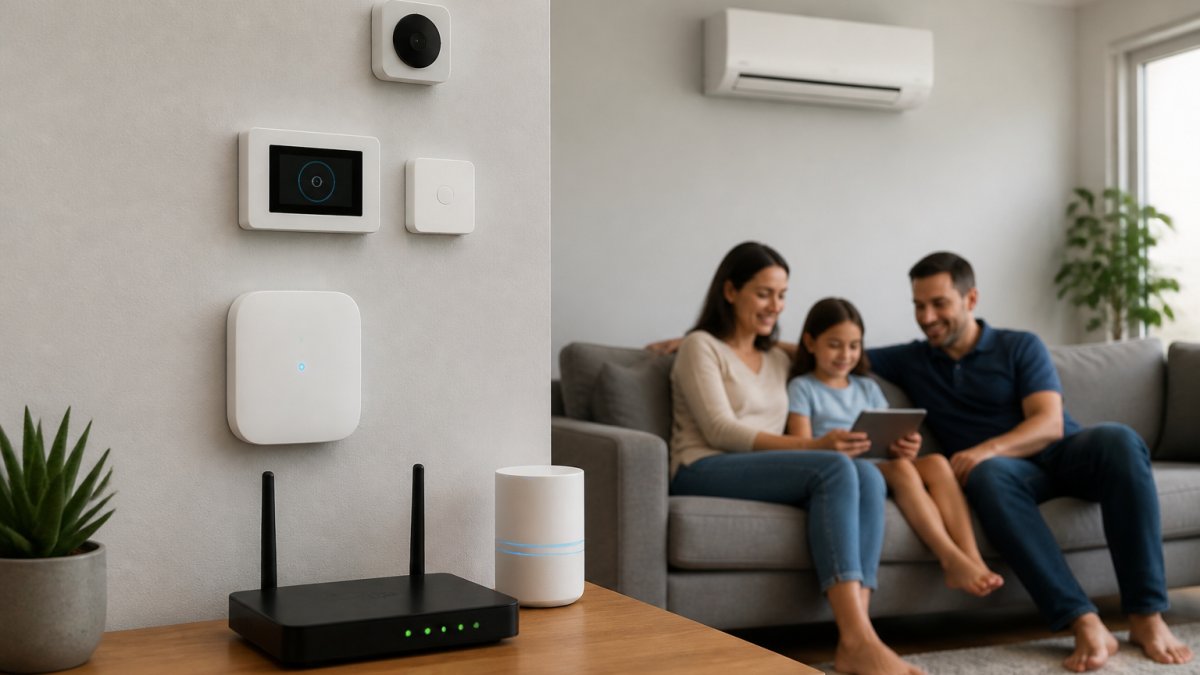
A smart thermostat automates schedules and can learn your patterns, but the features that matter for furnace efficiency are simple: a reliable schedule, geofencing (so the house is not heated while empty), and a display of runtime hours. Runtime is the number to watch, if heating hours climb without colder weather, something else in this guide needs attention. Our guide to the best smart thermostat features for homeowners explains which settings actually save money.
Seal Air Leaks and Improve Insulation to Stop Heat Loss
Heat loss through air leaks wastes money no matter how efficient the furnace is. Warm air escapes through gaps around windows, doors, and outlets, and cold air slips in to replace it. Weatherstripping and sealing gaps are cheap, fast fixes. Add insulation in the attic and rim joists to slow heat loss further. Together, these steps cut heating demand so the furnace runs less.
Address Duct Leakage and Distribution Losses
A furnace can run at rated efficiency and still waste a large share of its heat before that heat reaches a room. Ducts running through attics, crawlspaces, garages, and rim-joist cavities lose heat to unconditioned air and leak it through joints, seams, and disconnected sections. The research from CIM's HVAC efficiency guidance notes that sealing and insulating ducts can improve system efficiency by up to 20%, one of the largest single gains available, and one most tip lists skip entirely.
Where Duct Losses Hide
- Disconnected joints at plenums, boots, and register connections, often a visible gap
- Torn or crushed flex duct in attics and crawlspaces
- Unsealed seams in sheet-metal trunk lines
- Ducts routed through unconditioned space with little or no insulation
- Long, winding runs that lose heat before the air arrives
Homeowner Diagnostics You Can Do Safely
- The register temperature test. With the furnace running, measure supply air at a register near the furnace and at the farthest register. A large drop suggests duct loss.
- The visual walk-through. In the attic or crawlspace, look for separated joints, sagging flex duct, and ducts touching bare framing.
- The room-by-room check. Rooms that stay cold while others are warm often point to a distribution problem, not a furnace problem.
- The runtime pattern. Short cycling plus cold rooms can mean the furnace is heating air that never arrives.
What to Seal and What to Leave Alone
Homeowners can seal accessible joints with mastic or metal-backed tape (not cloth duct tape) and add insulation to exposed ducts in unconditioned spaces. Do not seal supply or return registers closed to "balance" a room, that raises static pressure and can damage the blower. Leave ductwork inside walls, combustion-air connections, and any duct near the flue to a licensed technician.
When to Call a Professional
A licensed technician can run a duct leakage test and a static-pressure measurement to quantify losses and confirm the blower is moving the air the system was designed for. If you see crushed duct, disconnected runs in inaccessible spaces, or a furnace that short cycles despite a clean filter, that is the point to schedule testing rather than guess.
High-Efficiency Furnace Benefits: When an Upgrade Pays Off
A high-efficiency furnace can cut fuel consumption sharply compared with an aging unit. Modern condensing models capture heat that older furnaces vent outside. The high-efficiency furnace benefits show up as lower operating costs and steadier warmth. Cold-climate homes gain the most. A Minnesota Center for Energy and Environment case study paired a heat pump with a 96%-efficient furnace to raise heating efficiency, which shows how equipment choice changes outcomes. Gas, electric, and heat-pump systems each upgrade differently, so match the choice to your setup. For cold-climate guidance, read how to choose a high-efficiency furnace.
Furnace Repair or Replacement: How to Decide
The furnace repair or replacement call comes down to age, repair cost, and efficiency. Fix the furnace when the repair is minor and the unit is young. Replace it when repairs pile up or the heat exchanger fails. A cracked heat exchanger is a safety concern and often means replacement. Use this checklist:
- Is the furnace over 15 years old?
- Do repairs cost more than half a new unit?
- Has efficiency dropped year after year?
- Are carbon monoxide warnings present?
If two or more boxes are checked, replacement usually wins. For a full cost comparison, see our furnace repair vs replacement cost analysis.
| Situation | Best Move | Why |
|---|---|---|
| Under 10 years, small fix | Repair | Cheaper, unit still efficient |
| 10-15 years, repeated repairs | Weigh both | Rising costs signal decline |
| Over 15 years, cracked exchanger | Replace | Safety and efficiency gains |
Frequently Asked Questions
How can I improve my furnace's energy efficiency?
Start with the low-cost basics: change the furnace filter every 1-3 months, seal drafts around windows and doors, and set the thermostat back 7-10 degrees while you sleep or are away. Schedule an annual furnace tune-up and have ducts inspected for leaks. Sealing and insulating ducts can improve HVAC system efficiency by up to 20%, according to CIM. If your furnace is older than 15 years, ask a licensed technician whether high-efficiency furnace benefits justify an upgrade.
Does changing the furnace filter improve efficiency?
Yes. A dirty filter restricts airflow, forcing the blower to work harder and reducing how much warm air reaches your rooms. ENERGY STAR recommends changing air filters regularly as a core efficiency measure. Most homes need a new filter every 1-3 months, more often during heavy heating season or in dusty conditions. This is the single cheapest furnace maintenance tip you can follow, and it also helps prevent breakdowns.
Is it worth upgrading to a high-efficiency furnace?
It depends on your current unit's age, repair history, and your climate. A high-efficiency furnace benefits homeowners most when the existing system is 15+ years old, needs frequent repairs, or has a failing heat exchanger. Pairing a high-efficiency furnace with duct sealing and insulation captures more of the savings. Get a professional inspection first: a licensed technician can measure system performance and tell you whether furnace repair or replacement makes more financial sense.
What temperature should I set my thermostat to save energy?
The U.S. Department of Energy recommends setting your thermostat to 68°F while you're awake and home, and lowering it 7-10 degrees for 8 hours a day while you sleep or are away. Each degree of setback can trim heating costs by roughly 1% over an 8-hour period. A programmable or smart thermostat automates these setbacks so you don't have to remember. Avoid large swings; steady, moderate setbacks work better than turning the system off entirely.
High heating bills and a struggling furnace rarely fix themselves. If you want a clear diagnosis and a plan you can trust, Air CareSaver offers same-day response, free estimates, and licensed technicians (#1054832) with 21+ years of experience across the San Gabriel Valley. We find the real problem without unnecessary parts or guesswork, then help you cut heating costs for good. Get started with Air CareSaver and get a free quote today.