 how-to
How to Choose a High-Efficiency Furnace for Cold Climates
Table of Contents
- Step 1: Understand AFUE Ratings and What They Mean for Cold Weather
- Step 2: Gas Furnace vs Heat Pump for Cold Climates
- Step 3: Furnace Sizing for Cold Weather and IECC Climate Zones
- Step 4: High-Efficiency Furnace Tax Credits and Utility Rebates
- Step 5: Evaluate Modulating vs. Two-Stage Heating and Blower Motors
- Step 6: Check Venting, Ductwork, and Installation Requirements
- Step 7: Plan for Long-Term ROI, Smart Thermostats, and Indoor Air Quality
- Common Mistakes to Avoid When Choosing a High-Efficiency Furnace
- Frequently Asked Questions
Last Updated: September 21, 2026
Step 1: Understand AFUE Ratings and What They Mean for Cold Weather
AFUE (Annual Fuel Use Efficiency) tells you how much fuel your furnace burns actually becomes heat. A 90 AFUE furnace turns 90 cents of every fuel dollar into warmth; the rest is lost through the flue.
Condensing vs. Non-Condensing Furnaces
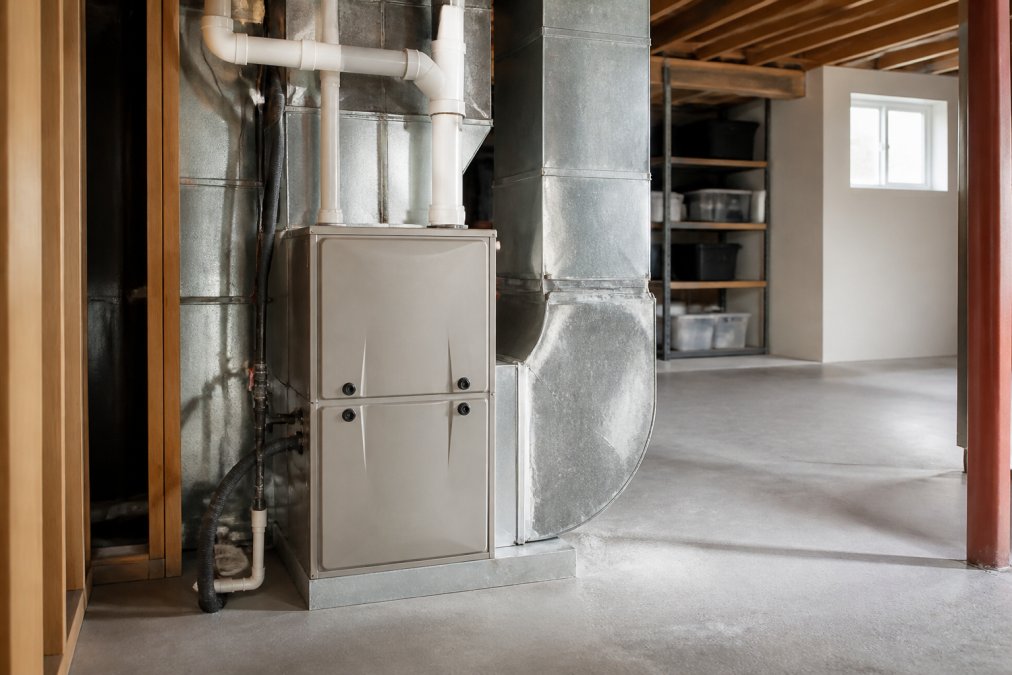
A condensing furnace is a unit that captures heat from exhaust gases that a standard furnace sends out the flue. That second heat exchange step is what pushes efficiency above 90%.
Step 2: Gas Furnace vs Heat Pump for Cold Climates
In a gas furnace vs heat pump comparison for cold climates, gas furnaces still win on raw heating power in deep cold. Heat pumps move existing heat rather than generating it, so they are efficient in mild weather but lose capacity as temperatures fall. Modern cold-climate heat pumps have closed much of that gap, but in regions with sustained hard freezes, a gas furnace delivers consistent, predictable output.
Fuel Source Availability: Natural Gas, Propane, and Delivered Fuel
Before comparing AFUE numbers, confirm what is piped or delivered to your address.
- Natural gas. If a utility main already runs to your home, a condensing gas furnace is usually the simplest, lowest-operating-cost path, no tank, deliveries, or conversion.
- Propane (LP). Where natural gas is unavailable, propane is the common substitute. Many gas furnaces ship as natural gas units requiring a conversion kit (often a new orifice set and a spring or regulator change), a real line item and installation step.
- Heating oil. Common in older rural housing stock. High-efficiency condensing oil furnaces exist, but they are a smaller slice of the market and service network than gas or propane.
- Electric resistance. Cheap to install, expensive to run in a cold climate. It is usually a backup, not a primary strategy.
Propane vs. Natural Gas: What Actually Changes
Propane carries more energy per unit of volume than natural gas, so the two are not interchangeable at the burner without correct orifices and settings. For a cold-climate buyer:
- Operating cost. Propane is priced per gallon and delivered; natural gas is metered per therm. Convert both to cost per million BTU using the fuel's heating value before comparing.
- Storage and delivery. Propane requires a tank sized for your winter burn, plus a delivery schedule. In a hard winter, running out is a comfort and safety problem, so tank sizing and automatic delivery matter as much as the furnace rating.
- Efficiency ratings. AFUE is fuel-specific. A unit rated 96 AFUE on natural gas is not automatically 96 AFUE on propane after conversion. Confirm the rating for the fuel you will actually burn.
Hybrid Heating Systems and Dual-Fuel Setup
A hybrid heating system pairs a heat pump with a gas (or propane) furnace and switches automatically: the heat pump handles milder days, the furnace takes over when temperatures plunge, efficiency in shoulder seasons, reliability in deep winter.
A Quick Decision Path
- Is utility natural gas at the address? If yes, a condensing gas furnace is usually the default.
- If no, are you on propane or oil? Match the furnace (and any conversion kit) to that fuel, and size the tank for winter.
- Is your climate mild enough that a cold-climate heat pump can carry most of the load? If so, a hybrid may beat a furnace-only install.
- In sustained deep cold with delivered fuel, a properly sized high-efficiency furnace remains the reliable backbone.
Step 3: Furnace Sizing for Cold Weather and IECC Climate Zones
Correct furnace sizing for cold weather starts with your climate zone and your home's actual heat loss, not a guess from square footage. IECC climate zones map the country by heating demand, and colder zones require more BTU capacity per square foot.
Manual J Load Calculations and Heat Loss
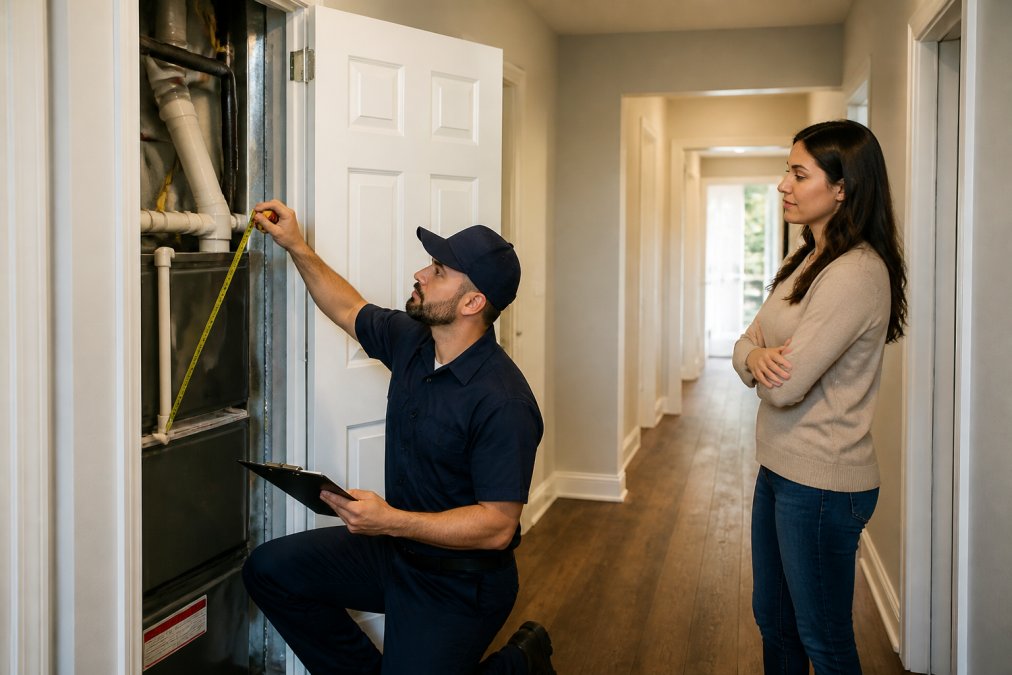
A Manual J load calculation is the industry-standard method for determining exactly how much heating capacity a home needs, factoring in square footage, insulation, window area, air sealing, and local design temperatures.
Step 4: High-Efficiency Furnace Tax Credits and Utility Rebates
High-efficiency furnace tax credits and utility rebates can meaningfully cut the upfront cost, but rules change, so verify current amounts with official sources before you budget. Programs have specific efficiency thresholds a unit must meet.
Step 5: Evaluate Modulating vs. Two-Stage Heating and Blower Motors
A modulating gas valve adjusts output in small increments; two-stage heating offers only high and low. Modulating units hold steadier temperatures and run longer at lower power, which a cold climate rewards.
| Feature | Two-Stage | Modulating |
|---|---|---|
| Output settings | High and low | Many small steps |
| Temperature steadiness | Good | Excellent |
| Efficiency in cold | Solid | Highest |
| Upfront cost | Lower | Higher |
| Best for | Tighter budgets | Long-term comfort |
Step 6: Check Venting, Ductwork, and Installation Requirements
Condensing furnaces create acidic water as a byproduct, so they need PVC flue piping and a drain path, a real installation constraint.
Step 7: Plan for Long-Term ROI, Smart Thermostats, and Indoor Air Quality
A high-efficiency furnace pays you back over its lifespan through lower operational cost and fewer breakdowns, but "it pays for itself" is not a plan. You need a break-even framework you can run with your own numbers.
A Break-Even Framework for 80% vs. 95%+ AFUE
You need four inputs:
- Your annual heating spend (or annual heating fuel use) from last year's bills.
- The efficiency of your current system (its AFUE, or an estimate if it is old).
- The AFUE of the unit you are considering.
- The installed price difference between the standard-efficiency and high-efficiency options.
The mechanic: fuel needed is proportional to 1 divided by AFUE, so the fraction saved is roughly (1 / old AFUE) minus (1 / new AFUE), divided by (1 / old AFUE). Multiply by annual heating spend for annual savings; divide the installed price difference by annual savings for years to break-even.
Smart Thermostats and Cold-Climate Control
Smart home thermostats add to the return by learning your schedule, cutting heat when you are away, and reporting how the system runs. In a cold climate, the useful features are specific:
- Recovery ramping. A smart thermostat starts the furnace earlier on a cold morning so the house is warm at wake-up without blasting at full output.
- Geofencing. It drops the setpoint when everyone is away and restores it before you return, which matters most in hours the furnace would otherwise run unattended.
- Runtime and cycle data. Many models report how often the system runs and how long each cycle lasts. On a modulating furnace, long low-output cycles are the goal; short frequent cycles are a warning sign.
- Equipment compatibility. Not every smart thermostat supports the multi-wire communicating controls some modulating furnaces use. Confirm compatibility before buying, or you may lose the modulation you paid for.
Indoor Air Quality and the ERV/HRV Question
Indoor air quality deserves attention in airtight cold-climate homes for a mechanical reason. A high-efficiency condensing furnace is typically sealed-combustion: it draws combustion air from outside and vents exhaust outside, so it does not use indoor air for burning. That is good for safety, but it also means the furnace no longer incidentally pulls fresh air into the house the way an old atmospheric-vent unit did.
Common Mistakes to Avoid When Choosing a High-Efficiency Furnace
The most common mistake is buying on AFUE alone and ignoring sizing, ducts, and installation quality. A 98% furnace installed badly performs worse than a 90% furnace installed well.
- Skipping the Manual J load calculation
- Oversizing for "extra power"
- Ignoring duct sealing and venting needs
- Missing rebate documentation deadlines
- Choosing a unit without a variable speed blower
Frequently Asked Questions
What is the $5,000 rule for furnaces?
The $5,000 rule is a common guideline some homeowners use to decide between repairing and replacing a furnace. If the repair cost multiplied by the age of the unit exceeds $5,000, replacement may be the better financial move. For example, a $600 repair on a 10-year-old furnace equals $6,000, suggesting replacement. However, this is a rough rule of thumb, not a universal standard. A licensed technician can evaluate your specific system and give you an honest recommendation.
What are the downsides of a high-efficiency furnace?
High-efficiency furnaces cost more upfront than standard models. They also produce condensate that requires a drain line, and their PVC venting must be routed properly, which can add installation complexity. Some homeowners find that the higher AFUE rating does not translate to dramatic savings if the home has poor insulation or leaky ducts. Regular maintenance is also more critical because the condensing components and variable-speed blower motors are more complex than older fixed-speed designs.
How do high-efficiency furnace tax credits work?
The federal government offers tax credits for qualifying high-efficiency furnaces through programs like the Energy Efficient Home Improvement Credit. To qualify, the furnace must meet specific AFUE and ENERGY STAR certification requirements. You claim the credit when filing your federal tax return for the year the furnace was installed. Many utility companies also offer rebates that stack on top of federal credits. Keep your receipt and the manufacturer's certification statement, and confirm current eligibility rules before purchasing.
Should I choose a heat pump or a gas furnace for a cold climate?
It depends on how cold your winters get and what fuel is available. Cold-climate heat pumps can now operate efficiently at temperatures well below freezing, but in areas with extended subzero periods, a gas furnace often delivers more consistent heat output. A dual-fuel or hybrid system pairs a heat pump for mild weather with a gas furnace for deep cold, giving you efficiency and reliability. Your utility rates, local fuel infrastructure, and home insulation all factor into the decision.