 how-to
How to Clean HVAC Air Filters Properly: 2026 Guide
Table of Contents
- How to Clean HVAC Air Filters Properly: Step-by-Step
- Reusable vs Disposable HVAC Filters: Which Do You Have?
- Signs of a Clogged Air Filter You Should Never Ignore
- How Often to Change HVAC Filter: A Simple Schedule
- Why MERV Ratings and Filter Type Matter for Cleaning
- Common Mistakes That Damage Your HVAC System
- When to Call a Licensed HVAC Professional
- Frequently Asked Questions
Last Updated: September 27, 2026
How to Clean HVAC Air Filters Properly: Step-by-Step
Cleaning your HVAC air filter is one of the cheapest ways to protect your system. It takes about 20 minutes. It also cuts dust, helps your air quality, and keeps your blower motor from working too hard. This guide from Air CareSaver walks you through how to clean HVAC air filters properly, step by step.
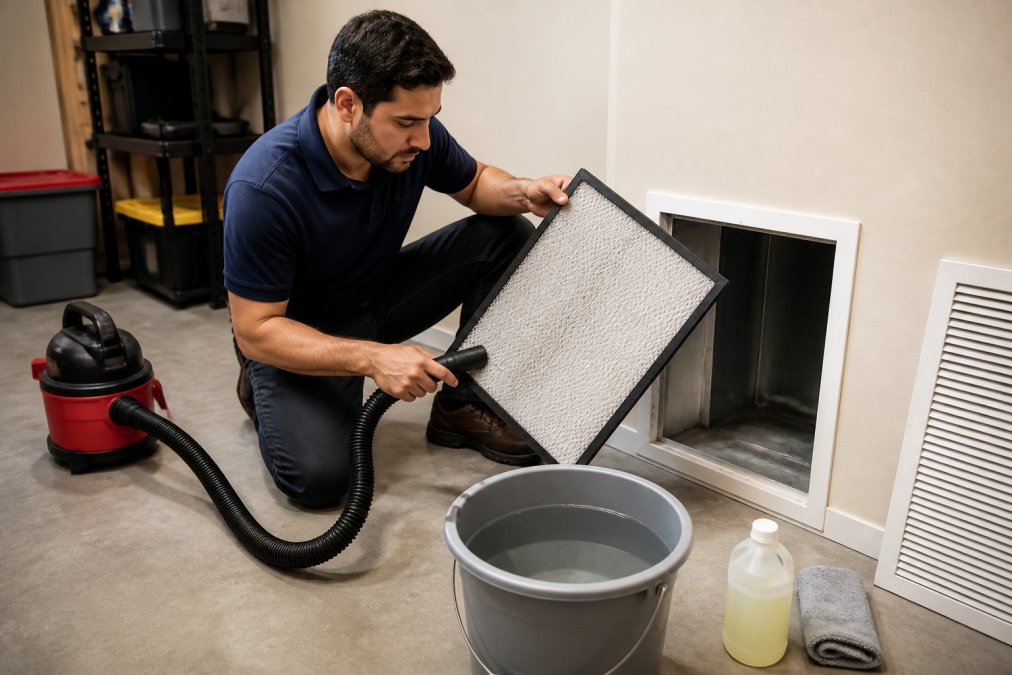
Here's the short version of the process:
- Turn off the system at the thermostat.
- Find the filter slot on the return duct or air handler.
- Pull the filter and check the frame.
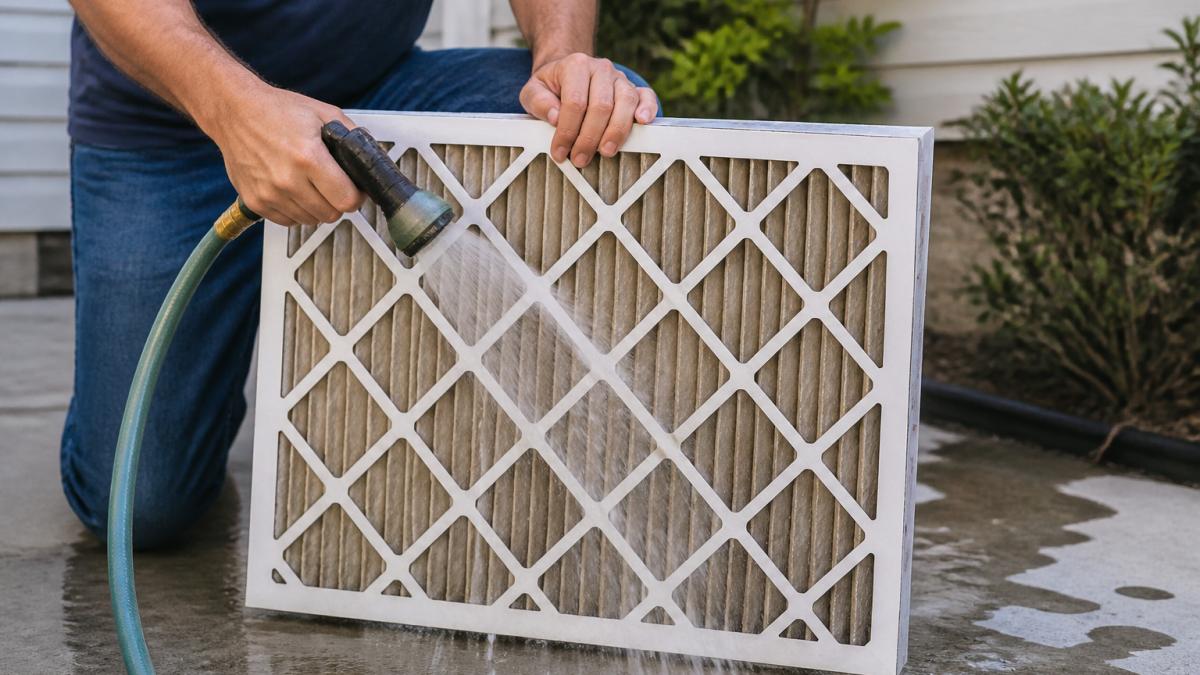
- Rinse reusable media, then vacuum it.
- Let it air dry fully.
- Slide it back in the right way.
Step 1: Turn Off the System and Locate the Filter
Kill the power first. Flip the thermostat to "off" and switch the breaker for the air handler. A running blower can suck debris into the system while the filter is out.
- Behind the return grille on a wall or ceiling
- In a slot on the side of the furnace or air handler
- Inside a filter cabinet on the return duct
Step 2: Remove, Rinse, and Vacuum the Filter Media
Pull the filter straight out. Note the arrow on the frame. That arrow shows airflow direction, and it needs to point toward the blower when you reinstall.
Step 3: Dry Completely Before Reinstalling
Never put a wet filter back in. A damp filter grows mold fast, and that mold blows straight into your living space.
Reusable vs Disposable HVAC Filters: Which Do You Have?
Reusable HVAC filters are washable and last for years. Disposable filters are meant to be thrown out and replaced. Knowing which one you have decides whether you clean it or swap it.
Here's how to tell them apart:
| Feature | Reusable Filter | Disposable Filter |
|---|---|---|
| Frame | Rigid plastic or metal | Thin cardboard |
| Media | Washable mesh or foam | Paper or fiberglass |
| Care | Rinse and vacuum | Replace |
| Lifespan | Years with care | Weeks to months |
| Cost pattern | Higher upfront | Lower upfront |
Signs of a Clogged Air Filter You Should Never Ignore
A clogged air filter shows clear warning signs. Catch them early and you avoid a breakdown. Ignore them and you strain the blower motor and cut airflow across the coil.
Watch for these signals:
- Weak airflow from the vents
- Rising energy bills with no other cause
- More dust settling on furniture
- A musty smell when the system runs
- The system cycling on and off more often
- Visible gray buildup on the filter media
How Often to Change HVAC Filter: A Simple Schedule
Change or clean your filter based on your home, not the calendar alone. Most homes need a change every 60 to 90 days. Homes with pets, allergies, or heavy dust need it sooner.
Use this schedule as a starting point:
- Standard home, no pets: every 90 days
- One pet: every 60 days
- Two or more pets: every 30 to 45 days
- Allergy sufferers: every 30 days
- New construction or remodeling: every 2 to 4 weeks
Why MERV Ratings and Filter Type Matter for Cleaning
The MERV rating tells you how well a filter traps particles, on a scale from 1 to 16 for residential use. Higher MERV means smaller particles get caught. But higher MERV also means denser media, more airflow restriction, and, critically for this guide, a filter that behaves very differently when you try to clean it.
The Rating Tiers, and What They Mean for Cleaning
- MERV 1-4: Loose fiberglass or thin synthetic media. Low restriction, low capture. Most of these are disposable and not worth washing, the media tears easily and the frame is usually cardboard.
- MERV 5-8: The common residential range. Pleated synthetic media, moderate density. Washable versions exist and tolerate rinsing well.
- MERV 9-12: Denser pleats, finer capture. Washable, but the media holds more water and needs longer drying.
- MERV 13-16: Hospital-grade filtration for homes. Very dense media, high static pressure. Some are washable, but many manufacturers specify replacement only because rinsing can collapse the pleat structure.
How MERV Changes Your Cleaning Method
The higher the MERV, the gentler you have to be. Three rules scale with rating:
- Water pressure drops. A MERV 5 filter can handle a gentle shower spray. A MERV 13 filter should be rinsed with a low-flow trickle from the clean side only. High pressure drives dust deeper into dense pleats instead of flushing it out.
- Drying time grows. Thin media dries in a few hours. Thick MERV 13+ media can hold water for a full day. Budget accordingly, and use the fan method described in the drying section.
- Vacuum suction drops. A soft brush attachment on low is fine for any rating, but on MERV 11 and above, use the brush to lift surface dust rather than pressing it into the pleats.
The Airflow Trade-Off Nobody Warns You About
Every step up in MERV adds static pressure, resistance to airflow. A system designed for a MERV 8 filter may lose 10 to 20 percent of its rated airflow when you install a MERV 13. That reduced airflow means the blower motor runs hotter, the evaporator coil gets colder (and can freeze), and the system works harder to move the same volume of air.
Check Before You Upgrade
Before moving up in MERV, check three things:
- Your system manual. Most manufacturers list a maximum MERV rating for the filter slot. Exceeding it can void a warranty on the blower motor.
- Your filter slot depth. A 1-inch slot can't fit a 4-inch media cabinet filter. Match the depth, not just the face dimensions.
- Your return duct size. Undersized returns amplify the airflow penalty of a high-MERV filter.
The EPA guide to indoor air quality and filtration explains how filter choice affects indoor air, and the Department of Energy guide to home cooling systems covers how airflow restriction affects system efficiency.
A Practical Rule
If your goal is basic dust control and system protection, a MERV 8 washable filter is the sweet spot for most homes, easy to clean, forgiving of rinsing, and low restriction. If someone in the home has allergies or asthma, step up to MERV 11 or 13, but plan on cleaning more often and drying longer. If your system can't handle the restriction, a standalone room air purifier is often a better answer than forcing a high-MERV filter into a system that wasn't designed for it.
Common Mistakes That Damage Your HVAC System
Most filter damage comes from a handful of easy-to-avoid mistakes. Each one shortens system life or raises your bills.
- Reinstalling a wet filter. Mold grows in hours. It then spreads through the ducts.
- Skipping the airflow arrow. A backward filter blocks air instead of cleaning it.
- Using the wrong size. Gaps let unfiltered air bypass the media entirely.
- Washing a disposable filter. The media falls apart and clogs the blower.
- Vacuuming too hard. High suction tears the filter media and bends the frame.
- Running the system with no filter. Dust coats the coil and blower motor.
When to Call a Licensed HVAC Professional
Some problems go past a filter swap. Call a licensed tech when you see water pooling near the unit, hear grinding or squealing, or smell burning. Those point to blower motor, drain line, or electrical issues.
Watch for these too:
- The system runs but never cools or heats
- Ice forms on the outdoor condenser unit
- The float switch keeps tripping
- Airflow stays weak after a fresh filter
Frequently Asked Questions
What is the easiest way to clean an air conditioner filter?
For reusable filters, turn off the system, remove the filter, and vacuum both sides with a soft brush attachment. Then rinse with lukewarm water and a drop of mild dish soap, and let it air dry completely on a towel before reinstalling. Never put a damp filter back in the unit, because moisture encourages mold growth and restricts airflow.
How often should HVAC filters be cleaned?
Reusable filters typically need cleaning every 30 to 60 days, and monthly during peak heating or cooling season if you have pets or live in a dusty area. Disposable filters should be replaced on the same schedule, not washed. Check the filter monthly and clean or replace it whenever you see a visible layer of dust across the filter media.
Can HVAC filters be cleaned and reused?
Only permanent or reusable filters are designed for cleaning and reuse. Disposable fiberglass and pleated filters lose their structure and electrostatic charge when wet, so washing them damages the filter media and reduces allergen trapping. If your filter frame is flimsy cardboard, it is disposable. If it has a sturdy metal or plastic frame, it is likely reusable.
What happens if you don't clean your HVAC filter?
A clogged filter restricts airflow, which forces the blower motor to work harder and raises energy consumption. Dust and debris can bypass the filter, collect on the evaporator coil, and clog the condensate drain line, which may trigger the float switch and shut the system down. Over time, this leads to costly repairs and reduced indoor air quality.
A clogged filter is easy to fix. A failed blower motor or a frozen coil is not. Regular cleaning and a smart replacement schedule prevent most of the breakdowns we see.
If your system still struggles after a clean filter, don't wait for it to quit on the hottest day of the year. Air CareSaver offers accurate diagnostics, preventative maintenance plans, and same-day response backed by 21+ years of licensed experience. Get your free estimate today and keep your home comfortable all year.