 how-to
Regular HVAC Maintenance and Energy Bills: Real Savings
Table of Contents
- How Regular Maintenance Improves Energy Efficiency and Lowers Bills
- Common Causes of Inefficient HVAC Operation and Higher Energy Costs
- Signs Your HVAC System Needs Maintenance
- HVAC Preventive Maintenance Checklist for Year-Round Efficiency
- How Often Should You Service Your HVAC System
- Practical Steps to Lower Your HVAC Energy Bills
- Maintenance Cost Versus Energy Savings: What You Need to Know
- Conclusion
- Frequently Asked Questions
Last Updated: October 21, 2026
How Regular Maintenance Improves Energy Efficiency and Lowers Bills
Regular HVAC maintenance directly reduces energy bills: an efficient system uses less power to hold your home's temperature, lowering monthly costs and reducing strain on your equipment.
Dirty filters, clogged ducts, and worn components force your HVAC to work harder and consume more energy.
Regular maintenance keeps your system running smoothly, which means lower energy consumption, consistent comfort without excessive cycling, less strain on electrical components, and longer equipment lifespan.
The relationship between regular maintenance energy bills is straightforward: a clean, properly tuned system uses less electricity. Over a year, this adds up to meaningful savings.
Common Causes of Inefficient HVAC Operation and Higher Energy Costs
Several factors make your HVAC work harder than it should. Knowing them helps you spot overdue maintenance.
Clogged air filters are the most common culprit.
Dirty evaporator and condenser coils can't transfer heat effectively, so the system compensates with longer cycles that drive up energy use.
Refrigerant leaks force your cooling system to run constantly without reaching the set temperature, a major energy drain.
Thermostat problems cause unnecessary heating or cooling.
Electrical connection issues reduce efficiency. Loose connections and corroded terminals create resistance and force the system to work harder.
These problems don't fix themselves.
Signs Your HVAC System Needs Maintenance
Recognizing when your system needs attention helps you avoid emergency repairs and energy waste.
Rising energy bills without explanation suggest inefficiency.
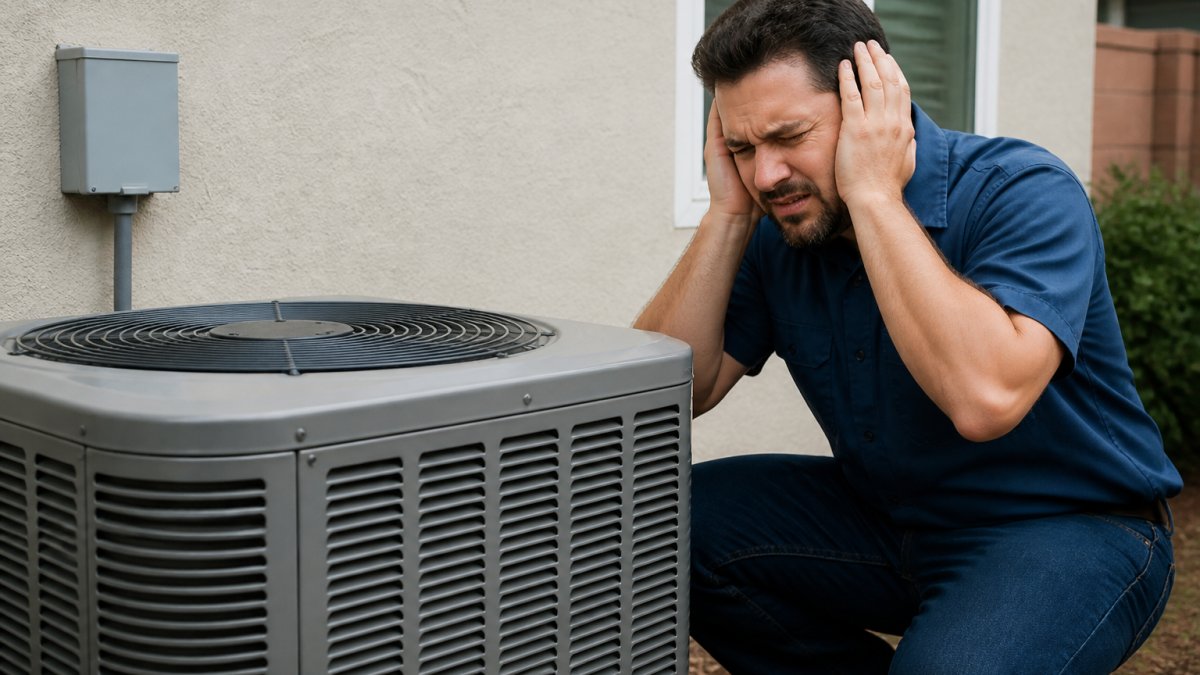
Strange noises like grinding, squealing, or rattling point to mechanical issues and components wearing out.
Musty or stale odors indicate mold growth in ducts or the system, affecting indoor air quality and efficiency.
The system running constantly without reaching your set temperature means it's struggling and wasting energy.
Age of your system matters too.
If you notice any of these signs, schedule maintenance soon.
HVAC Preventive Maintenance Checklist for Year-Round Efficiency
A practical maintenance checklist keeps your system running efficiently throughout the year.
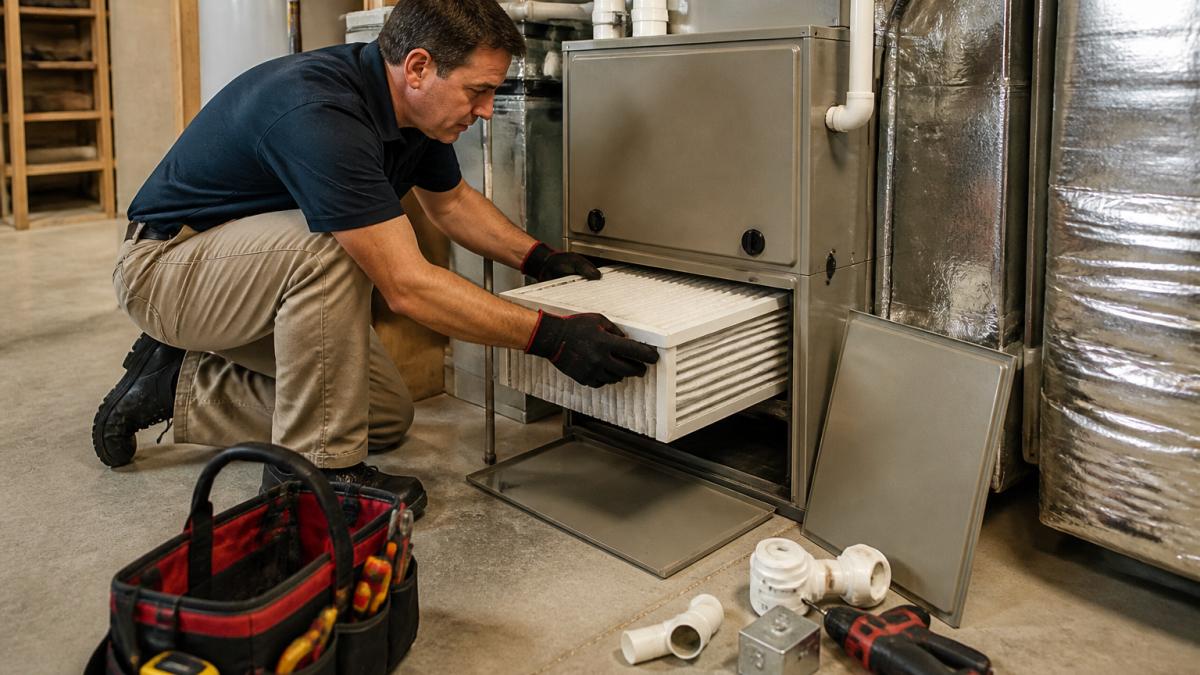
Monthly tasks:
- Check and replace air filters if visibly dirty
- Ensure thermostat is set correctly for the season
- Listen for unusual noises during operation
- Verify airflow from all vents in your home
Quarterly tasks:
- Inspect outdoor condenser unit for debris
- Check that supply and return vents are unobstructed
- Clean vents and registers of dust buildup
- Verify thermostat batteries are fresh
Annual professional maintenance:
- Full system inspection by licensed technician
- Refrigerant level check and adjustment
- Coil cleaning (evaporator and condenser)
- Electrical connection inspection and tightening
- Ductwork inspection for leaks or damage
- Lubrication of moving parts
- Thermostat calibration
- Complete performance testing
A professional can catch issues you might miss before they impact your energy bills.
Seasonal preparation: Have your AC serviced in spring for peak summer efficiency and your furnace checked in fall for winter demands. Following this checklist prevents most common problems that drive up energy costs.
How Often Should You Service Your HVAC System
Most homeowners should schedule professional HVAC maintenance at least once per year. The frequency depends on several factors.
Schedule maintenance before each major season: spring service prepares your AC for summer, fall service prepares your furnace for winter, catching issues before peak demand.
Regular maintenance energy bills relationship becomes clear over time. Systems serviced consistently use less energy than neglected ones.
Air CareSaver recommends scheduling your first service call in early spring or fall. We'll assess your system and recommend a maintenance schedule that fits your needs.
Practical Steps to Lower Your HVAC Energy Bills
Maintenance is the foundation, but a meaningful share of your bill comes from systems and envelope features no tune-up touches. This section covers the HVAC steps competitors list, then goes where most don't: the rest of the building.
HVAC steps that actually move the needle
- Replace filters on a schedule, not a feeling. Check monthly during heavy-use seasons. A 1-inch filter typically needs replacement every 1 to 3 months; a 4- or 5-inch media filter can go 6 to 12 months. A clogged filter raises blower energy use and can freeze a coil.
- Seal duct leaks in unconditioned space. Ducts running through attics, crawlspaces, or garages are the highest-value target. Leaks there waste conditioned air before it reaches a room. Use mastic or UL 181-rated foil tape, not cloth duct tape, which fails over time.
- Set back the thermostat when the house is empty. A programmable or smart thermostat that raises the cooling setpoint 7 to 10 degrees for eight hours a day is a well-established way to cut cooling energy. Avoid deep setbacks on heat pumps without consulting the manufacturer's guidance, since recovery can trigger inefficient auxiliary heat.
- Use ceiling fans to raise the setpoint. A fan in an occupied room lets you set the thermostat a few degrees higher without losing comfort. Turn it off when the room is empty; fans cool people, not air.
- Keep the outdoor unit clear. Trim vegetation back at least two feet and keep the condenser coil free of leaves and cottonwood fluff. A shaded, unobstructed condenser rejects heat more easily.
The non-HVAC steps most guides skip
These are where the broader energy bill actually lives.
Lighting. Swapping incandescent and halogen bulbs for LEDs cuts lighting energy and, in summer, reduces internal heat gain your AC must remove.
Water heating. Water heating is often the second-largest energy end use after space conditioning.
Windows and solar gain. In cooling-dominated climates, west- and south-facing windows drive afternoon heat gain.
Air sealing and insulation. Air leaks around rim joists, attic hatches, recessed lights, and penetrations waste conditioned air year-round.
Plug loads and standby power. Game consoles, set-top boxes, and older chargers draw power even when idle.
Commercial and small-business equipment. For businesses, the same logic applies at larger scale: refrigeration, commercial cooking, and process equipment often dominate the bill more than HVAC. Scheduling maintenance on refrigeration condensers and checking door gaskets is the commercial equivalent of an HVAC tune-up.
Put the steps in the right order
A practical order of operations for most homeowners:
- Low-cost HVAC hygiene, filters, thermostat schedule, outdoor unit clearance.
- Duct sealing and air sealing, stop paying to condition air you never use.
- Insulation, reduce the load the system sees.
- Professional HVAC maintenance, tune the system to the load it actually faces.
- Equipment upgrade, only after the above, and only when repair-versus-replace math favors it.
Maintenance and whole-building work are complements, not substitutes: maintenance keeps equipment at its best, while the building determines how hard it has to work. Together they explain more of your bill than either alone.
Maintenance Cost Versus Energy Savings: What You Need to Know
Most articles stop at "maintenance saves money", easy to claim, hard to check. Here's a framework for deciding whether a service visit is worthwhile, using your own bills rather than a generic promise.
A simple payback framework
You don't need an auditor, just three numbers:
- Annual maintenance cost. Get a written quote before you commit.
- Your annual heating and cooling spend. Pull 12 months of utility bills and add the electricity and gas attributable to heating and cooling. If you cannot separate them, use your summer and winter bill peaks as a rough proxy.
- The efficiency improvement you can realistically expect. A well-maintained system doesn't jump from 70% to 95% efficiency. A dirty filter, blocked coil, or low refrigerant charge degrades performance meaningfully, and correcting those restores the system toward its rated efficiency. Savings come from closing that gap, not exceeding the equipment's design.
Payback is: maintenance cost ÷ annual bill savings = years to break even. A $200 tune-up restoring 5% of an $1,800 annual heating-and-cooling bill saves $90 per year, payback a little over two years. At 10%, payback is about one year. If your system was already clean and well-charged, payback may be longer, and value shifts toward reliability and equipment life.
When the math favors maintenance
A common pattern among practitioners is that payback is fastest in these situations:
- The system has gone two or more years without service. Filters, coils, and blower wheels accumulate debris, and the efficiency loss is real.
- You have noticed a gradual bill climb that does not track with weather or rate changes.
- The equipment is 8 to 15 years old. It is past its most efficient years but not yet at replacement age, so restoring performance has the highest marginal value.
- You are in a climate with a long cooling or heating season. More run hours mean more dollars per point of efficiency.
When the math does not favor maintenance alone
Be skeptical of anyone who says maintenance always pays for itself. It does not, in these cases:
- The system is undersized, oversized, or badly ducted. No tune-up fixes a design problem. You may need a load calculation and duct evaluation instead.
- The building envelope is the real problem. If your attic is under-insulated or your windows leak, the HVAC system is doing extra work that maintenance cannot recover. See the section on when maintenance is not enough.
- The equipment is near end of life and failing. At that point, maintenance spending competes with replacement, and a repair-versus-replace analysis is the better tool.
The non-energy return
Bill savings are only part of the return. Maintenance reduces emergency repairs, which are priced at a premium and arrive at the worst time. It extends equipment life, deferring a replacement that commonly runs several thousand dollars. And it protects manufacturer warranty coverage, since many warranties require documented routine maintenance.
How to verify the savings actually happened
Don't take savings on faith. Compare weather-adjusted energy use before and after service. Your utility portal usually shows monthly usage and, in many markets, degree-day data. If usage per degree-day falls after a tune-up, the maintenance did something; if not, ask the technician what was actually corrected.
Conclusion
Regular HVAC maintenance directly impacts your energy bills. A well-maintained system operates efficiently, uses less electricity, and costs less to run. The regular maintenance energy bills relationship is proven: cleaner filters, sealed ducts, and properly tuned components all reduce energy consumption.
Air CareSaver helps homeowners optimize their HVAC systems through professional maintenance and accurate diagnostics. Our licensed technicians identify efficiency problems and fix them right the first time.
Get my free quote today and discover how much you can save with professional HVAC maintenance.
Frequently Asked Questions
How does regular HVAC maintenance affect energy bills?
Regular maintenance keeps your system operating at peak efficiency. Clean filters, lubricated parts, and properly calibrated thermostats reduce strain on equipment, meaning it uses less energy to heat or cool your home. When an HVAC system runs efficiently, it consumes less electricity, directly lowering your monthly energy bills. Systems that skip maintenance work harder to maintain temperature, wasting energy and driving costs up.
What HVAC maintenance tasks have the biggest impact on energy efficiency?
Air filter replacement is the single most impactful task, a clogged filter forces your system to work harder. Cleaning evaporator and condenser coils removes buildup that restricts airflow. Checking and adjusting thermostat settings ensures your system isn't running unnecessarily. Professional tune-ups that inspect electrical connections and lubricate moving parts also improve efficiency significantly by reducing friction and energy loss.
How often should an HVAC system be serviced to maintain energy efficiency?
Most systems benefit from twice-yearly maintenance: a spring tune-up before cooling season and a fall inspection before heating season. Homes in dusty environments or with pets may need filter changes every 30-60 days instead of the standard 90 days. Annual professional inspections catch efficiency problems early. Older systems or those running continuously may need more frequent service to maintain peak performance and prevent energy waste.
Can a dirty air filter really increase energy bills?
Yes. A dirty air filter restricts airflow, forcing your HVAC system to work harder and run longer to reach your desired temperature. This increased runtime directly increases energy consumption and utility costs. Replacing a clogged filter is one of the cheapest maintenance tasks but delivers measurable savings. Regular filter checks, monthly during heavy-use seasons, prevent this common efficiency drain and keep your system running smoothly.