 listicle
Furnace Replacement: 7 Signs You Need a New One
Table of Contents
- Sign 1: Your Furnace Is Past Its Expected Lifespan
- Sign 2: Furnace Frequent Repairs Are Adding Up
- Sign 3: Rising Energy Bills and Falling Heating Performance
- Sign 4: Uneven Heating, Cold Spots, and Weak Airflow
- Sign 5: Strange Noises, Odors, and Safety Warnings
- Sign 6: Short Cycling and Thermostat Trouble
- Sign 7: Your Furnace Inspection Before Winter Reveals Problems
- Furnace Repair or Replacement: How to Decide
- Frequently Asked Questions
Last Updated: October 13, 2026
Sign 1: Your Furnace Is Past Its Expected Lifespan
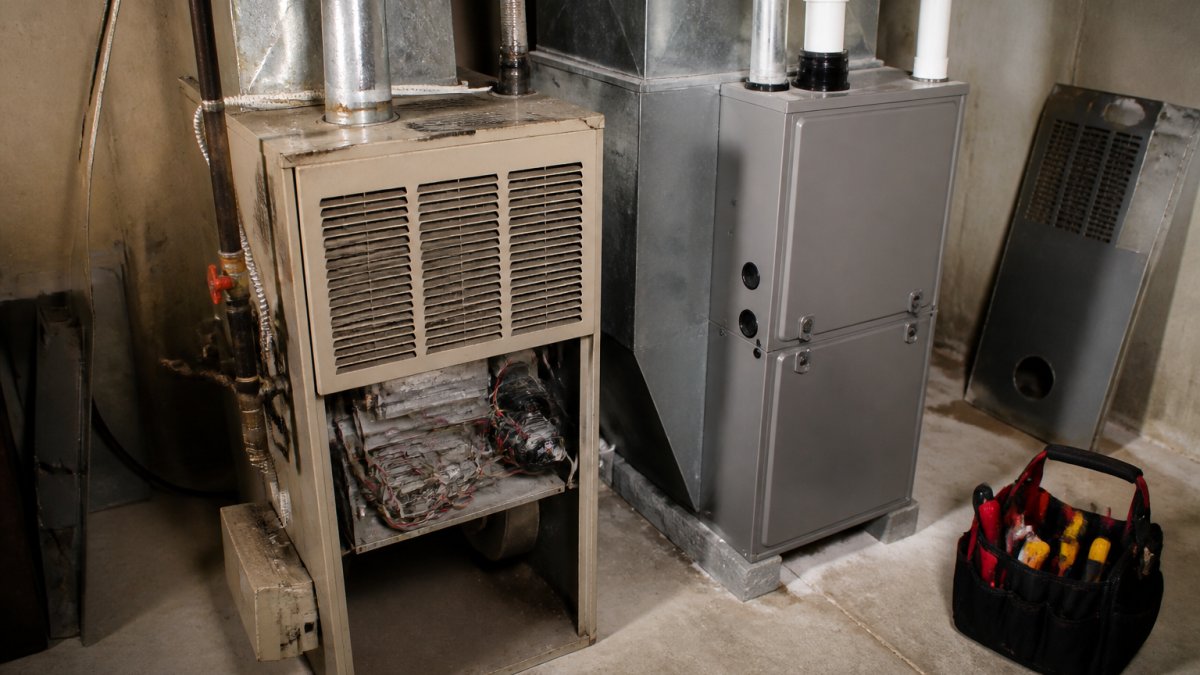
The clearest early warning sign is age. Most gas furnaces last roughly 15 to 20 years, and past that window breakdowns become more frequent and parts harder to source. If your system was installed in the 1980s or 1990s, you are already living on borrowed time.
At Air CareSaver, we have walked San Gabriel Valley basements for over 21 years, and the pattern is consistent: furnaces decline slowly, then quit on the coldest night of the year. That is why we tell homeowners to start planning a furnace replacement months before winter, not the week the heat stops working.
U.S. Department of Energy guidance on furnace efficiency and lifespan notes that an aging furnace loses efficiency long before it stops running entirely.
Sign 2: Furnace Frequent Repairs Are Adding Up
One repair is normal. Three repairs in two heating seasons is a signal. Furnace frequent repairs are the most reliable indicator that a system is nearing the end of its serviceable life.
The pattern we see most often: a blower motor one winter, an ignitor the next, a control board the year after.
A practical rule many contractors use: if a single repair costs more than half the price of a new unit, or if you have had two or more repairs in the last two years, replacement usually makes more financial sense than another patch.
Sign 3: Rising Energy Bills and Falling Heating Performance
A furnace that costs more to run each winter is telling you something. As heat exchangers corrode and burners clog, the system burns more fuel for the same warmth, you feel it in your bills before you feel it in the room.
Heating efficiency is measured by AFUE, or Annual Fuel Use Efficiency.
If your bills climb while your thermostat stays the same, and the system has already been serviced, declining efficiency is a strong argument for furnace replacement.
Sign 4: Uneven Heating, Cold Spots, and Weak Airflow
Rooms that never get warm, cold spots near windows, and weak airflow all point to a distribution problem. Sometimes the ductwork is at fault, sometimes the blower, on an older furnace, often both.
Test it yourself: hold your hand near a register in the farthest room and compare it to one in a central room. If the far register barely pushes air, the system is struggling to move heat.
Uneven heating is not just uncomfortable, it forces the furnace to overwork, shortening its life and raising operating costs.
Sign 5: Strange Noises, Odors, and Safety Warnings
Some symptoms are about comfort; others are about safety. Grinding, banging, and rumbling usually mean a failing blower motor or loose internal component. A burning smell on startup can be dust, but a persistent burning odor is not normal.
The warning signs that matter most involve gas and combustion:
- A yellow or flickering flame instead of a steady blue one
- A pilot light that keeps going out
- Soot streaks around the furnace cabinet
- A smell of gas near the unit
- Headaches, nausea, or dizziness that ease when you leave the house
A yellow flame and soot point to incomplete combustion, which can produce carbon monoxide. The U.S. Consumer Product Safety Commission guidance on carbon monoxide safety is clear that CO is odorless and can be fatal, which is why every home with a fuel-burning furnace needs working CO alarms on each level.
Sign 6: Short Cycling and Thermostat Trouble
Short cycling means the furnace turns on, runs briefly, then shuts off, only to start again minutes later. The house never reaches a consistent temperature, and the constant starting and stopping wears the system out faster.
Common causes include an oversized furnace, a failing thermostat, a dirty flame sensor, or restricted airflow. A thermostat that reads the wrong temperature or loses its settings adds to the confusion.
Short cycling is one of the more diagnosable issues on this list.
Sign 7: Your Furnace Inspection Before Winter Reveals Problems
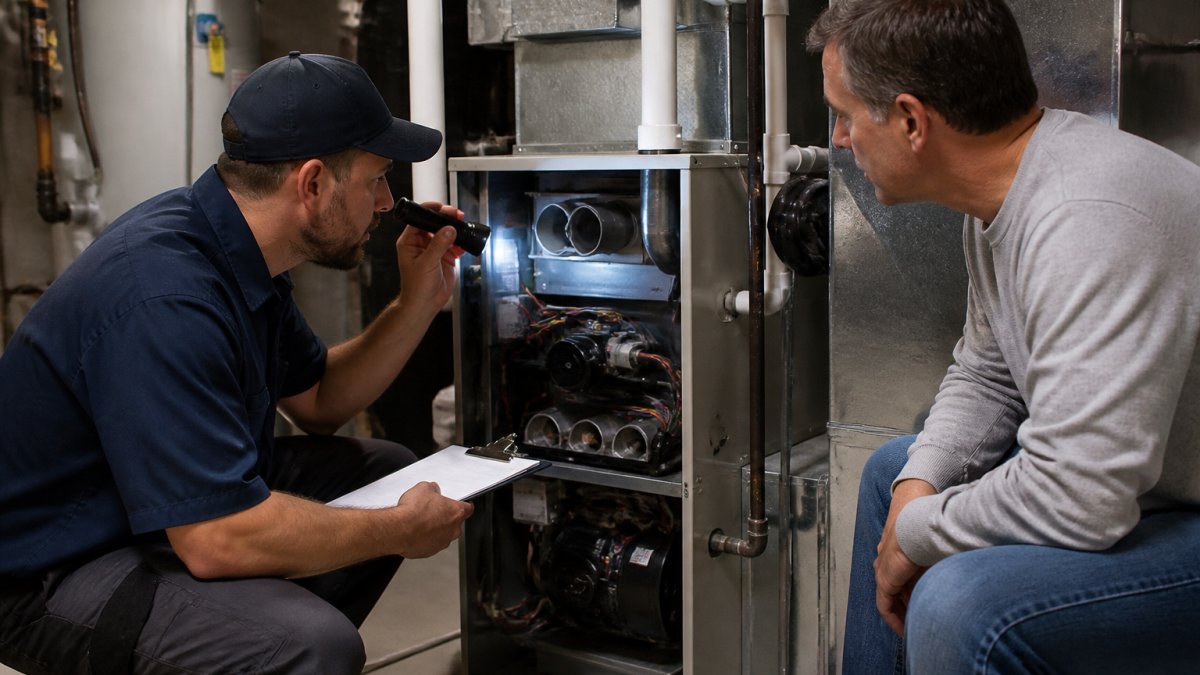
A furnace inspection before winter is the best way to catch these issues while you still have time to act.
What matters is what the inspection finds. A clean report on a 12-year-old furnace means keep maintaining it.
A Practical Pre-Winter Checklist
Most homeowners wait until the first cold night to think about the furnace, by then every contractor is booked and every parts counter has a line. Work through this sequence in early fall instead:
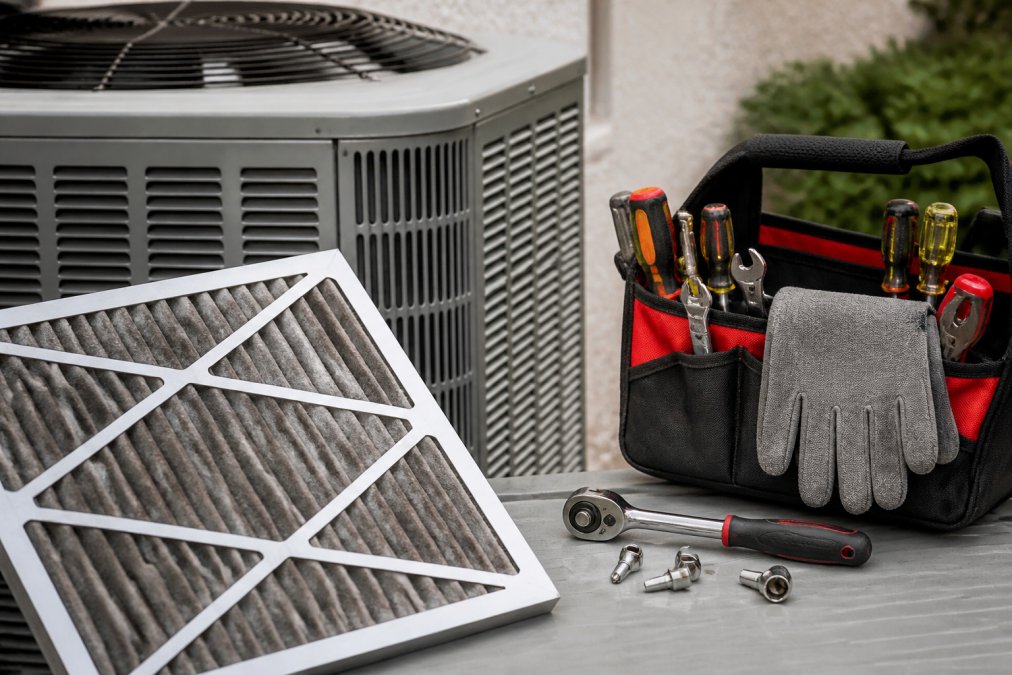
- Replace the air filter. A clogged filter restricts airflow, drives up temperature rise, and mimics a failing blower. Check it monthly during heating season and replace it per the manufacturer's recommendation.
- Test the thermostat. Switch from cool to heat, set the temperature several degrees above room temperature, and confirm the furnace fires and the blower comes on. If the display is blank, the batteries are dead, or the reading is off, address it before the season starts.
- Walk the house and feel the registers. Compare airflow and temperature at the register farthest from the furnace against one in a central room. Weak or cool output at the far end points to a distribution problem.
- Clear the area around the furnace. Remove stored items, paint cans, and anything flammable from the immediate vicinity. Check that the intake and exhaust vents outside are clear of leaves, snow, and debris.
- Test your carbon monoxide alarms. Every home with a fuel-burning furnace should have working CO alarms on each level and outside sleeping areas. Press the test button and replace batteries as needed.
- Schedule a professional tune-up. A licensed technician should inspect the heat exchanger, clean the burners, check the ignitor and flame sensor, verify combustion readings, and measure temperature rise. This is the step that catches problems you cannot see.
- Get a written assessment. Ask for the findings in writing, age of the unit, condition of the heat exchanger, combustion readings, and any recommended repairs. That document is what you use to decide between repair and replacement.
- Plan for lead time. If replacement is likely, start getting quotes in early fall. Ordering, permitting, and scheduling can take days to weeks, and the wait grows once the first cold snap hits.
What the Inspection Actually Tells You
A tune-up is not just a cleaning. Combustion analysis reveals whether the furnace is burning fuel safely and efficiently, and temperature-rise measurement shows whether it is moving the right amount of air.
If the inspection comes back clean, keep maintaining the system and revisit it next year. If it flags a safety concern, treat it as urgent. If it lists recommended repairs on a furnace already past 15 years, that list is your signal to start pricing replacements.
At Air CareSaver, our pre-winter inspections include accurate diagnostics so you get a straight answer, not a sales pitch. We are licensed (#1054832), family owned, and have served the San Gabriel Valley for more than two decades.
Furnace Repair or Replacement: How to Decide
Furnace repair or replacement comes down to four questions: how old is the system, how much have you already spent on it, is it safe to keep running, and what will each path cost you over the next ten years? Most homeowners only ask the first three. The fourth is where the real answer lives.
Start With the Age-and-Repair Math
A common rule of thumb among HVAC contractors is the "multiplier" test: multiply the age of the furnace by the cost of the proposed repair. If the result is greater than the price of a new system, replacement usually wins.
The second test is repair frequency. One repair is maintenance; two in two heating seasons is a pattern. Three or more, and you are effectively financing an old system one part at a time while still owning the same aging equipment.
Compare Lifetime Cost, Not Just Sticker Price
Sticker price is the least useful number here. What matters is total cost of ownership over the next decade: purchase price, installation, annual maintenance, expected repairs, and fuel.
Efficiency is the lever most homeowners underestimate. Heating efficiency is measured by AFUE, or Annual Fuel Utilization Efficiency.
You do not need a precise number to use this. Pull twelve months of gas bills, compare winter months year over year, and ask a technician to estimate your unit's AFUE.
Use a Simple Decision Framework
| Situation | Recommended Path | Why |
|---|---|---|
| Under 10 years old, one minor repair | Repair | Plenty of service life remains; multiplier test favors fixing |
| 10-15 years, first major repair | Repair, then monitor | Cost still favors fixing; start budgeting for replacement |
| 15+ years, two or more repairs | Replace | Repair costs approach replacement value; reliability is declining |
| Cracked heat exchanger or CO risk | Replace immediately | Safety cannot be repaired around |
| Rising bills plus uneven heating | Replace | Efficiency and distribution gains offset the cost |
| 20+ years regardless of condition | Plan replacement | Parts availability and efficiency are both working against you |
Plan for Lead Time and Payment
Replacement is not instant. In most markets, ordering a specific model, pulling permits, and scheduling installation takes days to a few weeks, longer during a cold snap when every contractor is booked.
On cost, expect the installed price to vary widely by region, home size, fuel type, efficiency tier, and whether ductwork or venting needs modification.
Financing is common in this category. Many contractors offer monthly payment plans, and utility or state programs sometimes provide low-interest loans for efficiency upgrades.
Frequently Asked Questions
How do you tell if your furnace needs to be replaced?
The clearest signs are a furnace age past 15-20 years, frequent furnace repairs, rising energy bills without a usage change, uneven heating and cold spots, strange noises, unusual odors, and short cycling. If you notice two or more of these at once, schedule a professional furnace inspection before winter. A licensed technician can confirm whether it's a repairable fault or end-of-life failure.
Is it better to repair or replace an old furnace?
It depends on age, repair cost, and efficiency. If your furnace is under 15 years old and the repair is minor, fixing it usually makes sense. If it's past 15-20 years and facing a major repair, replacement is often the smarter long-term move. A furnace repair or replacement decision should factor in how long does a furnace last, how often you've paid for repairs, and what a new system would save on energy bills.
What is the most common furnace failure?
Ignition and flame sensor problems are among the most common furnace failures, followed by blower motor issues and clogged filters. These often show up as short cycling, weak airflow, or a furnace that won't stay lit. Some are simple fixes, but repeated failures on an older system can signal that the furnace is heading toward replacement.
Can a furnace be unsafe to use?
Yes. A yellow or flickering flame instead of a steady blue flame, a burning smell, or a pilot light that keeps going out can point to incomplete combustion or a carbon monoxide risk. If you notice any of these, turn the furnace off and call a licensed HVAC professional right away. Carbon monoxide is odorless, so install a working CO detector on every level of your home.
Winter does not wait, and neither should a failing furnace. If your system is showing any of these signs, Air CareSaver can help you decide with confidence. We offer same-day response, free estimates, and accurate diagnostics from licensed technicians with 21+ years of experience, so you get a straight answer instead of guesswork. Get started with Air CareSaver and walk into winter with reliable, efficient heat.