 listicle
Top 5 Benefits of Regular AC Maintenance
Table of Contents
- Lower Monthly Utility Bills Through Energy Efficiency
- Extended System Lifespan and Compressor Health
- Prevention of Costly Breakdowns and Emergency Repairs
- Better Indoor Air Quality and Allergen Reduction
- Manufacturer Warranty Compliance and Peace of Mind
- AC Maintenance Checklist for Homeowners
- How Often to Service AC Unit: Seasonal Timing That Works
- Cost of AC Maintenance vs Repair: A Real ROI Breakdown
- Frequently Asked Questions
Last Updated: September 20, 2026
Lower Monthly Utility Bills Through Energy Efficiency
Regular AC maintenance is the single most reliable way to keep cooling costs down, because a system that is dirty, low on refrigerant, or out of calibration has to run longer to hit the same thermostat setting. This guide from Air CareSaver covers the five biggest payoffs of routine service, starting with the one homeowners notice first: the monthly bill.
When air filters clog, airflow drops and the blower motor works harder. When condenser coils collect dirt, the unit sheds heat less effectively.
Extended System Lifespan and Compressor Health
The compressor is the most expensive component in your HVAC system, and it is also the one that suffers most from neglect. Preventative maintenance protects compressor health by keeping refrigerant levels correct, electrical connections tight, and the system cycling within its design parameters.
Prevention of Costly Breakdowns and Emergency Repairs
Emergency repairs cost more than scheduled ones for a simple reason: they happen at the worst possible time, often during a heat wave when every technician in the area is booked. But the bigger cost is not the labor rate, it is the cascade of damage that a small, ignored fault causes before it finally stops the system.
The Failure Sequence Most Homeowners Never See
Breakdowns rarely happen overnight. They follow a predictable chain, and maintenance exists to break that chain early:
- A clogged filter or dirty condenser coil restricts airflow and forces the compressor to run hotter and longer than designed.
- The extra heat and runtime stress the capacitor and contactor, the two cheapest electrical parts in the system and the two most common points of failure.
- A weak capacitor causes hard starting, which pulls higher amperage through the compressor windings on every cycle.
- The compressor eventually overheats or shorts, and at that point the repair is no longer a $15 part, it is a sealed-system component replacement or a full system swap.
What a Tune-Up Actually Checks
During a standard maintenance visit, a technician inspects the specific components that fail most often:
- Refrigerant charge and superheat/subcooling readings
- Condenser and evaporator coil condition
- Capacitor microfarad readings against the manufacturer's rating
- Contactor pitting and electrical connection torque
- Condensate drain line flow and pan condition
- Compressor amp draw versus nameplate rating
The Cost-Benefit Math
This is the calculation most articles skip. Compare two homeowners over a ten-year window:
| Scenario | Annual Outlay | Likely 10-Year Outcome |
|---|---|---|
| Annual maintenance | Predictable tune-up cost each year | Original system often still running; minor part replacements only |
| No maintenance | $0 for years, then a large emergency bill | Premature compressor or system failure; replacement 3-5 years early |
Better Indoor Air Quality and Allergen Reduction
Indoor air quality is directly tied to the condition of your system's filter, coils, and ductwork. A clean system moves air efficiently and filters it properly. A neglected one recirculates dust, pollen, and other particles throughout your home.
Manufacturer Warranty Compliance and Peace of Mind
Most manufacturer warranties require documented, professional maintenance to stay valid. Miss those service intervals and you can find yourself paying out of pocket for a repair the warranty would otherwise have covered, and the components most likely to fail are also the most expensive to replace.
What Actually Voids a Warranty
Warranty language varies by brand, but the patterns are consistent. Coverage on major components is commonly denied when one of these is true:
- No maintenance records. The manufacturer asks for proof of service and the homeowner has none.
- Unqualified installation or repair. Work performed by someone who is not licensed or certified can void coverage on the affected components.
- Improper refrigerant handling. Adding refrigerant without locating and fixing the leak is a documented cause of denied compressor claims.
- Unauthorized parts. Aftermarket components that do not meet the manufacturer's specification can void coverage on the parts they touch.
- Neglect-related damage. A seized compressor caused by a years-long refrigerant leak is treated as owner neglect, not a defect.
The Paper Trail That Protects You
A maintenance plan does more than keep the system running, it builds the record a warranty claim depends on. Keep these on file:
- Dated invoices from each service visit, showing the technician's license number
- The specific tasks performed (refrigerant check, coil cleaning, electrical inspection)
- Any parts replaced and their manufacturer part numbers
- Filter replacement dates, even for DIY changes
Peace of Mind Is the Real Payoff
Peace of mind is the benefit homeowners mention most often after they start a maintenance plan. Knowing the system has been inspected, cleaned, and calibrated before summer arrives removes a source of low-grade anxiety that most people do not realize they were carrying. It also means that when the first 100-degree day hits, you are not one of the homeowners refreshing the scheduling page, hoping for a same-day slot.
AC Maintenance Checklist for Homeowners
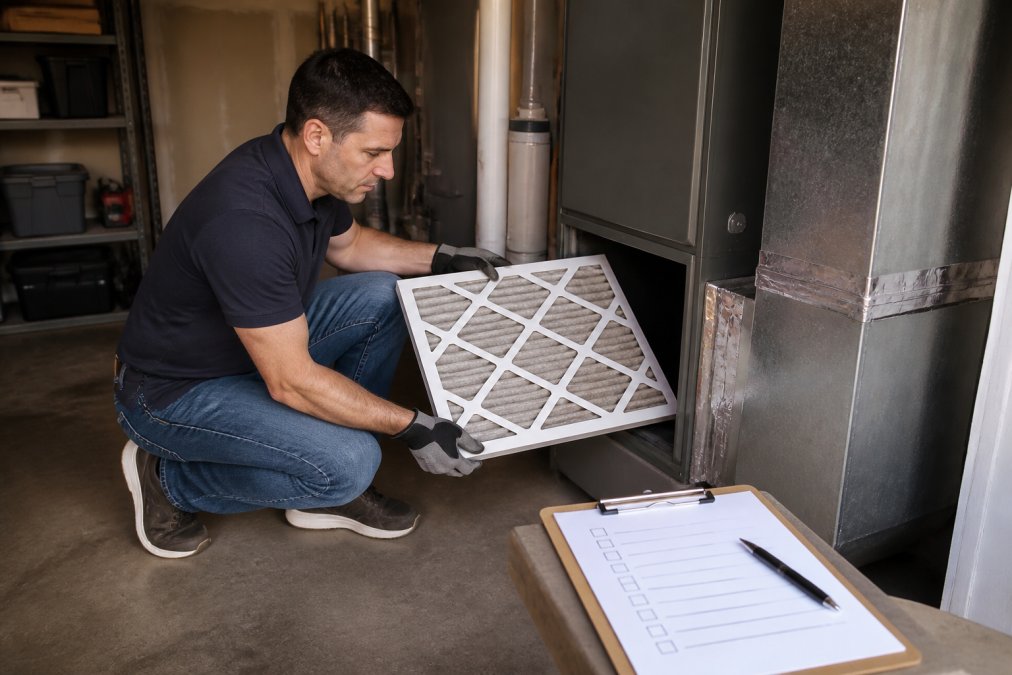
A practical AC maintenance checklist for homeowners splits cleanly into two columns: what you can safely handle yourself, and what requires a licensed HVAC technician. Getting this division right protects both your system and your warranty.
DIY Tasks You Can Handle Safely
- Replace or clean the air filter every 30 to 90 days, depending on the filter type
- Clear debris, leaves, and grass clippings from around the outdoor condenser unit
- Gently rinse the outdoor coil with a garden hose once the power is off
- Keep two feet of clearance around the condenser for proper airflow
- Check and clean the condensate drain line for visible clogs
- Verify the thermostat is set correctly and replace its batteries annually
- Inspect visible ductwork for gaps, tears, or disconnected sections
What Requires a Licensed HVAC Technician
- Checking and adjusting refrigerant levels
- Testing electrical connections, capacitors, and contactors
- Cleaning the evaporator coil, which sits inside the air handler
- Calibrating the thermostat against actual room temperature
- Measuring airflow and static pressure across the system
- Inspecting the compressor and its electrical draw
- Verifying the cooling cycle operates within manufacturer specifications
How Often to Service AC Unit: Seasonal Timing That Works
The short answer: service your AC unit once a year, ideally in spring before the cooling season begins. Systems in heavy-use climates or older homes benefit from a second visit in fall to prepare for heating.
| Service Timing | Best For | What It Covers |
|---|---|---|
| Spring (March to May) | All systems | Pre-season cooling tune-up, coil cleaning, refrigerant check |
| Fall (September to November) | Older systems, heating-heavy homes | Heating inspection, drain line, electrical connections |
| Monthly | Every homeowner | Filter check and replacement |
| After any repair | All systems | Verification that the fix restored full performance |
Cost of AC Maintenance vs Repair: A Real ROI Breakdown
The cost of AC maintenance versus repair is not a close comparison once you factor in emergency pricing, parts, and system lifespan. Routine maintenance is a small, predictable expense. Emergency repair is a large, unpredictable one.
Frequently Asked Questions
How often should I schedule professional AC maintenance?
Schedule a professional AC maintenance visit once a year, ideally in spring before cooling season starts. If your system is older or runs heavily, twice a year works better. Regular AC maintenance catches refrigerant leaks, worn electrical connections, and dirty condenser coils before they turn into emergency repairs. A licensed technician can also verify thermostat calibration and airflow optimization during the same visit.
Does regular AC maintenance really prevent expensive emergency repairs?
Yes. Most emergency breakdowns trace back to neglected parts: clogged drain lines, low refrigerant levels, or failing capacitors. A routine inspection catches these early when the fix is small. Skipping maintenance lets small issues compound, and a compressor failure can cost thousands. Preventative maintenance is the single best way to avoid mid-summer breakdowns and the premium labor rates that come with emergency calls.
What is the $5,000 rule for AC units?
The $5,000 rule is a rough guideline some homeowners use: if a repair costs more than $5,000, or more than half the cost of a new system, replacement often makes more financial sense. It is not a hard rule. Age, refrigerant type, and how well the system was maintained all affect the decision. A technician can run the numbers on your specific unit before you commit to either path.
Can I do AC maintenance myself, or do I need a professional?
You can handle simple tasks: replacing air filters every 1-3 months, clearing debris around the outdoor unit, and keeping vents unobstructed. Anything involving refrigerant levels, electrical connections, compressor health, or drain line cleaning inside the unit requires a licensed HVAC technician. Attempting those yourself risks injury, voiding your manufacturer warranty, and causing damage that costs more to fix than the original service call.
How does AC maintenance improve indoor air quality?
A clean system moves air better. When air filters are clogged and condenser coils are dirty, the system recirculates dust, pollen, and allergens instead of filtering them out. Regular maintenance includes cleaning or replacing filters, checking the drain pan for mold growth, and verifying airflow optimization. For families dealing with allergies or asthma, this allergen reduction alone justifies the cost of an annual tune-up.