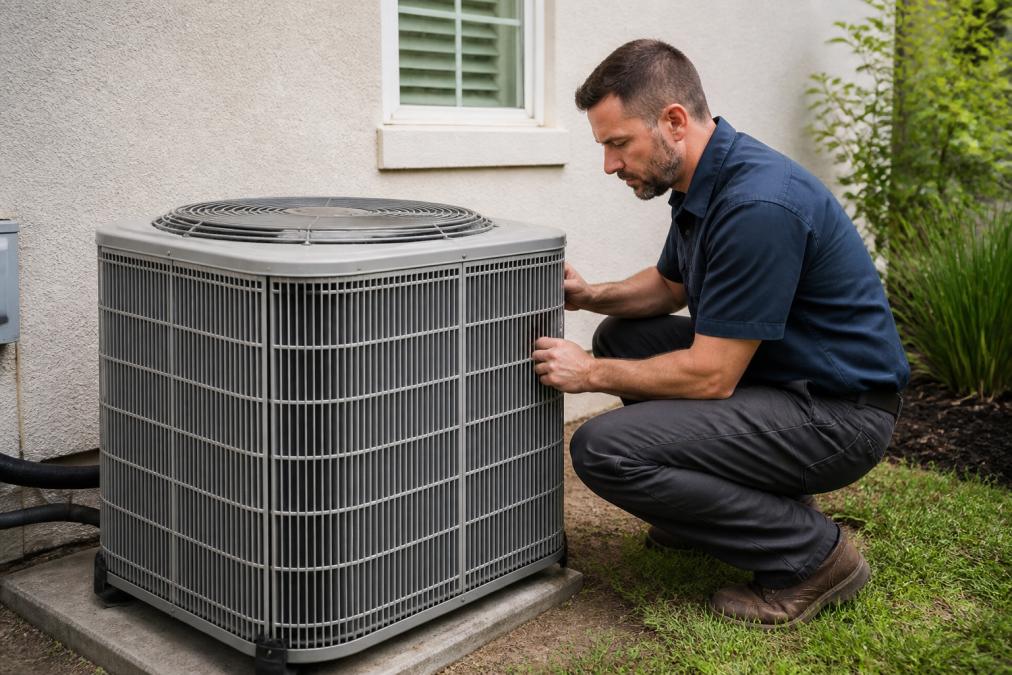
 ultimate-guide
HVAC Energy Efficiency for Homes: A 2026 Guide
Table of Contents
- Why HVAC Energy Efficiency for Homes Matters More in 2026
- SEER2 Rating Explained: What the Numbers Actually Mean
- The Best High-Efficiency Upgrades for Your Home
- Federal HVAC Tax Credits 2025: How to Claim Your Rebate
- Your HVAC Preventative Maintenance Checklist for Peak Efficiency
- When to Repair vs. Replace an Aging System
- Conclusion: Start With an Energy Audit
- Frequently Asked Questions
Last Updated: September 6, 2026
Why HVAC Energy Efficiency for Homes Matters More in 2026
Heating and cooling account for the largest share of a typical household's utility bills, often more than half of annual energy use. That makes hvac energy efficiency for homes a financial priority, not just an environmental one. At Air CareSaver, we have spent over 21 years diagnosing systems across the San Gabriel Valley, and we often see that homeowners who ignore efficiency pay for it twice, once in monthly bills and again in premature equipment failure.
The push for efficiency has accelerated recently because of two converging forces. Federal incentives introduced through the Inflation Reduction Act now make high-efficiency upgrades more affordable than they have been in decades. At the same time, newer efficiency standards have changed what "efficient" actually means on an equipment label.
HVAC energy efficiency measures how effectively a heating and cooling system converts energy into thermal comfort. Efficient systems use less electricity and fuel to produce the same comfort, lowering utility bills and reducing equipment wear.
Below, we cover the new SEER2 ratings, the upgrades that deliver the best return, maintenance habits that preserve efficiency, tax credits available through 2025, and a framework for deciding whether to repair or replace an aging system.
SEER2 Rating Explained: What the Numbers Actually Mean
The SEER2 rating is the official measure of cooling efficiency for central air conditioners and heat pumps, and it replaced the older SEER standard in 2023. SEER2 stands for Seasonal Energy Efficiency Ratio 2, and it uses more realistic testing conditions that account for the pressure and static load of actual installations.
A higher SEER2 number means the unit uses less electricity to deliver the same amount of cooling. Most new systems on the market today range from SEER2 14 to SEER2 25 or higher. The minimum federal standard is now SEER2 14 for most regions, so any system rated below that is either outdated or non-compliant.
The companion rating for heating is HSPF2, which measures heat pump efficiency during the heating season. In climates requiring significant winter heating, HSPF2 matters as much as SEER2, and a high rating can cut winter heating costs substantially compared to electric resistance heating.
When comparing quotes, ask for the SEER2 and HSPF2 numbers in writing. A SEER2 16 unit typically uses less energy than a SEER2 14 model.
The Best High-Efficiency Upgrades for Your Home
The most impactful upgrade for most homes is replacing an aging central air conditioner or heat pump with a modern high-efficiency model. Units manufactured before 2010 often operate at SEER ratings below 13, which means they consume considerably more electricity than current minimums allow.
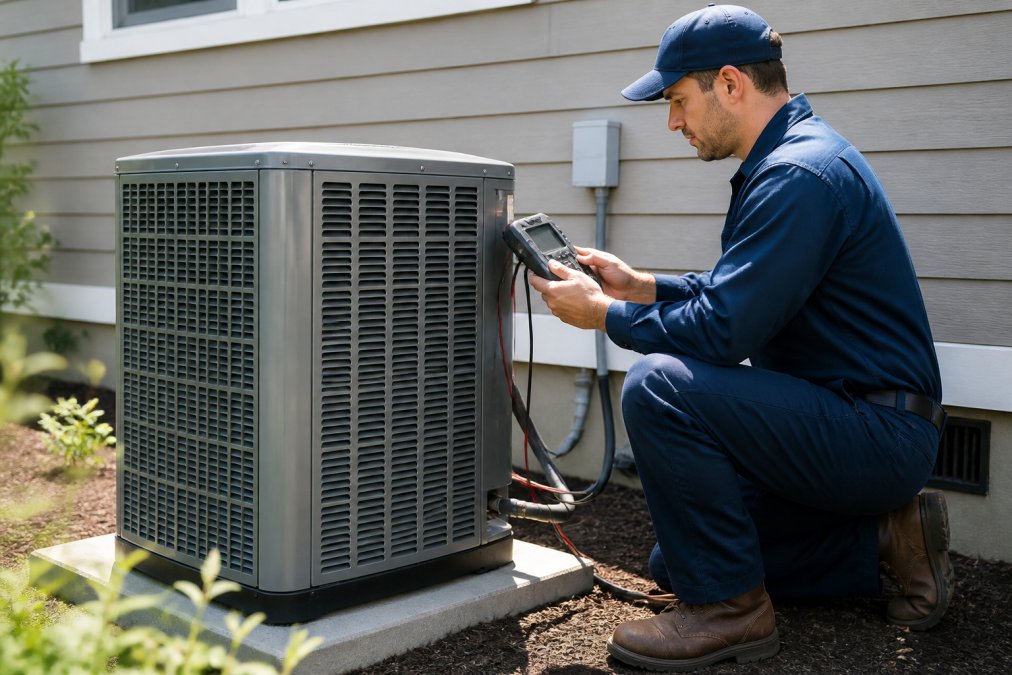
Beyond the core equipment swap, several upgrades deliver strong efficiency gains, but the best choice often depends on your climate zone. A strategy that works in a dry, hot region may not suit a humid Southeast or a cold Northern state.
Climate-Zone Specific Upgrades
- Hot, dry climates (e.g., Southwest): Focus on reflective roofing, radiant barriers in the attic, and high-SEER2 systems with variable-speed compressors. Evaporative coolers can be an efficient alternative to traditional AC in these areas, but they are not suitable for humid regions.
- Hot, humid climates (e.g., Southeast): The priority is latent heat removal (dehumidification). Look for systems with a higher HSPF2 and consider a whole-house dehumidifier. Ensure your system is properly sized to run longer cycles, which is essential for moisture control. Over-sized units short-cycle and leave the air feeling clammy.
- Cold climates (e.g., Northeast, Midwest): A cold-climate heat pump is a game-changer. These systems are designed to maintain high efficiency at low outdoor temperatures, unlike older models that struggled. Look for models that maintain full heating capacity down to 5°F or lower. Pairing a heat pump with a gas furnace in a hybrid or dual-fuel setup can be the most cost-effective strategy, letting the system switch to gas only during extreme cold snaps.
Smart Home Integration & AI-Driven Optimization
Beyond smart thermostats, AI-driven climate control learns your home's thermal dynamics. Modern systems use machine learning to analyze weather forecasts, insulation characteristics, and room-by-room occupancy to optimize energy use in real-time.
An AI-enabled thermostat can pre-cool your home before peak electricity rate periods, then let the temperature drift during expensive hours while maintaining comfort, a level of optimization a programmable schedule cannot achieve. When selecting a system, ask about compatibility with platforms like Google Nest or Amazon Alexa, and look for remote sensors that enable zoned comfort without ductwork modifications.
The Matched-System Principle
A common mistake is focusing only on the outdoor unit while ignoring the indoor coil and blower. The outdoor condenser and indoor evaporator coil are designed as a matched pair; replacing only half leaves efficiency ratings far below what the label promises. Insist on a matched system from the same manufacturer to capture the full SEER2 and HSPF2 benefits.
Federal HVAC Tax Credits 2025: How to Claim Your Rebate
The Inflation Reduction Act extended significant federal tax credits for energy-efficient home improvements, and these credits remain available for qualifying installations. For hvac energy efficiency for homes, the most relevant credit is the Energy Efficient Home Improvement Credit, which covers qualifying heat pumps, heat pump water heaters, and central air conditioners.
For 2025, homeowners can claim a credit equal to a portion of the cost for qualifying equipment that meets specific efficiency standards. The credit is applied against your federal income tax, meaning it directly reduces the amount you owe. IRS guidance on Energy Efficient Home Improvement Credit provides the current credit amounts and the specific efficiency requirements equipment must meet to qualify.
To claim the credit, you will need to complete IRS Form 5695 when you file your federal tax return. Keep the manufacturer's certification statement and your proof of purchase, since these documents support your claim if the IRS requests verification.
Several states and local utilities also offer rebates that stack on top of the federal credit. These programs vary by location and funding availability, so it is worth checking with your utility provider before scheduling an installation. A licensed contractor can often confirm whether the equipment they recommend qualifies for available incentives.
Your HVAC Preventative Maintenance Checklist for Peak Efficiency
Regular preventative maintenance is the single most cost-effective way to preserve hvac energy efficiency over the life of your system. A neglected system loses efficiency gradually, often without obvious warning signs until a component fails entirely.
The most important habit is changing or cleaning your air filter every one to three months. A dirty filter restricts airflow, forcing the blower motor to work harder and reducing the system's ability to cool or heat effectively. This simple task has an outsized impact on both efficiency and indoor air quality.
The Indoor Air Quality vs. Efficiency Trade-off
The filter you choose directly impacts your energy bill. HEPA filters and those with a MERV rating of 13 or higher trap more particles but create more airflow resistance, forcing the blower motor to work harder and potentially reducing system efficiency.
For most homes, a MERV 8 to MERV 11 filter balances allergen capture with proper airflow. If health concerns require a higher MERV rating, ensure your blower motor and ductwork can handle the added static pressure; a variable-speed blower is better suited for this. A professional can measure static pressure to determine the maximum filter rating your system can handle.
Professional Tune-Up Checklist
Schedule a professional tune-up twice per year, once before the cooling season and once before the heating season. A qualified technician should perform the following checks to ensure peak efficiency:
- Refrigerant Charge Verification: Low or overcharged refrigerant can reduce efficiency and damage the compressor. The technician must check the charge against the manufacturer's specifications, not just add refrigerant.
- Thermostat Calibration: An inaccurate thermostat can cause the system to run longer than necessary. The technician should verify the temperature reading against a known accurate thermometer.
- Condenser Coil Cleaning: Dirty coils on the outdoor unit reduce heat exchange. The technician should clean the coils with a specialized solution, not just a garden hose.
- Ductwork Leak Testing: Leaky ducts can waste conditioned air. A professional should inspect for visible leaks and, ideally, perform a duct leakage test to quantify the problem.
- Electrical Component Check: Loose connections or worn capacitors can cause the system to draw more amperage than necessary, wasting electricity and risking a breakdown.
If you prefer a hands-off approach, consider a preventative maintenance plan. Many HVAC companies offer agreements with priority service and discounted repairs, catching small issues before they become expensive failures. Always verify what is included, some plans cover only a basic inspection, not a comprehensive tune-up.
When to Repair vs. Replace an Aging System
The decision to repair or replace an aging HVAC system comes down to lifecycle cost, which is the total expense of owning and operating the equipment over time. A repair that costs a few hundred dollars may be worthwhile, but repeated repairs on an old system quickly exceed the value of the equipment.
A practical rule of thumb is the age of the system combined with its efficiency level. Most central air conditioners and heat pumps have a lifespan of 15 to 20 years with proper maintenance. If your system is older than that and requires a major repair, replacement is usually the smarter financial choice.
Refrigerant condition also matters. Older systems often use R-22, which is being phased out and has become expensive to source. If your aging system develops a refrigerant leak, repair costs may approach half the price of a new, more efficient system.
Energy Star guidance on when to replace your HVAC equipment suggests that replacing an older system with a properly sized high-efficiency model can reduce energy use noticeably, especially when the old unit is significantly below current efficiency standards.
A professional load calculation is essential before any replacement. This analysis determines the correct system size based on square footage, insulation, window orientation, and local climate. An oversized system short-cycles and fails to dehumidify properly, while an undersized system runs constantly without reaching the set temperature.
Conclusion: Start With an Energy Audit
Lower utility bills and a more comfortable home start with understanding where your energy goes. An energy audit, professional or DIY, identifies weak points in your home's envelope and HVAC system's performance.
Prioritize the improvements that deliver the fastest payback: sealing air leaks, adding insulation, and upgrading to a smart thermostat. These measures are relatively inexpensive and produce immediate results. From there, plan for the larger investment of replacing aging equipment with high-efficiency models that qualify for federal tax credits.
At Air CareSaver, our licensed technicians provide accurate diagnostics without unnecessary parts or guesswork, so you know exactly what your system needs. We offer same-day response for urgent breakdowns and free estimates for replacements and upgrades. Energy Star's guidance on home energy audits can help you understand what a professional assessment covers before you schedule one.
Home efficiency is not a one-time project but an ongoing commitment to maintenance and smart upgrades. Homeowners who treat it that way enjoy reliable comfort and predictable energy bills year after year.
Frequently Asked Questions
What is the difference between SEER and SEER2 ratings?
SEER2 is the updated efficiency standard that took effect in January 2023. It uses a more realistic test procedure that accounts for external static pressure, making ratings lower than old SEER numbers. If you're comparing systems, always use SEER2 values. For example, an older 14 SEER unit may only test at 13 SEER2 under the new criteria. Federal minimums are now based on SEER2, so any new system must meet those standards.
What HVAC tax credits are available for 2025?
The Inflation Reduction Act extended federal tax credits through 2032. For 2025, you can claim up to 30% of the cost, capped at $2,000, for a qualifying Energy Star heat pump or central air conditioner. Heat pumps that meet the highest efficiency tiers (SEER2 above 15.2 and HSPF2 above 8.1) qualify. You must use IRS Form 5695 when filing.
How often should I replace my HVAC air filter for efficiency?
Check your filter monthly and replace it at least every 90 days. Homes with pets, allergies, or high dust levels need replacement every 30 to 60 days. A clogged filter restricts airflow, forcing your blower motor to work harder. This can increase energy consumption and shorten the lifespan of your compressor. Setting a calendar reminder each season is the simplest way to stay consistent.
Is it worth repairing an HVAC system that is over 15 years old?
A good rule of thumb is to consider the age of your system in relation to the estimated repair cost. If the repair cost is significant for an older system, replacement can often be a smarter financial choice. An older system also runs at lower efficiency, so even with a successful repair, your utility bills may remain high. A load calculation and efficiency test can help you decide whether continued repairs make sense.
What is the most energy-efficient type of HVAC system for a home?
For most homes, a variable-speed heat pump offers high efficiency because it provides both heating and cooling. Models with high SEER2 and HSPF2 ratings are among the best available. Ductless mini-split systems can also be very efficient for homes without existing ductwork, since they avoid duct leakage. Your climate and home size determine which type delivers the best results for hvac energy efficiency for homes.
Making your home more energy efficient is a challenge that requires both knowledge and consistent upkeep. Air CareSaver supports homeowners across the San Gabriel Valley with licensed expertise, accurate diagnostics, and energy-efficient installations backed by over 21 years of experience. Get started with Air CareSaver and schedule your free estimate to lower your utility bills and extend the life of your system.