 how-to
Is a Noisy HVAC Unit an Emergency? What Each Sound Means
Table of Contents
- Is a Noisy HVAC Unit an Emergency? Start Here
- Signs of an HVAC Emergency You Should Never Ignore
- Should I Turn Off AC If Making Noise?
- AC Making Grinding Noise: What It Means and Why It Can't Wait
- Air Conditioner Rattling Noise: Loose Parts, Debris, or Worse
- Banging, Buzzing, Hissing, and Popping: A Sound-by-Sound Guide
- How to Document the Noise and Talk to a Technician
- Conclusion
- Frequently Asked Questions
Last Updated: October 18, 2026
Is a Noisy HVAC Unit an Emergency? Start Here
Most of the time, a noisy HVAC unit is not an emergency, but some sounds are.
Here is the short answer: a noisy HVAC unit is an emergency when the sound comes with a burning smell, a total loss of cooling, ice on the lines, water on the floor, or a hard mechanical grind. Anything else is usually urgent but not dangerous.
An HVAC emergency is any failure or sound that risks safety, causes immediate damage, or leaves your home without heating or cooling in extreme weather. That definition keeps things simple.
A small mechanical problem can become a system shutdown in hours, shorten your system's lifespan, and drive up repair costs.
Signs of an HVAC Emergency You Should Never Ignore
Some warning signs point to immediate risk. Treat these as an HVAC emergency and act now.
- Burning smell from vents or the outdoor unit
- Popping or sparking near the thermostat or breaker
- Grinding or screeching from the outdoor unit
- Ice buildup on the refrigerant lines or coil
- Water leak or flooding around the indoor unit
- Complete loss of cooling during a heat wave
- Buzzing that continues after shutdown
A buzzing sound that keeps going after you cut power is a real electrical issue. Do not touch the unit. Call a technician.
Should I Turn Off AC If Making Noise?
Yes, turn off the AC if the noise is loud, new, or paired with a burning smell, ice, or water. A strange sound is your system telling you something is wrong. Running it can cause further damage.
Here is a simple decision guide:
- Grinding, screeching, or banging → turn off, call for emergency service
- Burning smell or popping → turn off at the breaker, call now
- Hissing with ice or a coolant smell → turn off, call for a refrigerant leak check
- Light rattling or a hum → schedule routine service soon
- Normal hum or whoosh at startup → no action needed
When in doubt, shut it down. A short shutdown costs nothing. A damaged compressor does not.
AC Making Grinding Noise: What It Means and Why It Can't Wait
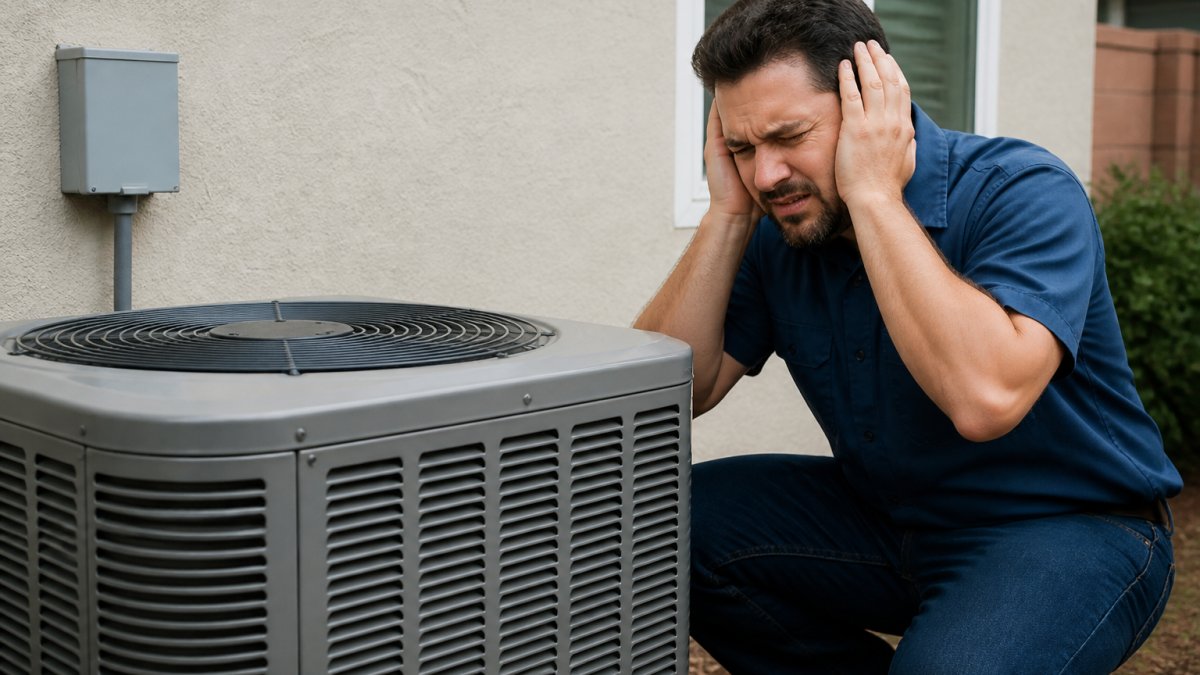
A grinding noise usually means metal is grinding against metal inside the unit, often from a failing fan motor bearing, a loose blower wheel, or debris caught in the fan.
Left alone, a grinding AC can seize the motor or damage the compressor. That turns a small repair into a system replacement.
Shut the unit off and call for emergency HVAC repair. The longer it runs, the more parts it takes with it.
A screeching sound often points to a worn belt or a dry bearing. Stop the unit and get it looked at.
Air Conditioner Rattling Noise: Loose Parts, Debris, or Worse
Rattling is the most common air conditioner rattling noise complaint we hear, and often the least serious. A loose panel, a stray twig, or a small rock in the fan cage are easy fixes.
But rattling can also signal a loose blower wheel or a failing motor mount. If the rattle gets louder over a few days, stop guessing and get a diagnosis.
Check these first:
- Loose access panels on the outdoor unit
- Debris inside the fan cage
- Loose screws on the cabinet
- A wobbly fan blade
If everything looks tight and the rattle continues, call a technician. A quick service call beats a cracked fan blade.
Banging, Buzzing, Hissing, and Popping: A Sound-by-Sound Guide
The same sound can mean different things depending on whether it comes from a furnace, heat pump, air conditioner, indoor air handler, or outdoor condenser. Use this guide to match what you hear to the likely cause, urgency, and next action.
| Sound | Where it comes from | Likely cause | Urgency | Action |
|---|---|---|---|---|
| Banging or clanking | Outdoor condenser or indoor air handler | Loose or broken internal part, such as a fan blade, blower wheel, or motor mount | High | Turn off, call |
| Buzzing (continues after shutdown) | Outdoor unit, thermostat, or breaker panel | Electrical fault, failing contactor, or loose wiring | Emergency | Cut power at the breaker, call now |
| Hissing | Refrigerant lines, indoor coil, or outdoor unit | Refrigerant leak or pressure issue | High | Turn off, keep people and pets away, call |
| Popping | Thermostat, breaker panel, or ductwork | Electrical arc or duct expansion | Emergency if repeated | Cut power, call |
| Grinding | Outdoor condenser or indoor blower | Motor or bearing failure, metal-on-metal contact | Emergency | Turn off, call now |
| Rattling | Outdoor cabinet, fan cage, or indoor panel | Loose panel, debris, or failing motor mount | Low to medium | Inspect, then schedule |
| Screeching | Indoor blower or outdoor fan | Worn belt or dry bearing | High | Turn off, call |
Banging points to a mechanical problem. A single loud bang at startup can be duct expansion, but repeated banging usually means a loose or broken part striking the housing. On a furnace, banging can come from delayed ignition, a safety concern. On a heat pump, banging during defrost is common but should be checked if new or loud.
Buzzing that continues after you cut power is the most dangerous sound here, often an electrical fault such as a failing contactor or loose wiring. Do not touch the unit. Cut power at the breaker and call a technician. Buzzing that stops at shutdown is less urgent but still worth a service call.
Hissing often means a refrigerant leak, so keep people and pets away. On a furnace, it can mean a gas leak, an immediate hazard; if you smell gas, leave and call your gas utility from a safe location. On a heat pump, a brief hiss during defrost is normal, but a constant hiss is not.
Popping near the thermostat can mean an electrical fault, and repeated popping from the breaker panel is an emergency. Popping from ductwork is usually expansion and contraction, annoying but not dangerous.
Grinding usually means metal is grinding against metal inside the unit, often from a failing fan motor bearing, a loose blower wheel, or debris caught in the fan. Left alone, it can seize the motor or damage the compressor, turning a small repair into a system replacement.
Rattling is often the least serious, caused by a loose panel, a stray twig, or a small rock in the fan cage. But it can also signal a loose blower wheel or a failing motor mount. If it gets louder over a few days, get a diagnosis.
Screeching often points to a worn belt or a dry bearing. Same advice: stop the unit and get it looked at.
When a sound comes with a burning smell, treat it as an immediate risk. Cut the power and call. If you suspect a gas leak, do not flip any switches; leave the building and call from outside.
How to Document the Noise and Talk to a Technician
Good notes get you a faster diagnosis and a clear decision about whether to shut down, call immediately, or schedule service. Use this triage flow before you pick up the phone.
Step 1: Decide whether to shut down. Turn the system off at the thermostat if the noise is loud, new, or paired with a burning smell, ice, water, or a hard mechanical grind. If you suspect an electrical fault or gas leak, cut power at the breaker only if safe to reach, and leave the area if you smell gas.
Step 2: Decide how fast to call. Call for emergency service now for grinding, screeching, banging, popping, or buzzing that continues after shutdown. Schedule routine service soon for light rattling, a new hum, or a single bang at startup. When in doubt, shut it down and call; a short shutdown costs nothing, a damaged compressor does not.
Step 3: Capture the details. Before the technician arrives, write down:
- What the sound is: grinding, rattling, buzzing, hissing, popping, or screeching
- Where it comes from: furnace, heat pump, air conditioner, indoor air handler, outdoor condenser, or vents
- When it happens: at startup, during cooling, during heating, during defrost, or after shutdown
- How long it lasts: seconds, minutes, or constant
- What else you notice: ice, water, smells, weak airflow, or a tripped breaker
- A short phone video of the sound with the unit running
Step 4: Communicate the urgency. Tell the dispatcher whether the system is still running, whether you shut it off, and whether anyone is at risk from heat or cold. Mention safety signs like a burning smell, sparks, or a gas odor so the technician brings the right parts.
Name your equipment when you call. A furnace banging on ignition differs from a heat pump banging during defrost, and an outdoor condenser grinding differs from an indoor air handler rattling. The more specific you are, the faster the diagnosis.
Our licensed technicians (#1054832) use accurate diagnostics to find the real cause, not guess at it. We offer free estimates and same-day response, so you are not left waiting in the heat.
Conclusion
A noisy HVAC unit can be a harmless rattle or a warning of real danger. The key is knowing which sounds mean "call now" and which mean "schedule service soon."
When a sound comes with a burning smell, ice, water, or a hard grind, shut the system down and call for help.
Air CareSaver brings over 21 years of licensed experience, same-day response, and free estimates to every call. Our team diagnoses the problem accurately, helping you avoid guesswork and expensive breakdowns.
Get started with Air CareSaver and keep your home comfortable year-round.
Frequently Asked Questions
What is considered an HVAC emergency?
An HVAC emergency is any failure that poses a safety risk or threatens major damage: burning smells, popping or sparking sounds, hissing that suggests a refrigerant leak, grinding or banging from the outdoor unit, ice buildup on the coils, or water flooding around the system. Total loss of heating in freezing weather or cooling during a dangerous heat wave also counts. In these cases, shut the system off and call for emergency HVAC repair rather than waiting for a routine appointment.
Is it normal for an HVAC unit to make a loud noise?
Some noise is normal: a steady hum from the outdoor condenser, whooshing airflow from vents, and a soft click when the thermostat cycles. What is not normal is a sudden loud noise, a new banging, clanking, grinding, or screeching sound, or a hum that keeps getting louder. Any noisy HVAC behavior that starts suddenly and repeats is a warning sign worth diagnosing before it becomes a bigger repair.
Should I turn off my AC if it's making noise?
Turn it off if the noise is grinding, screeching, banging, or accompanied by a burning smell, sparking, or ice on the lines. These point to mechanical or electrical problems that get worse with every minute of operation. A light rattle or hum can usually wait for a scheduled service call, but note when it happens and how often. When in doubt, shut the system down at the thermostat and call a technician.
When should I call an HVAC technician for a strange noise?
Call immediately for grinding, screeching, loud banging, buzzing near electrical parts, or hissing that could mean a refrigerant leak. Schedule a routine visit for a mild rattle, a single thud at startup, or airflow that sounds slightly louder than usual. Mention the type of sound, when it happens (startup, shutdown, or continuous), and how long it has been going on. That detail helps the technician bring the right parts and diagnose faster.