 ultimate-guide
Why Professional Duct Cleaning Matters for Indoor Air
Last Updated: November 3, 2026
Quick Summary
Professional duct cleaning removes years of accumulated dust, pet dander, debris and mold from ductwork that household vacuums cannot reach. However, research does not yet prove it improves health, so its strongest benefit is better airflow and system efficiency.
- Professional duct cleaning can reduce airborne particulates by 30% to 50%, according to industry analysis cited in the article.
- Consumer shop vacuums are not sealed to the duct network, so they leave fine particles behind.
- The NIH and EPA both say evidence does not show duct cleaning prevents health problems.
- Contaminated ducts increase aerodynamic resistance, which reduces HVAC system efficiency.
- Ask whether the system will be under negative pressure, whether before-and-after photos will be provided, and what is included.
Table of Contents
- What Professional Duct Cleaning Actually Removes
- What the Research Says About Indoor Air Quality Benefits
- Signs Your Air Ducts Need Cleaning
- What Does Air Duct Cleaning Entail?
- How Much Does Air Duct Cleaning Cost?
- Can Air Duct Cleaning Cause Damage?
- Booking Your Duct Cleaning Inspection With Air CareSaver
- Frequently Asked Questions
Dirty ducts are one of the quieter problems in a home's air system, and professional duct cleaning is one of the few ways to address what has built up inside them. Air CareSaver has spent more than 21 years as a family-owned, licensed HVAC business serving the San Gabriel Valley, and we see the results of neglected ducts regularly. This guide explains what professional duct cleaning actually removes, what the research does and does not support about indoor air quality, how to recognize the signs, and what to expect in cost and process.
What Professional Duct Cleaning Actually Removes
Air ducts collect dust, debris and particles over years of circulating air. The research summarized here reports that professional duct cleaning can reduce airborne particulates by 30% to 50% (Care Heating and Cooling, 2026). That reduction figure comes from industry analysis, so treat it as a practical indicator rather than a guarantee for every home. Care Heating and Cooling's 2026 indoor air quality analysis covers the particulate reduction figures in more detail.
What actually comes out of a neglected system is more specific than the word "dust" suggests. A typical load includes settled dust and lint, pet dander and hair, construction debris left after remodeling, pollen tracked in from outdoors, and, in homes with moisture problems, mold spores and the organic matter they feed on. In older homes, technicians also find drywall dust, sawdust and occasional pest debris. The mix matters because fine particles stay suspended longer and are more likely to be drawn back into the living space, while heavier debris settles on duct floors and reduces airflow.
The reason a professional service removes more than a consumer vacuum is mechanical, not marketing. Consumer-grade shop vacuums and central vacuum systems are not sealed to the duct network, so they pull ambient air and leave fine particulate behind; their filters also load quickly and bypass particles back into the room.
For a homeowner, the practical takeaway is to ask what equipment will be used, whether the system will be placed under negative pressure, and which components beyond the ducts are included. Those three answers separate a cleaning that removes the accumulated load from one that simply redistributes it.
What the Research Says About Indoor Air Quality Benefits
Here the evidence is more cautious than most service providers admit. The National Institutes of Health's Division of Occupational Health and Safety concludes there is not enough evidence to draw solid conclusions about the benefits of duct cleaning on indoor air quality or occupant health, despite two decades of research (NIH DOHS fact sheet on HVAC duct cleaning). A separate review notes that duct cleaning is widely advocated for indoor air quality and cost benefits, though scientific consensus remains under review (Zuraimi's ventilation duct cleaning review). If you want to address filtration, ventilation, and humidity alongside your ducts, explore our indoor air quality services in Walnut.
The U.S. Environmental Protection Agency states that duct cleaning has not been shown to prevent health problems, and that studies do not conclusively show removing particles from ducts produces a measurable health improvement (EPA guidance on whether to clean air ducts). The energy side is clearer. Contaminated ducts increase aerodynamic resistance in HVAC systems, which reduces efficiency (MDPI, 2026). If your main goal is comfort and system performance, that is the stronger case to make.
Signs Your Air Ducts Need Cleaning
Look for visible dust or debris blowing from supply vents, dust that returns quickly after cleaning surfaces, a musty smell when the system starts, or visible mold growth inside accessible ductwork. To see what a standard service visit covers beyond cleaning, read What Is Included in a Standard HVAC Tune-Up?. Persistent airflow problems and rising energy bills can also point to a duct or system issue, though they may have other causes. If you notice any of these, a diagnostic inspection is the right first step. Our inspection service can identify whether ducts or the system itself is the source.
What Does Air Duct Cleaning Entail?
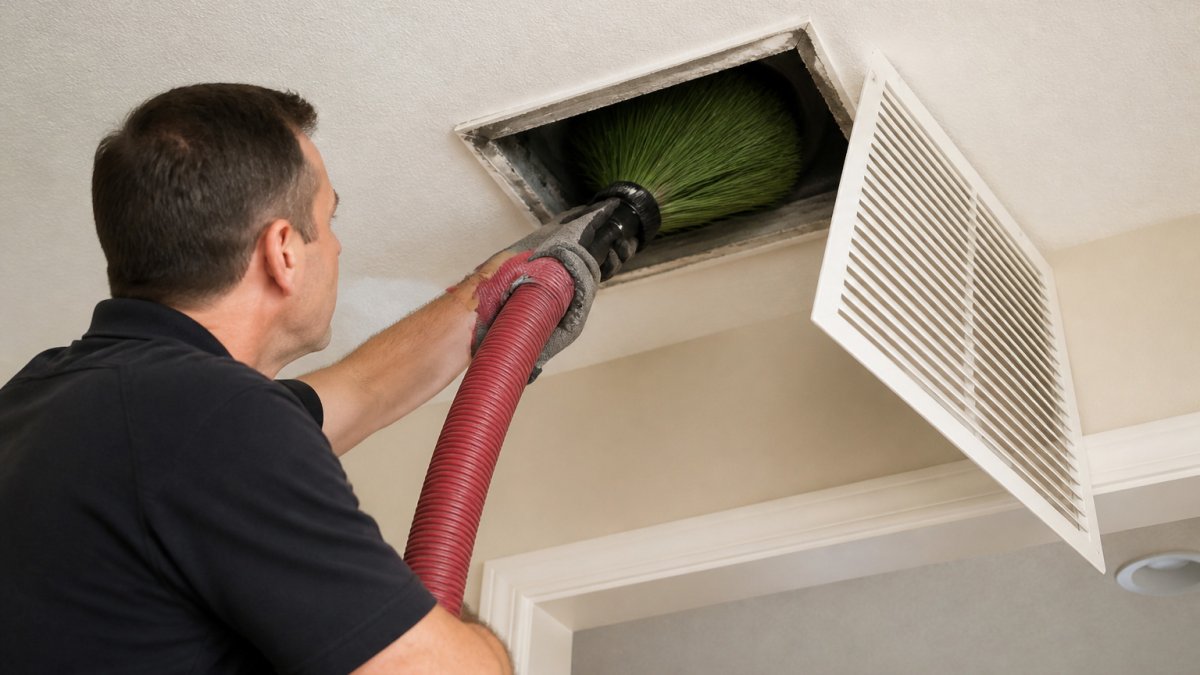
A professional cleaning typically uses truck-mounted or portable vacuum equipment connected to supply and return vents, with agitation tools used to loosen buildup from duct surfaces. Technicians should also inspect the air handler, blower and filter during the visit.
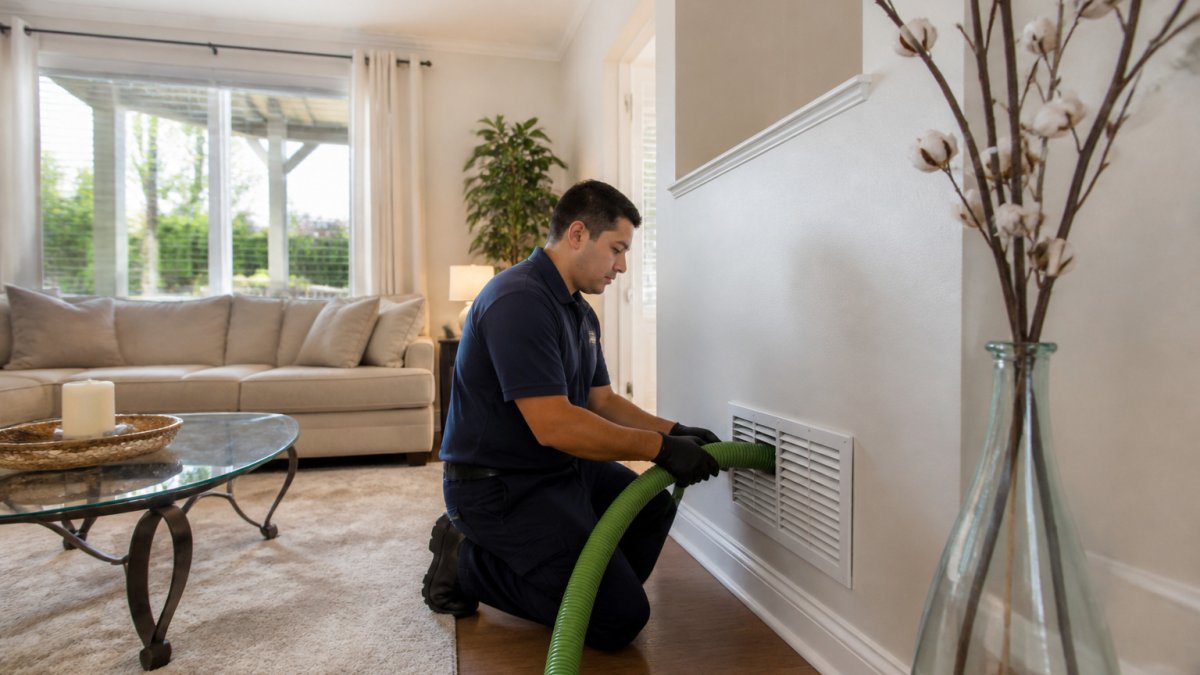
The visit usually follows a predictable sequence, and knowing it helps you judge whether a provider is doing the work or performing a show. First comes a walkthrough and a before-inspection: the technician confirms the system type, counts vents and returns, checks for accessible mold, moisture or damaged duct liner, and notes any disconnected joints. Next, the system is isolated, registers are removed, and the vacuum is connected so the duct network is held under negative pressure. Agitation follows, run section by section from the trunk out to the branches, using brushes or air whips matched to the duct material. The air handler, blower and coil are cleaned and inspected, and the filter is checked or replaced. Finally, the technician does an after-inspection, reseals access points, reinstalls registers and confirms airflow at the vents.
What separates a legitimate job from a "blow-and-go" scam is mostly what happens before and after the cleaning. Watch out: a common scam pattern is an unusually low advertised price that becomes a much larger bill after a technician claims to find mold or blocked ducts that were never shown to you. Legitimate providers inspect first, show you photos or video of any problem area, and give you a written scope before work begins. Be cautious of anyone who demands payment before the job, refuses to document findings, or pressures you into replacement on the spot.
Ask three questions when you book: Will the system be under negative pressure during cleaning? Will you show me before-and-after photos of the duct interior? And what is included beyond the branch runs? The answers tell you whether the visit will match the process above. Our inspection service can identify whether ducts or the system itself is the source of a problem before any cleaning is scheduled.
The cleaning visit follows a predictable sequence, and knowing these steps helps you judge whether a provider is doing the actual work.
| Step | What happens | Note |
|---|---|---|
| Before-inspection | Confirm system type, count vents, check for mold or damage | Note any disconnected joints |
| Isolate the system | Remove registers and connect vacuum under negative pressure | Prevents debris entering living space |
| Agitation | Loosen buildup from trunk out to branches | Tools matched to duct material |
| Clean air handler | Clean and inspect blower, coil and filter | Check or replace filter |
| After-inspection | Reseal access points, reinstall registers, confirm airflow | Ask for before-and-after photos |
How Much Does Air Duct Cleaning Cost?
Pricing depends on the size of the home, the number of vents and the accessibility of the ductwork. Contact Air CareSaver for a free estimate and current pricing for your property. For background on how diagnostic and service costs are structured, read our HVAC diagnostic cost breakdown.
Can Air Duct Cleaning Cause Damage?
Yes, if it is done poorly. Aggressive agitation can damage flexible duct liners, loosen connections or release debris into living spaces if the system is not properly sealed during the process. Ask whether the technician isolates the system and checks for leaks before and after the work.
Booking Your Duct Cleaning Inspection With Air CareSaver
If you are unsure whether your ducts need cleaning, start with an inspection rather than a blanket service. Air CareSaver is licensed (#1054832), offers same-day response and free estimates, and rates 4.9 on Google from more than 270 reviews. We will tell you honestly whether cleaning is likely to help your system. Get My Free Quote from Air CareSaver today.
Frequently Asked Questions
How often should air ducts be professionally cleaned?
There is no universal schedule. A licensed technician can inspect the system and recommend an interval based on what they find.
Will my house be dusty after duct cleaning?
Some dust is normal during and shortly after service, because loosened debris can briefly move through the home before it is captured. Ask the provider how they contain debris, and plan to change your filter after the job so any remaining particles are trapped sooner.
How much does air duct cleaning cost?
Pricing depends on home size, the number of vents and returns, the accessibility of the system, and whether additional services are requested. Current pricing comes from a written estimate. Air CareSaver offers free estimates, and you can request one through the company website to get current pricing for your home.
What are the potential downsides or risks of improper duct cleaning?
Poor technique can damage flexible ducts, disturb insulation, loosen connections, or spread debris into living spaces. Aggressive agitation without proper containment is a common concern. Look for licensed contractors, ask how they protect the system, and get the scope of work in writing before service begins.