 ultimate-guide
What Factors Affect Air Conditioner Energy Consumption?
Last Updated: October 24, 2026
Quick Summary
Air conditioner energy consumption is influenced by thermostat settings, system age and efficiency, maintenance condition, home insulation, and weather patterns. Every degree you raise your thermostat saves approximately 1-3% on cooling costs, while dirty filters can increase energy use by 5-15%.
- A typical 3-ton central AC system uses 3,000 to 4,000 watt-hours per hour, costing roughly $0.36 to $0.48 at the national average electricity rate
- Replacing a 1995 air conditioner with a modern system cuts cooling energy consumption roughly 40-50% for the same comfort level
- Ductwork leaks waste 15-30% of cooled air before it reaches your rooms, forcing your system to run longer
- Occupancy shows the strongest relationship with cooling energy use according to research in Frontiers in Big Data
- Setting your thermostat to 78°F instead of 72°F cuts AC runtime roughly 20% over a cooling season
Table of Contents
- How Much Electricity Does an Air Conditioner Use
- Air Conditioner Energy Consumption Per Hour and Peak Demand
- Thermostat Settings to Save Energy Without Sacrificing Comfort
- How Occupancy, Weather, and Home Design Drive Cooling Demand
- Air Conditioner Maintenance and Energy Efficiency
- System Age, Size, and Efficiency Ratings Impact Your Bills
- Get a Free Energy Assessment and Efficiency Upgrade Plan
- Frequently Asked Questions
How Much Electricity Does an Air Conditioner Use
Air conditioner energy consumption represents a significant portion of residential electricity use in the United States. According to U.S. Energy Information Administration's residential energy data, in 2020, air conditioning accounted for about 19% of U.S. residential electricity consumption, or 254 billion kilowatt-hours (How much electricity is used for air conditioning in the United States? - Frequently...). That's roughly one-fifth of all the electricity flowing into American homes, a staggering figure that underscores why understanding air conditioner energy consumption matters for your utility bills.
The actual power draw varies widely depending on your system's age, size, and efficiency rating. A typical central air conditioning unit consumes between 3,000 to 5,000 watts while running. Window units use considerably less, usually 500 to 1,500 watts. But here's where it gets important: the wattage is only half the story. When your AC runs for hours during peak summer heat, those watts translate into dollars on your monthly bill.
Understanding cooling costs by breaking down exactly what drives consumption can help homeowners. The real insight isn't just knowing your system's power draw, it's understanding which factors you can actually control and which ones require professional intervention.
Air Conditioner Energy Consumption Per Hour and Peak Demand
How much electricity does an air conditioner use per hour? A typical 3-ton central air conditioning system running continuously consumes approximately 3,000 to 4,000 watt-hours (3-4 kilowatt-hours) per hour. That translates to roughly $0.36 to $0.48 per hour at the national average electricity rate of $0.12 per kilowatt-hour, though your actual cost depends on local rates.
Peak demand tells a different story. Your AC doesn't run constantly, it cycles on and off based on thermostat settings and indoor temperature. During the hottest parts of the day, your system may run 80-90% of the time. During cooler evening hours, it might cycle on for 15-20 minutes every hour. This cycling behavior is crucial because peak-demand charges from utilities often penalize systems that draw heavy power during specific hours.
Understanding your peak-demand window helps you shift usage. If your utility charges higher rates between 2 PM and 8 PM, running your system harder during off-peak hours (by pre-cooling your home) can reduce overall costs. The math works: cooling your home to 72°F at 1 PM costs less than letting it drift to 78°F and then aggressively cooling it back down at 3 PM.
Thermostat Settings to Save Energy Without Sacrificing Comfort
Your thermostat is the single most controllable lever for reducing air conditioner energy consumption. Every degree you raise the temperature saves approximately 1-3% on cooling costs, depending on outdoor conditions and your home's insulation. Setting it to 78°F instead of 72°F cuts your AC runtime roughly 20% over a cooling season.
The key is finding the comfort-efficiency sweet spot. Most people tolerate 76-78°F indoors when humidity is controlled. If your system includes a dehumidifier or your AC includes humidity management, you'll feel comfortable at a higher temperature because moisture removal matters more than absolute temperature for human comfort.
Programmable and smart thermostats amplify these savings. Set your system to 82°F when you're away during the day and 78°F when you're home. At night, you can push it to 80°F since cooler outdoor air often provides natural ventilation. These adjustments, automated rather than manual, eliminate the friction that causes people to abandon energy-conscious settings.
How Occupancy, Weather, and Home Design Drive Cooling Demand
Occupancy is the variable most highly correlated with air-conditioning consumption. According to research published in Frontiers in Big Data, occupancy showed the strongest relationship with cooling energy use, when more people are home, AC runs longer because bodies generate heat and activities increase internal heat load.
Weather patterns dominate everything else. A 10% increase in cooling degree days increases air-conditioning consumption, though the exact magnitude depends on your system's efficiency and your home's thermal properties. Cooling degree days measure how far daily temperatures exceed 65°F, the baseline above which cooling becomes necessary. A summer with five extra days above 95°F dramatically increases consumption compared to a mild season.
Home design determines how efficiently your system handles that weather. Older homes built in the 1960s-1980s typically have poor insulation, single-pane windows, and air leaks that force your AC to work harder. A well-insulated home with modern windows and sealed ductwork cools faster and maintains temperature longer between cycles. South-facing windows without shade absorb solar heat directly into living spaces, forcing your system to overcome that load constantly.
Air Conditioner Maintenance and Energy Efficiency
Maintenance directly impacts how much electricity your air conditioner uses. Learn detailed steps to improve your AC's energy performance. Dirty filters force your system to work harder to move air, increasing energy consumption by 5-15% depending on filter condition. Clogged evaporator coils reduce heat transfer efficiency, making your compressor run longer to achieve the same cooling effect.
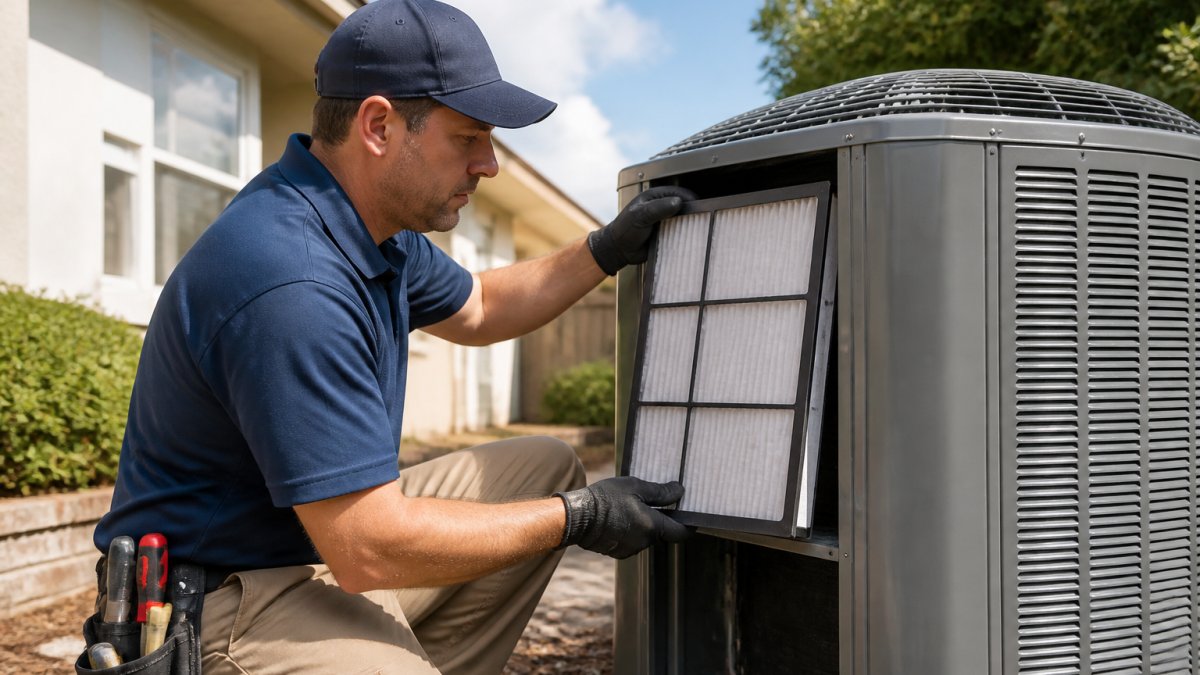
Refrigerant levels matter too. An undercharged system struggles to absorb heat efficiently, running continuously without reaching your setpoint. This is where professional diagnostics become essential, you can't visually inspect refrigerant levels or measure heat transfer efficiency yourself. Some problems require a licensed technician's gauges and expertise.
Ductwork leaks are invisible energy killers. If your ducts aren't sealed properly, 15-30% of cooled air escapes into attics, crawlspaces, or walls before reaching your rooms. Your system runs longer to compensate for that loss. Sealing ducts and insulating them in unconditioned spaces recovers that wasted energy immediately.
System Age, Size, and Efficiency Ratings Impact Your Bills
Older air conditioning systems are energy hogs. A unit from 1995 operates at roughly 8-10 SEER (Seasonal Energy Efficiency Ratio), while modern systems achieve 16-21 SEER. That means replacing a 30-year-old system with a current model cuts cooling energy consumption roughly 40-50% for the same comfort level.
SEER ratings became the federal efficiency standard for residential air conditioners beginning January 1, 2023, under standards established under the Energy Policy and Conservation Act. Understanding SEER ratings for AC explained helps you evaluate replacement options when your current system fails.
Oversizing is a common mistake that undermines efficiency. A system too large for your home cycles on and off rapidly without running long enough to dehumidify effectively. You end up cold and clammy rather than comfortable. A properly sized system runs longer, removes moisture more completely, and operates at peak efficiency. Professional load calculations determine the right size, not guesswork or industry rules of thumb.
Get a Free Energy Assessment and Efficiency Upgrade Plan
Your air conditioner energy consumption doesn't have to remain a mystery or a drain on your budget. Small adjustments, thermostat settings, filter changes, duct sealing, deliver immediate savings. Larger investments like system replacement or ductwork upgrades pay for themselves through reduced energy costs over 5-7 years.
The first step is understanding your specific situation. Every home has different insulation levels, window quality, duct conditions, and system efficiency. What works as a baseline recommendation may not match your actual setup. Air CareSaver offers free estimates to identify where cooling costs are going and which improvements deliver the highest return. Our licensed technicians (#1054832) provide honest diagnostics without unnecessary upselling, we've built our reputation over 21 years on accurate assessments and reliable solutions.
Understanding air conditioner energy consumption helps you to make decisions that lower costs while maintaining comfort. The factors we've covered, system efficiency, maintenance, thermostat settings, and home design, work together to determine your cooling bills. Start with the controllable factors today, then address larger efficiency improvements as your budget allows. Air CareSaver is here to guide that process with free estimates and straightforward recommendations.
| Factor | Impact on Energy Use | Control Level |
|---|---|---|
| Thermostat setting | 1-3% per degree | High |
| Filter condition | 5-15% if dirty | High |
| System age/SEER | 40-50% difference old vs. new | Medium |
| Ductwork leaks | 15-30% loss | Medium |
| Occupancy | Positive correlation | Low |
| Outdoor temperature | Drives cooling demand | None |
Frequently Asked Questions
How much electricity does an air conditioner use on average?
In 2020, air conditioning accounted for about 19% of U.S. residential electricity consumption, totaling 254 billion kilowatt-hours. Individual units vary widely based on size, efficiency rating, and usage patterns. A typical central AC system consumes 3,000-5,000 watts when running. Your actual consumption depends on your thermostat settings, home insulation, outdoor temperature, and how often the system cycles on and off during the day.
Does air conditioner maintenance really reduce energy consumption?
Yes. Regular maintenance keeps your system running efficiently by clearing debris from coils, replacing clogged filters, and ensuring proper refrigerant levels. Studies show that integrated air-conditioning energy-conservation strategies based on maintenance and occupancy patterns achieved 35% energy savings. A well-maintained unit cycles more efficiently, reducing wasted energy and lowering your monthly bills.
What thermostat settings save the most energy?
Higher thermostat settings reduce runtime and energy use. Setting your thermostat to 78°F instead of 72°F can cut cooling costs significantly. Programmable or smart thermostats that adjust temperatures when you're away or sleeping deliver even larger savings. Occupancy is the variable most highly correlated with air-conditioning consumption, so scheduling your thermostat around your daily routine maximizes efficiency without sacrificing comfort when you're home.
Can an oversized air conditioner waste more energy?
Yes. Oversized units cycle on and off too frequently, reducing efficiency and comfort while raising electricity costs. An improperly sized system also increases first costs and can exacerbate humidity control issues. Professional sizing ensures your new unit matches your home's actual cooling load, delivering both comfort and energy efficiency. Air CareSaver provides free estimates.