 how-to
How to Report an Unlicensed HVAC Contractor Fast
Table of Contents
- Why Reporting an Unlicensed HVAC Contractor Matters
- How to Check an HVAC Contractor License Before You Hire
- How to File a Contractor Complaint with the Right Agency
- Contractor Complaint Evidence: What to Gather Before You File
- The Unlicensed Contractor Complaint Process: What Happens After You Submit
- When to Escalate: Urgent Safety Hazards and Emergency Reporting
- What Reporting Can and Cannot Accomplish
- Frequently Asked Questions
Last Updated: October 12, 2026
Why Reporting an Unlicensed HVAC Contractor Matters
An unlicensed HVAC contractor is a technician who performs heating and cooling work without a valid state license, and reporting one protects your home, your wallet, and your neighbors. At Air CareSaver, we have held license #1054832 for over 21 years, so we know exactly what proper licensing requires. Unlicensed work often skips permits, inspections, and insurance. That means a failed compressor or a gas leak becomes your problem, not theirs. Reporting suspected unlicensed activity is one of the fastest ways to stop a bad operator from hurting the next homeowner. Below, we walk through how to check a license, how to file a complaint, and what happens after you submit it.
How to Check an HVAC Contractor License Before You Hire
The fastest way to check an HVAC contractor license is to look up the license number on your state's licensing board website. Every legitimate contractor carries a number, and most states let you search it in under a minute. Ask for the number in writing before any work starts. Then confirm three things:
- The license status shows "active," not expired or suspended
- The name on the license matches the company you hired
- The license covers the type of work you need
Warning Signs of an Unlicensed Contractor
Several red flags show up again and again. A contractor who asks for full payment upfront in cash is a major warning sign. So is anyone who refuses to put a license number on an estimate. Other common signs include:
- No physical business address, just a cell phone
- Pressure to start the same day
- No written contract or permit paperwork
- A price that seems far below every other quote
How to File a Contractor Complaint with the Right Agency
To file a contractor complaint, you need to reach the agency that actually licenses HVAC work where the job happened. That is not always the same office. In most states, HVAC licensing sits with a dedicated board, for example, a state contractors board, a mechanical or HVACR licensing board, or a department of professional regulation. In others, the county or city building department issues the trade permit and handles unpermitted work. When in doubt, file with both: the state licensing board for the unlicensed-practice violation and the local building department for the permit violation.
Before you file, gather the basics: the contractor's legal name and any DBA, license number if one was given, business address, phone, the job-site address, and a plain-language description of the work and the suspected violation. Many boards also ask whether the job site is active, because an active site may need a faster response to prevent further unsafe work.
Here is how to report an unlicensed HVAC contractor step by step:
- Identify the correct authority, state licensing board, local building department, or both
- Open the consumer complaint form on that agency's site (or call the consumer hotline)
- Enter the contractor's name, license number if any, and business details
- Describe the work, the suspected violation, and whether the job is active
- Attach contracts, photos, receipts, and any license-search results
- Submit and save your confirmation number or complaint ID
State-by-State Reporting Directory
Rules differ by state, and sometimes by city, so the agency you contact depends on where the work happened. Use the table below to find the right channel, then confirm current details on the agency's own site before filing.
| State | Primary Licensing Authority | How to File | Notes |
|---|---|---|---|
| California | Contractors State License Board (CSLB) | Online form, phone, or mail | CSLB also runs a separate SWIFT complaint process for unlicensed activity |
| Texas | Texas Department of Licensing and Regulation (TDLR) | Online form or phone | Air conditioning and refrigeration contractors are licensed by TDLR |
| Florida | Department of Business and Professional Regulation (DBPR) | Online form | HVAC is a certified or registered trade; local building departments also enforce permits |
| New York | Department of State, Division of Licensing Services | Online form or mail | Some HVAC work falls under local NYC Department of Buildings rules |
| Illinois | Illinois Department of Financial and Professional Regulation (IDFPR) | Online form | Roofing and HVAC complaints often route through IDFPR |
| Arizona | Arizona Registrar of Contractors (ROC) | Online form or phone | ROC handles residential and commercial contractor complaints |
| Washington | Department of Labor & Industries (L&I) | Online form or phone | L&I licenses electrical and HVAC/plumbing contractors |
| Nevada | Nevada State Contractors Board (NSCB) | Online form or phone | NSCB also runs a recovery fund for certain residential claims |
This is a starting point, not a complete list. Licensing requirements vary by state and sometimes by locality, so if your state is not shown, search for your state's contractors board or department of professional regulation and look for a "file a complaint" or "unlicensed activity" page. For official forms and current rules, check the agency directly, such as the California Contractors State License Board complaint page if you are in California.
Contractor Complaint Evidence: What to Gather Before You File
Strong contractor complaint evidence makes the difference between a case that moves forward and one that stalls. Investigators work from documents, so the more you provide, the faster they can act. Collect everything before you file.
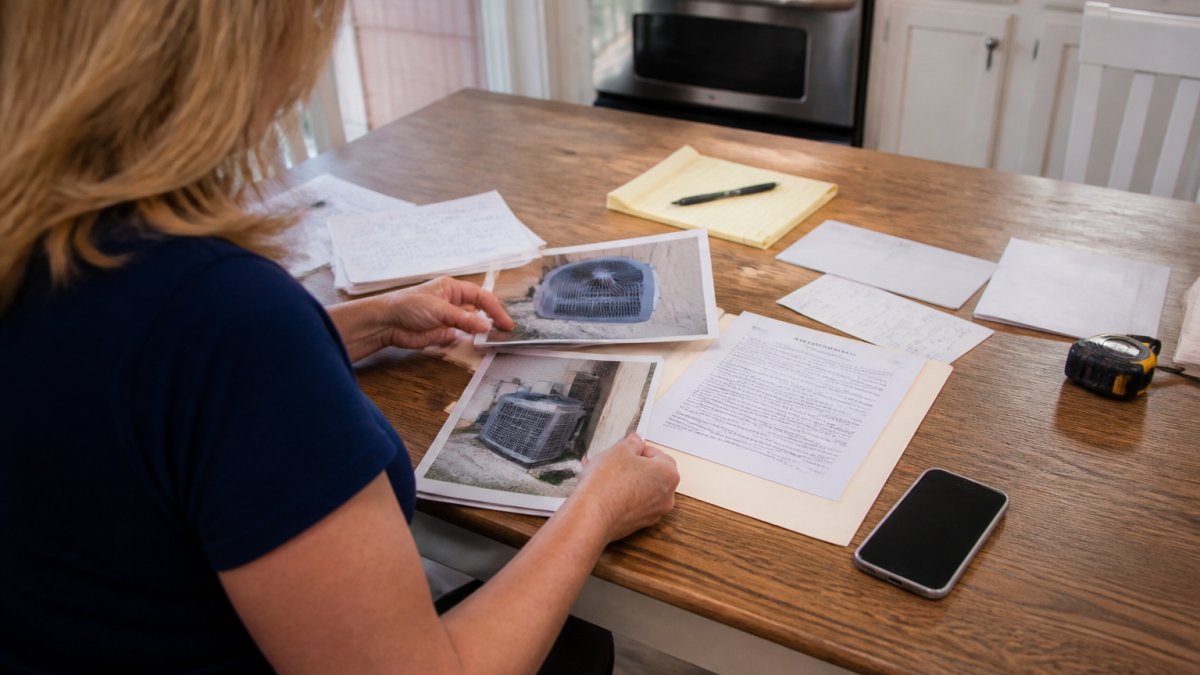
Gather these items:
- A copy of the signed contract or written estimate
- Photos of the work performed and any damage
- Receipts, canceled checks, or payment records
- Text messages and emails with the contractor
- The job-site address and a note on whether work is active
The Unlicensed Contractor Complaint Process: What Happens After You Submit
After you submit, the agency reviews your complaint and decides whether to open an investigation. Most boards send an acknowledgment first, then assign an investigator if the case qualifies. The investigator may contact you for more details or request supporting documents. If the board finds a violation, it can issue fines, suspend a license, or refer the case to enforcement. Response time varies widely. Simple cases may close in weeks, while complex ones take months.
What most guides do not tell you is what a licensing complaint can and cannot do, especially for HVAC work. A board can fine an unlicensed operator, issue a cease-and-desist, or refer the case for criminal prosecution in states where unlicensed contracting is a misdemeanor. It generally cannot recover your money, force a refund, or fix poor workmanship. Those are civil matters. If you already paid, your realistic paths are a civil claim in small claims or district court, a demand letter, a chargeback through your card issuer if you paid by credit card, or, in some states, a contractor recovery fund that pays limited amounts to homeowners harmed by licensed or unlicensed contractors. Recovery funds typically require a judgment or a final agency order first, so they are a later step, not an immediate remedy.
A few HVAC-specific points matter here. First, unpermitted HVAC work can void your homeowner's insurance for a related claim, so document the permit status early. Second, if the work involved refrigerant handling, the EPA Section 608 certification is separate from state licensing, and a complaint about refrigerant handling may route to a different federal or state environmental office. Third, if the contractor damaged your system or left it in a dangerous state, get a written inspection from a licensed HVAC technician before you file, that report becomes key evidence.
When to Escalate: Urgent Safety Hazards and Emergency Reporting
Some situations cannot wait for a standard complaint. Call emergency services first if you smell gas, see exposed wiring, or notice carbon monoxide symptoms. A gas leak or faulty electrical work is a life-safety issue, not a paperwork issue. After everyone is safe, report the contractor to the licensing board and your local building department. For active hazards, use the phone hotline rather than the online form so a person can triage it right away.
What Reporting Can and Cannot Accomplish
Reporting can stop a bad contractor from working and can support a refund or legal claim. It cannot always recover your money or undo poor work. A board can fine or suspend a contractor, but it usually does not pay you back directly. If you already paid, you may need a civil claim or your state's recovery fund. Reporting still matters. It builds a record that protects other homeowners and can strengthen your own case.
That is where a licensed pro helps. If you are in the San Gabriel Valley and need work done right, Air CareSaver offers free estimates, same-day response, and accurate diagnostics. Our team is licensed (#1054832) and family owned, with over 21 years of experience.
Frequently Asked Questions
How do I report an unlicensed HVAC contractor?
Contact your state's contractor licensing board. Most accept complaints online, by phone, or by mail. Provide the contractor's name, business address, license number if available, a description of the work, and any supporting documents like contracts, receipts, or photos. If the work is active and unsafe, call your local building department immediately.
Can I report a contractor if I only suspect they are unlicensed?
Yes. You do not need proof of unlicensed activity to file a report. State agencies investigate suspected violations, so a reasonable suspicion based on missing license numbers, refusal to provide credentials, or a quote far below market rates is enough to submit a complaint. Include what you observed and any documentation you have.
What evidence should I collect before filing a contractor complaint?
Gather your signed contract, payment receipts, text or email threads, photos of the work performed, the contractor's business card or vehicle information, and any license number they provided. Note the job-site address and dates. This contractor complaint evidence helps investigators verify license status and build a case faster.
Can I report an unlicensed contractor after the work is finished?
Yes. Most states accept complaints after work is complete, especially if the contractor was unlicensed during the project or caused damage. File as soon as you discover the issue, since some agencies have time limits. Include proof of payment and photos of the finished work to support your claim.
Facing a broken system or a contractor you cannot trust? Air CareSaver brings 21+ years of licensed expertise, same-day response, and free estimates to every job. We diagnose the real problem without guesswork, so you avoid expensive breakdowns and unnecessary repairs. Get started with Air CareSaver and restore your year-round comfort today.