 how-to
How to Avoid HVAC Repair Scams: 7 Key Steps
Table of Contents
- Why HVAC Repair Scams Are So Common
- Step 1: How to Verify HVAC Contractor License and Credentials
- Step 2: Recognize Red Flags Before Booking a Service Call
- Step 3: Questions to Ask HVAC Repair Companies
- Step 4: When to Get a Second Opinion on HVAC Repairs
- Step 5: Spot Common Scams and Unnecessary Repairs
- Step 6: Collect Digital Evidence and Documentation
- Step 7: What to Do If You've Been Scammed
- Frequently Asked Questions
Last Updated: September 2, 2026
Why HVAC Repair Scams Are So Common
HVAC systems are complex and expensive, and most homeowners don't understand how they work. This knowledge gap is where scams flourish. Scammers exploit this by diagnosing problems that don't exist, recommending unnecessary system replacements, or charging diagnostic fees for quick inspections.
At Air CareSaver, we've seen the damage these scams cause firsthand. Homeowners lose thousands of dollars on unnecessary work and often delay legitimate repairs out of fear. The good news is that you can avoid HVAC repair scams by learning what to watch for. Most scams follow predictable patterns. This guide walks you through seven concrete steps to protect yourself, from verifying credentials before a technician arrives to knowing what to do if you've already been scammed.
Step 1: How to Verify HVAC Contractor License and Credentials
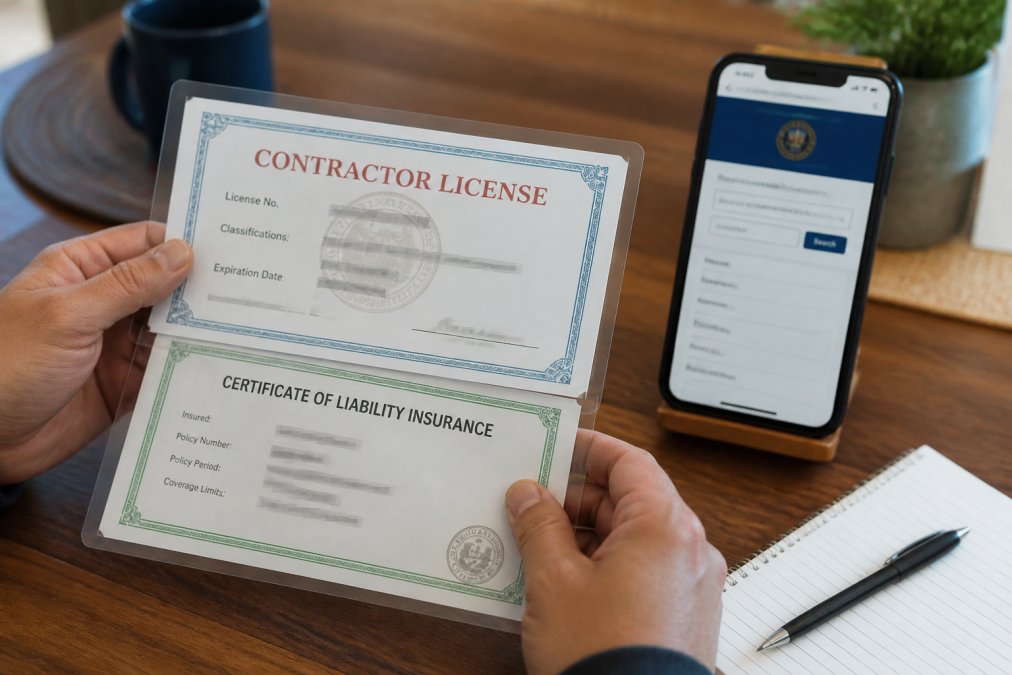
Before you book a service call, verify that the contractor is actually licensed. Every state requires HVAC technicians to hold a valid license, which means they've passed an exam covering safety, code compliance, and technical knowledge (the EPA).
To verify credentials, search for the contractor's name and license number on your state's official licensing board website. If the number doesn't pull up, do not hire them. Ask for proof of liability and workers' compensation insurance as well. A legitimate contractor will provide documentation without hesitation.
Ask whether the technician holds EPA certification for handling refrigerant or NATE (North American Technician Excellence) certification, which shows they passed an independent competency exam (the EPA). Don't just take the contractor's word, verify independently by calling the licensing board yourself.
Step 2: Recognize Red Flags Before Booking a Service Call
Some warning signs appear before the technician even shows up. Legitimate contractors provide free estimates and won't quote a price over the phone without an in-person inspection.
High-Pressure Sales Tactics
Watch for artificial urgency. A technician who says "your system could fail any day now" or claims a promotion expires today is using fear to rush your decision. Legitimate problems need fixing, but they don't need fixing in the next 30 minutes. An honest contractor will give you time to think and provide a written estimate you can review at home.
Diagnostic Fees and Hidden Charges
Some contractors charge for the initial inspection, which can be legitimate if the fee is reasonable and credited toward the repair. Be suspicious of vague language about what the fee covers. If they charge $200 to diagnose a refrigerant leak but then recommend a $5,000 system replacement, ask why the diagnosis led to that recommendation.
Vague or Verbal Estimates
Never accept a verbal estimate. A written estimate should include a description of the problem, the recommended solution, parts with part numbers, labor costs separated from parts, total price, warranty information, and timeline for completion.
Compare estimates from at least two contractors. If one is dramatically higher or lower, ask why. A huge difference might indicate a scam or that one contractor found a problem the others missed.
Step 3: Questions to Ask HVAC Repair Companies
The right questions reveal whether a contractor is honest or trying to manipulate you.
Ask: "What specifically is wrong with my system, and how did you determine that?" A technician should explain the problem clearly and describe their diagnostic steps. Ask about alternatives, an honest technician will discuss different options with different costs and lifespans.
Ask about warranty: "What warranty comes with this work?" Legitimate contractors warrant parts for 1-5 years and labor for about 1 year (the FTC). Ask about timeline and whether your system is worth repairing or should be replaced. A honest answer might be "5-7 more years if we replace the compressor" rather than "it could fail anytime."
Step 4: When to Get a Second Opinion on HVAC Repairs
If a contractor recommends major repair or replacement, get a second opinion. This is especially important if the work costs more than $1,500, involves replacing the entire system, or the diagnosis seems inconsistent with your system's age.
Call a different company and ask if the first diagnosis makes sense. The second technician might confirm the diagnosis or find something different. If two independent contractors recommend similar work at similar prices and a third recommends something very different, the outlier is probably wrong.
Step 5: Spot Common Scams and Unnecessary Repairs
Refrigerant Recharge Scams
Your air conditioner doesn't "run out" of refrigerant. If your system is low, there's a leak. The fix is to find and seal the leak, then recharge the system. A scammer will recommend a recharge without mentioning a leak. If a technician recommends a recharge without discussing a leak, ask directly: "Where's the leak?" If they can't answer, get a second opinion.
Fake Component Failures
Technicians sometimes claim expensive components like the compressor or heat exchanger have failed when they haven't. Ask to see the damage. A genuinely failed part shows visible signs: corrosion, cracks, leaks, or physical damage. Request photos of the damage. Be especially skeptical of claims about internal components you can't see.
Bait-and-Switch System Replacement
A technician arrives for a repair call, quotes a repair price, then calls back saying you need a whole new system. Sometimes this is legitimate, but scammers use this tactic to pressure you into expensive replacements. Protect yourself by getting a detailed written estimate before any work begins.
Step 6: Collect Digital Evidence and Documentation
If you suspect you've been scammed, documentation is your weapon. Keep every piece of paper the contractor gives you: the estimate, invoice, warranty information, and any photos or reports. Take photos of these documents with your phone and store them in a cloud folder.
During the service call, take photos and videos of your HVAC system before and after the work. Write down everything the technician says about your system, including the date, time, and technician's name. Get the technician's license number and company name in writing.
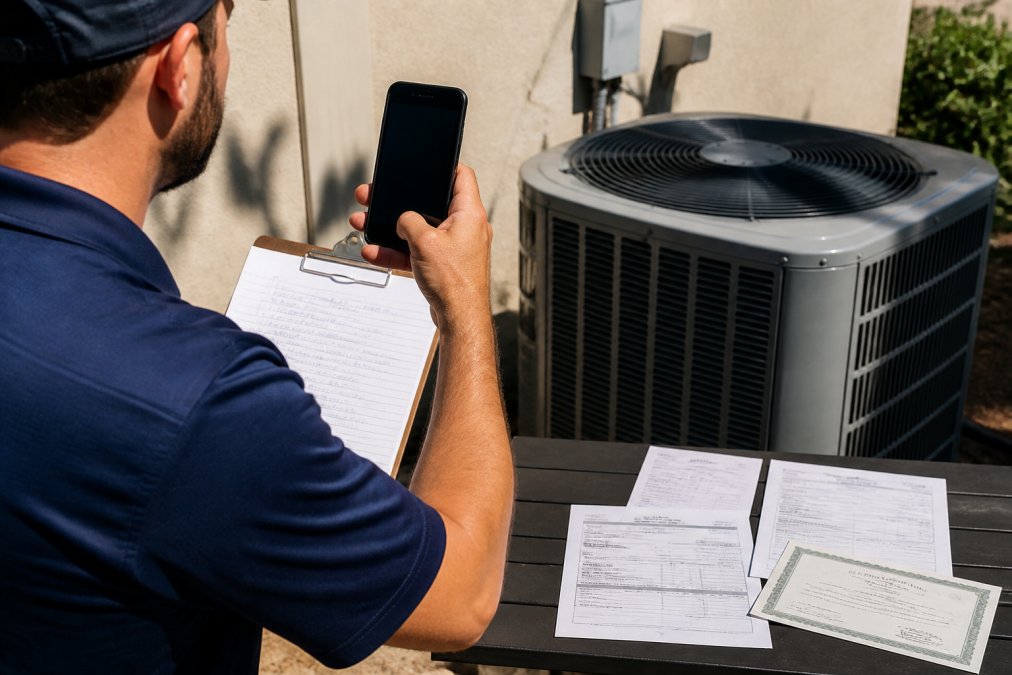
Ask for a detailed invoice that breaks down parts and labor separately. If you're not satisfied with the work, document the problems with photos and get a second technician to inspect the work and provide a written assessment.
Step 7: What to Do If You've Been Scammed
If you discover you've been scammed, contact the contractor in writing via email to create a record. Explain what you believe was wrong and request a refund or correction. Some contractors will make it right at this stage.
If the contractor refuses, file a complaint with your state's licensing board. Every state has an agency that oversees HVAC contractors and can investigate violations or fraudulent practices. File a complaint with the Better Business Bureau as well.
For small amounts, consider small claims court. Most states allow claims up to $5,000-$10,000 without needing a lawyer. Contact your state's consumer protection agency and the Federal Trade Commission if the scam involved credit card fraud or identity theft.
Document everything throughout this process. Keep copies of all correspondence, complaints, and responses for potential court or arbitration proceedings.
HVAC repair scams thrive on homeowner confusion and fear. You can dramatically reduce your risk by verifying credentials, asking the right questions, and demanding documentation. When you're ready to move forward with repairs, work with contractors who welcome scrutiny and provide clear, detailed estimates. At Air CareSaver, we believe transparency builds trust. Our 21+ years of licensed experience (#1054832) means we've earned the confidence of homeowners through honest diagnostics, accurate estimates, and work that actually solves problems. We offer free estimates and same-day response because we're confident in our reputation. Get your free quote today and see the difference that honest service makes.
Frequently Asked Questions
How can I verify if an HVAC contractor is licensed and insured?
Check your state's licensing board database using the contractor's name or license number. Ask the contractor directly for proof of insurance and verify it with their insurance provider. Licensed contractors should have no problem providing documentation. A legitimate HVAC company will also display their license number in advertisements and on their website. Always confirm the license is current and active before hiring.
What are the most common red flags of an HVAC repair scam?
Watch for contractors who push system replacement without a thorough inspection, quote prices verbally without written estimates, demand full upfront payment, create false urgency by claiming your system will fail immediately, or refuse to explain what's wrong in simple terms. High-pressure sales tactics, vague diagnostic fees, and contractors who won't provide references are major warning signs. Legitimate HVAC companies always provide written estimates, explain repairs clearly, and allow time for you to get a second opinion.
When should I get a second opinion on HVAC repairs?
Get a second opinion whenever a repair estimate exceeds $500, a contractor recommends full system replacement, or you feel pressured to decide immediately. If the diagnosis seems unclear or the recommended repair doesn't match your symptoms (like a compressor failure when your AC just won't turn on), seek another evaluation. A second opinion costs little and protects you from expensive, unnecessary work. Reputable contractors expect customers to verify their recommendations and won't be offended by a second assessment.
What should I do if I've already been scammed by an HVAC contractor?
Document everything: save the receipt, written estimate, photos of work performed, and any communications. File a complaint with your state's licensing board and the Better Business Bureau. If the amount is under $10,000, consider small claims court. Contact your credit card company or bank if you paid by card or check to dispute the charge. Consult a consumer protection attorney for larger amounts. Report the contractor to local consumer protection agencies and online review platforms to warn others and build a record of fraudulent activity.
This article was written using GrandRanker