 listicle
HVAC Installation Cost Estimate 2026
Table of Contents
- HVAC Installation Cost Breakdown for 2026
- Factors That Affect Your HVAC Installation Cost
- Equipment vs. Labor: Where Your Money Goes
- Repair vs Replace HVAC Decision Guide
- Why Is My AC Running Constantly and What It Costs to Fix
- Federal Tax Credits for Energy-Efficient HVAC Systems
- Hidden Costs and Installation Fees to Expect
- Getting an Accurate HVAC Installation Cost Estimate
- Frequently Asked Questions
Last Updated: August 24, 2026
HVAC Installation Cost Breakdown for 2026
When your air conditioning system fails, the first question is "how much will this cost?" Understanding HVAC installation costs matters because the difference between a smart decision and an expensive mistake often comes down to knowing what you're actually paying for.
The total cost typically breaks down into three major components: equipment (40-50%), labor (40-50%), and additional fees like permitting and ductwork modifications (5-10%). These percentages shift based on your home's size, system type, and local market rates.
At Air CareSaver, we've spent over 21 years helping homeowners understand exactly where their money goes. With our free estimates and transparent approach, you'll know the real cost before any work begins, no hidden surprises, no pressure to upgrade unnecessarily.
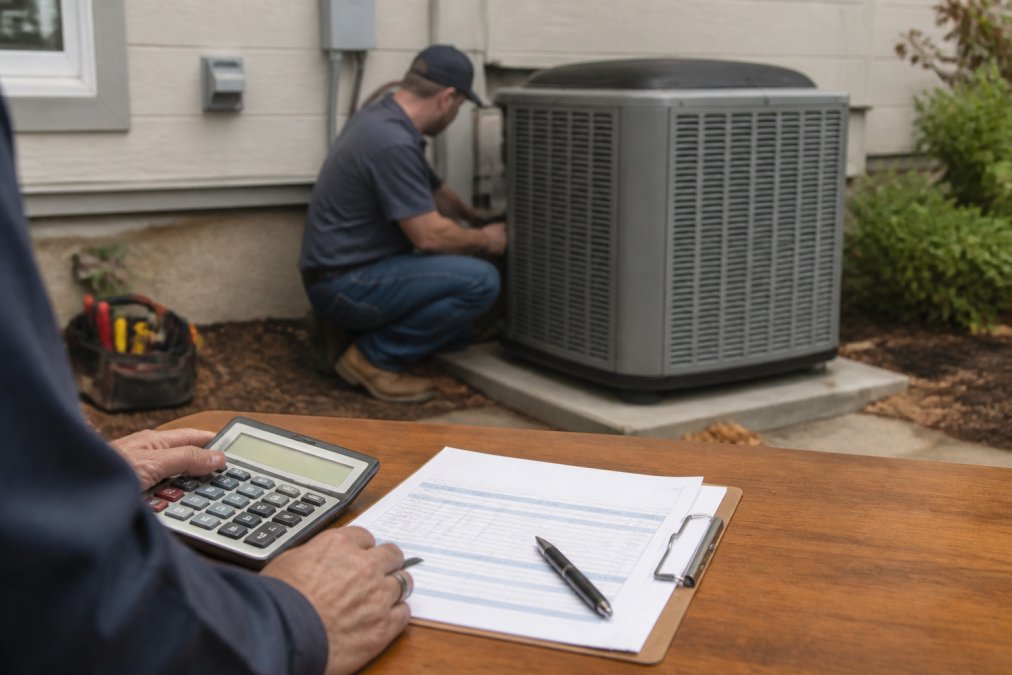
Your HVAC installation cost estimate should itemize each component separately. When a contractor hands you a single number without breakdown, you're flying blind. A detailed estimate tells you precisely what you're paying for and why.
Factors That Affect Your HVAC Installation Cost
Your HVAC installation cost estimate depends on more variables than most homeowners realize.
Home size and square footage is the primary cost driver. A 1,200-square-foot home requires a smaller capacity system than a 3,500-square-foot home. The HVAC load calculation, the technical assessment of how much cooling or heating your home actually needs, determines your system capacity (ashrae.org). An undersized system will fail to maintain comfort; an oversized system wastes energy and money.

System type selection dramatically changes your HVAC installation cost. A split system (outdoor condenser and indoor air handler) costs differently than a heat pump, which handles both heating and cooling. Heat pumps provide year-round comfort with a single system but carry higher upfront costs than traditional air conditioning. Communicating systems adjust capacity based on demand and cost more than single-stage systems but reduce energy waste.
Labor costs and installation complexity vary by region and your home's existing infrastructure. If your home already has ductwork in good condition, installation is straightforward. New ductwork, attic access challenges, and structural modifications all add time and cost.
Efficiency ratings (SEER2 for cooling, HSPF2 for heating) determine both performance and price. A system with a SEER2 rating of 16 costs considerably more than one rated at 13 but uses less electricity and qualifies for federal tax credits. The energy savings over 10-15 years often justify the upfront premium.
Ductwork condition and modifications can add thousands to your estimate. Older homes sometimes have undersized or damaged ductwork requiring replacement. Zoning systems allow temperature control in different areas but increase installation cost.
Equipment vs. Labor: Where Your Money Goes
Breaking down your HVAC installation cost estimate into equipment and labor helps you understand what you're purchasing.
Equipment costs include the outdoor condenser unit, indoor air handler or furnace, refrigerant lines, thermostat, and additional components. The condenser unit is typically the most expensive single component. High-efficiency compressors, larger coil surface area, and advanced controls drive costs up.
Equipment markup varies by contractor and region. Some operate on thin margins and pass savings to customers; others mark up equipment 25-40% above cost. This is why multiple estimates matter, the same equipment from different contractors can carry different price tags.
Labor costs reflect the time required for proper installation. A straightforward replacement with existing ductwork might take 8-12 hours; complex installations with ductwork modifications can take 20-30 hours or more. Labor rates vary by region, with urban areas typically higher than rural regions.
Quality installation affects system performance and longevity. A technician who properly sizes the system, seals connections, and tests for leaks ensures efficient operation. Rushing installation creates problems: refrigerant leaks, improper airflow, and premature failure.
Repair vs Replace HVAC Decision Guide
The repair versus replace decision depends on your current system's age, condition, and repair history.
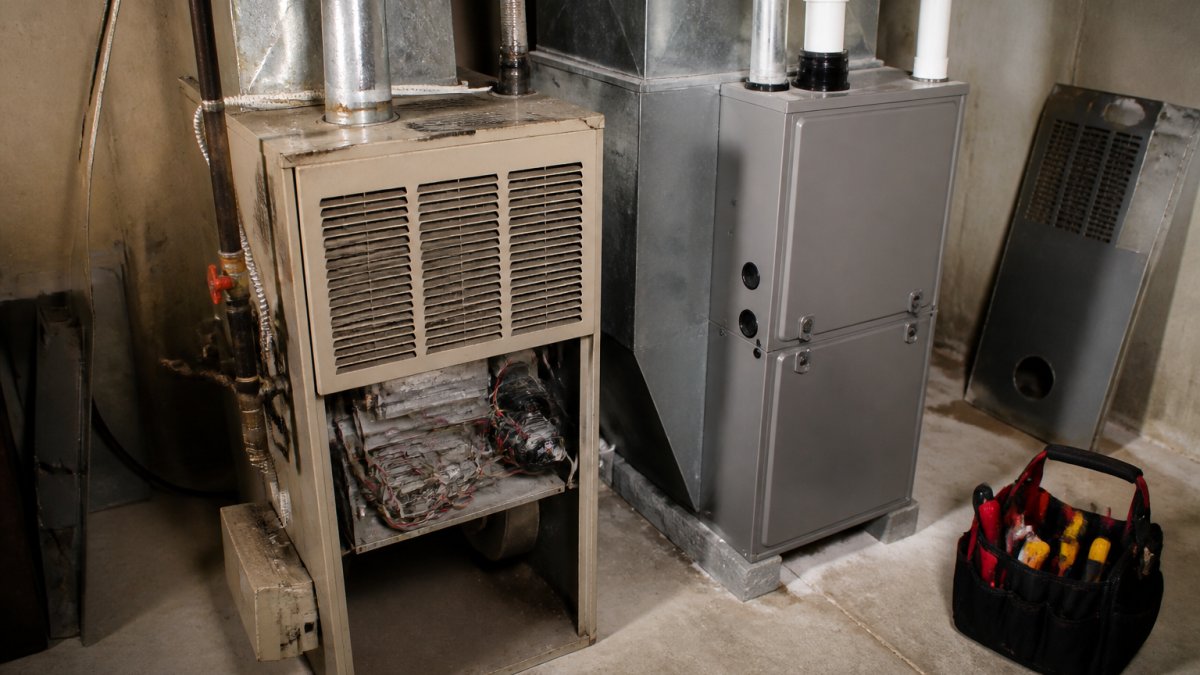
Age of your system is the primary decision point. Most HVAC systems last 12-15 years with proper maintenance (energy.gov). A system that's 10-12 years old and experiencing problems is approaching the end of its useful life. A system that's 5-7 years old with a single repair issue should usually be repaired.
The 5,000 rule helps guide this decision: multiply the age of your system by the repair cost. If the result exceeds 5,000, replacement is usually more economical. A 10-year-old system needing a $700 repair equals 7,000; replacement makes sense. A 6-year-old system needing the same repair equals 4,200; repair is better.
Repair history matters significantly. A system needing three repairs in two years shows signs of decline. When repairs become frequent, replacement becomes inevitable.
Energy efficiency gains from replacement can offset costs. An older system at 10 SEER efficiency uses far more electricity than a modern 16 SEER2 system. Over 10-15 years, energy savings can amount to thousands of dollars. Federal tax credits for high-efficiency systems also reduce net replacement costs.
A system that's completely failed, compressor seized, major refrigerant leak, cracked heat exchanger, should be replaced, not repaired.
Why Is My AC Running Constantly and What It Costs to Fix
An air conditioning system running continuously without cycling off is either working too hard or broken.
Undersized systems run constantly because they can't reach your thermostat's set temperature. Fixing this requires replacing the system with properly sized equipment.
Thermostat problems cause constant running that's easy and inexpensive to fix. A faulty thermostat might not recognize when your home has reached the desired temperature. Replacement costs a fraction of replacing an entire system.
Refrigerant leaks force your system to work harder and run longer. Finding and fixing the leak, then recharging the system, restores normal operation.
Dirty air filters and blocked condenser coils restrict airflow and reduce efficiency. Cleaning or replacing filters and cleaning the outdoor condenser unit often solves the problem.
Ductwork leaks allow cooled air to escape before reaching your living spaces. Sealing ducts restores efficiency and allows normal cycling.
The cost to fix a constantly running system ranges from $0 (change the filter yourself) to several thousand dollars (replace the entire system if undersized). A diagnostic inspection identifies the actual problem and gives you an accurate repair or replacement cost.
Federal Tax Credits for Energy-Efficient HVAC Systems
The federal government offers tax credits for homeowners who install energy-efficient HVAC systems. These credits reduce your tax liability dollar-for-dollar.
Current federal tax credits apply to HVAC systems meeting specific efficiency standards. Systems with SEER2 ratings of 16 or higher and HSPF2 ratings of 8 or higher qualify (irs.gov). Higher-efficiency systems qualify for larger credits.
State and local rebates often stack on top of federal credits. Some utility companies offer additional rebates for installing high-efficiency systems. Checking with your local utility and state energy office provides the full picture of available incentives.
Claiming the credit requires proper documentation. Keep your HVAC contractor's invoice showing the system model, efficiency ratings, and installation date. The combination of federal credits, state rebates, and long-term energy savings makes high-efficiency system replacement more affordable than equipment cost alone suggests.
Hidden Costs and Installation Fees to Expect
Your HVAC installation cost estimate should include all costs, but some items are easy to overlook.
Permit and inspection fees vary by location but are mandatory in most jurisdictions. Permits cost anywhere from $50 to $500 depending on your area.
Ductwork modifications add cost beyond basic installation. Replacing, sealing, or insulating ducts all add labor and materials.
Thermostat upgrades are sometimes bundled into installation, sometimes billed separately. Programmable or smart thermostats cost more than basic models.
Refrigerant disposal and handling requires proper procedures. Older refrigerants like R-22 cost more to handle.
Extended warranties and service agreements are optional add-ons providing coverage beyond the manufacturer's warranty.
Financing fees apply if you use the contractor's financing option. Understanding the true cost of financing helps you compare payment options.
Ask your contractor to itemize all costs in your HVAC installation cost estimate so you understand exactly what you're paying for.
Getting an Accurate HVAC Installation Cost Estimate
An accurate HVAC installation cost estimate requires a detailed in-home assessment. Phone quotes and online calculators provide rough figures but can't account for your home's specific characteristics.

The professional assessment starts with measuring your home's square footage and identifying your current system's location and condition. The technician evaluates existing ductwork, checks for leaks, and assesses insulation and air sealing. They ask about comfort concerns, are certain rooms too hot or cold? Does the system struggle to reach your set temperature?
The load calculation determines your system's required capacity in BTUs. This technical assessment considers your home's size, insulation level, window area, sun exposure, and local climate. A proper load calculation prevents oversizing or undersizing.
Multiple estimates reveal market rates in your area. Compare estimates side-by-side, looking at equipment specifications, labor costs, and included services. The lowest price isn't always the best value if it means lower-quality equipment or rushed installation.
Red flags in estimates include vague descriptions without model numbers, no labor breakdown, and pressure to decide immediately. Reputable contractors provide detailed, transparent estimates.
At Air CareSaver, every estimate is free and includes a complete system assessment. We provide detailed breakdowns showing equipment, labor, and all additional costs. Our 21+ years of experience means we identify issues other contractors might miss, and our same-day response ensures you're not left without cooling during an emergency.
Understanding your HVAC installation cost estimate puts you in control of one of the largest home improvement decisions you'll make. The breakdown between equipment, labor, and hidden costs tells you where your money goes. The decision to repair or replace depends on your system's age and condition. Federal tax credits and rebates reduce your net cost significantly.
Getting an accurate estimate requires a professional in-home assessment that accounts for your home's unique characteristics. Air CareSaver provides exactly that, free estimates with transparent pricing, backed by 21+ years of licensed expertise (#1054832). We diagnose problems accurately without unnecessary upselling, and our same-day response means you're never left without comfort. Get My Free Quote today and understand your true HVAC installation cost before committing to any work.
Frequently Asked Questions
What is a typical HVAC installation cost estimate for a 2,000 square foot home in 2026?
HVAC installation cost depends on your system type, equipment efficiency rating, local labor rates, and installation complexity. A larger home typically requires higher capacity equipment and may involve more ductwork modification, which increases total cost. For an accurate estimate specific to your home and location, contact a licensed HVAC contractor for a free in-home evaluation. Air CareSaver provides free estimates to help you understand your actual costs without obligation.
Are there federal tax credits available for HVAC installations in 2026?
Yes, federal tax credits are available for qualifying energy-efficient HVAC systems. The Inflation Reduction Act offers tax credits for heat pump installations and other high-efficiency equipment that meet specific SEER2 and HSPF2 ratings. Credits can cover a portion of equipment and installation costs. Eligibility depends on your system's efficiency rating and your home's location. A licensed contractor can help determine if your installation qualifies and guide you through the documentation needed to claim these credits.
How much of my HVAC installation cost goes to equipment versus labor?
Typically, equipment represents 40-50% of your total HVAC installation cost, while labor accounts for 50-60%. Equipment costs vary by system type and efficiency rating, while labor costs depend on installation complexity, ductwork modifications, and local prevailing wage rates. A detailed estimate from your contractor will break down equipment and labor separately, so you understand exactly where your money is going and can make informed decisions about efficiency upgrades or system options.
Should I repair my old HVAC system or replace it entirely?
The repair versus replace decision depends on your system's age, repair cost, and remaining lifespan. Systems over 15 years old become less efficient and repair costs accumulate. A general guideline: if repair cost exceeds 50% of replacement cost, replacement often makes financial sense long-term. Also consider energy efficiency gains and federal tax credits available for new systems. A professional HVAC contractor can assess your system's condition and provide honest guidance on the most cost-effective option for your situation.
This article was written using GrandRanker