 how-to
Is It Safe to Live With an AC Refrigerant Leak?
Last Updated: November 1, 2026
Quick Summary
A small, slow AC refrigerant leak in a ventilated home is usually not an immediate danger, but it should not be ignored. Turn the system off, ventilate the area, keep people and pets out of the room, and call a licensed technician. Large releases, leaks in confined spaces, or symptoms in anyone require leaving the home.
- Measured central AC systems leaked about 1.78% of refrigerant per year in one study of 126 homes.
- Warm air from vents, ice on lines, hissing, and rising energy bills are common leak warning signs.
- Never use a flame to check for a leak; use soap bubbles or an electronic detector.
- Refrigerant is heavier than air and can pool at floor level in basements and closets.
- Do not recharge the system yourself, because a DIY top-off hides the leak while charge keeps escaping.
Table of Contents
- What an AC Refrigerant Leak Is and How It Happens
- AC Refrigerant Leak Symptoms to Watch For
- Is It Safe to Stay Home With an AC Refrigerant Leak?
- What to Do If Your AC Is Leaking Refrigerant
- How Long Can You Run AC With a Refrigerant Leak?
- AC Refrigerant Leak Detection and Repair Options
- Booking a Refrigerant Leak Inspection With Air CareSaver
- Frequently Asked Questions
Is it safe to live with an AC refrigerant leak? Short answer: a small, slow leak in a ventilated home is usually not an immediate danger, but it is a problem you should not ignore. Homeowners often ask this question when they notice their cooling has weakened. Here is what the risk actually looks like and what to do next.
What an AC Refrigerant Leak Is and How It Happens
Refrigerant is the chemical that carries heat out of your home. When it leaks, the system loses its ability to cool properly.
Direct measurements from 126 homes found central air conditioners leaked about 1.78% of their refrigerant per year, which is lower than the 4% to 10% often assumed in climate estimates (PSE Healthy Energy study on AC refrigerant leakage). So a leak is not automatically a sign of a failing system. Leaks usually come from worn fittings, vibration, corrosion on coils, or damaged refrigerant lines.
AC Refrigerant Leak Symptoms to Watch For
Most leaks show up as performance problems before anyone smells anything. Common warning signs include:
- Air coming from vents that feels warm or only mildly cool
- Ice forming on the indoor coil or refrigerant lines
- A hissing or bubbling sound near the indoor or outdoor unit
- Cooling that gets worse over time, not all at once
- Higher energy bills with no other explanation
A chemical odor near the unit is less common but should be checked right away.
Is It Safe to Stay Home With an AC Refrigerant Leak?
For most households, a small, slow leak is not an emergency, but "safe to stay" is a judgment that depends on four things: the refrigerant type, how much has escaped, the size and ventilation of the space, and who lives there. Treating every leak as equally toxic is as wrong as ignoring it.
Risk depends on the refrigerant, not just the leak. Residential systems in the U.S. commonly use R-410A or, in newer equipment, R-32 or R-454B. Refrigerant type and how much has escaped both affect the level of risk, and a technician can identify which refrigerant your system uses.
Match your response to the size of the release.
- Suspected small, slow leak (gradual loss of cooling, no odor, no symptoms): turn the system off, ventilate the area, keep people and pets out of the immediate room, and schedule a technician. You do not need to evacuate.
- Suspected large release (loud hiss, visible frost or oily residue at a joint, strong chemical odor, or a sudden loss of cooling): leave the area, open windows and doors on your way out, and do not re-enter until it has aired out. Call a licensed HVAC technician; call 911 if anyone has symptoms or you cannot ventilate the space safely. If you need urgent help, emergency HVAC service in Walnut can get your system back to comfortable as quickly as possible. You can also review what qualifies as an emergency HVAC repair before deciding how urgent your situation is.
- Any release in a confined space (basement, closet, crawlspace, small utility room): treat it as a large release regardless of sound or smell, because refrigerant is heavier than air and pools at floor level where oxygen can be displaced.
Vulnerable household members change the calculus. Infants, older adults, pregnant occupants, and anyone with asthma, COPD, or another respiratory condition should be moved to fresh air first if there is any odor or symptom, even when the leak seems minor. Pets, especially birds, which are highly sensitive to airborne chemicals, should be removed from the room with the indoor unit. If a vulnerable person develops coughing, wheezing, headache, dizziness, or nausea, leave the home and seek medical advice; Poison Control can be reached for exposure guidance.
What "staying" should look like if you do remain. Keep windows cracked in the affected area, do not sleep in the room with the air handler, keep the system off until it is inspected, and avoid running other combustion appliances in a confined space where refrigerant may have pooled. If the odor returns or worsens after ventilating, leave and call for help rather than waiting it out.
What to Do If Your AC Is Leaking Refrigerant
Use this sequence for a suspected leak. The order matters, stop the source, clear the air, protect people, then call for help.
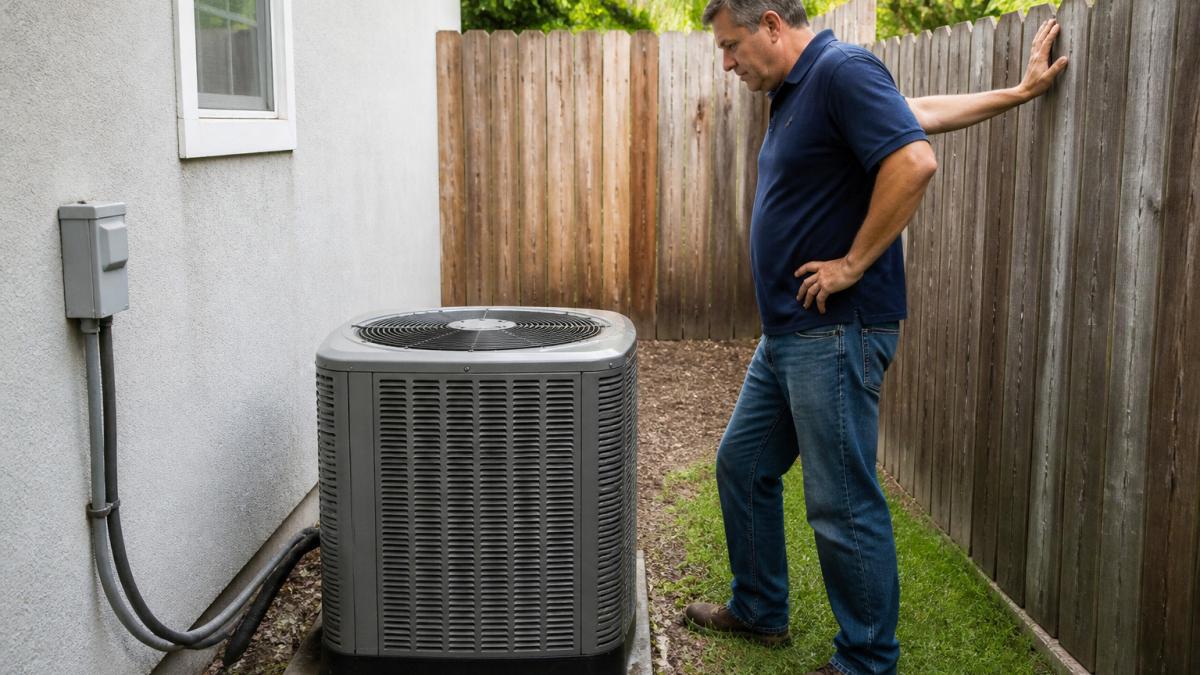
- Turn the system off at the thermostat, then at the breaker if you can reach it safely. A running system keeps pushing refrigerant out and can pull contaminated air through the ducts.
- Ventilate. Open windows and doors in the affected area and, if there is a confined mechanical room, leave the door open and keep people out.
- Move people and pets out of the room with the indoor unit or air handler. Move anyone with symptoms to fresh air immediately.
- Do not re-enter a confined space where you smell refrigerant or feel lightheaded. Call from outside the area.
- Call a licensed HVAC technician. If anyone has trouble breathing, confusion, or fainting, call 911 first, then Poison Control at 1-800-222-1222.
Do and Don't Checklist
Do:
- Shut off power and ventilate before doing anything else.
- Note what you observed, warm air, frost, hissing, odor, when it started, so the technician can triage faster.
- Ask the technician to locate and seal the leak, not just top off the charge.
- Ask for the refrigerant type and the leak location in writing on the invoice.
Don't:
- Don't try to recharge the system yourself. A DIY top-off hides the leak while the system keeps losing charge.
- Don't use a flame or open heat source to look for a leak.
- Don't seal a room and run the system to "see if it gets cold", that concentrates any release.
- Don't ignore a repeat leak. A system that loses charge more than once a season has an unresolved problem.
What the Service Visit Usually Involves
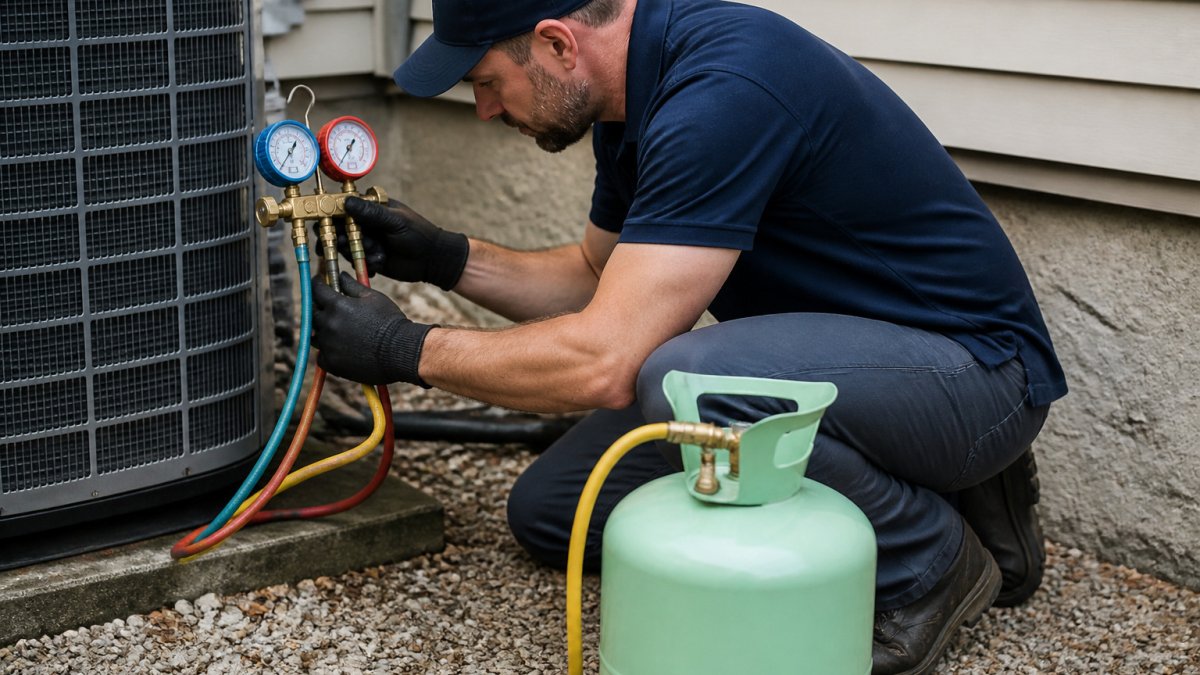
A technician will typically pressurize or evacuate the system, use an electronic leak detector and soap bubbles at fittings and coils, and may add UV dye for hard-to-find leaks. For a closer look at how these repairs are handled, see residential AC repair for refrigerant issues. Once located, the repair ranges from tightening a flare fitting or replacing a Schrader valve to replacing a section of line set or an evaporator coil. After repair, the system is evacuated, leak-tested, and charged to the manufacturer's specified weight, not guessed by pressure alone.
Repair Versus Replace: How the Math Usually Works
Repair and replacement costs depend on the system's age, refrigerant type, and the nature of the leak. Ask the technician for both the repair cost and the replacement cost, along with the expected remaining life of the system, before deciding.
The steps below cover what to do the moment you suspect a leak, in order.
| Step | What to do | Timing |
|---|---|---|
| Turn the system off | Switch off at the thermostat, then at the breaker if safe | Immediately |
| Ventilate | Open windows and doors in the affected area | Right away |
| Move people and pets | Clear the room with the indoor unit or air handler | Before anything else |
| Avoid confined spaces | Do not re-enter if you smell refrigerant or feel lightheaded | Until aired out |
| Call a technician | Use a licensed HVAC technician; call 911 if anyone has trouble breathing | As soon as safe |
How Long Can You Run AC With a Refrigerant Leak?
Running an AC with low refrigerant is not a good idea for long. The system works harder, uses more electricity, and can strain the compressor, which is the most expensive part to replace. A short period of running the unit to check temperatures is usually fine, but continuing to run it for weeks with a known leak can turn a repair into a much bigger job. Learning about the benefits of annual AC maintenance can help catch these problems early. The safer course is to have a technician confirm the problem and schedule service promptly.
AC Refrigerant Leak Detection and Repair Options
Technicians usually find leaks with an electronic leak detector, a soap-bubble test on fittings, or a dye that shows up under UV light. Once located, the repair might be as simple as tightening a fitting or replacing a short section of line. More serious cases involve a corroded coil or a damaged compressor.
The right repair depends on the age of the system, the type of refrigerant it uses, and the cost of fixing versus replacing. A good technician will explain those tradeoffs clearly before any work starts.
Booking a Refrigerant Leak Inspection With Air CareSaver
If your AC is blowing warm air or you suspect a leak, Air CareSaver offers same-day response and free estimates for residential and commercial properties across the San Gabriel Valley. Our licensed technicians will diagnose the problem and explain your options without unnecessary parts or guesswork.
Visit our site to get started with a free quote.
Frequently Asked Questions
Is it safe to stay in a house with an AC refrigerant leak?
For most homes, a small leak in a well-ventilated house is not an immediate emergency, but it should be treated as a problem to fix promptly. Refrigerant is most dangerous in enclosed, poorly ventilated spaces or where a large amount escapes at once. If you notice strong chemical odors, dizziness, breathing difficulty, or symptoms that worsen, leave the home and call emergency services or Poison Control. If you only suspect a slow leak, open windows if it is safe to do so, turn off the system, and schedule a licensed technician to inspect it as soon as possible.
Can an AC refrigerant leak make you sick?
Refrigerant exposure can cause health effects, especially with a large or concentrated release. Common symptoms include headache, dizziness, nausea, eye or throat irritation, and coughing. People with asthma, heart conditions, or other respiratory problems may be more affected. Small, brief exposures in a ventilated home are generally not expected to cause lasting harm, but any symptoms should be taken seriously. If symptoms are severe or persistent, contact a doctor or Poison Control right away.
What are the symptoms of refrigerant exposure?
Symptoms of refrigerant exposure may include headache, dizziness, nausea, shortness of breath, coughing, and irritation of the eyes, nose, or throat. In a severe case, confusion or loss of consciousness can occur. Children, older adults, pets, and people with respiratory conditions can react more strongly. If anyone in the home has these symptoms, move them to fresh air and seek medical care. Call 911 for severe symptoms and contact Poison Control for guidance.
How can you tell if your air conditioner is leaking refrigerant?
Common signs of a refrigerant leak include air that is not as cold as it used to be, ice forming on the evaporator coil or refrigerant lines, a hissing or bubbling sound near the indoor or outdoor unit, a sweet or chemical odor, and a system that runs longer without reaching the set temperature. Rising energy bills can also point to low refrigerant. Because these signs can have other causes, a licensed HVAC technician should confirm a leak with proper testing.