 ultimate-guide
What Is Considered an Emergency HVAC Repair?
Table of Contents
- What Qualifies as a True HVAC Emergency
- Signs You Need Emergency HVAC Repair Right Now
- Why Is My AC Running Constantly? When It Signals a Real Problem
- Emergency HVAC Repair Cost: What Drives the Price
- HVAC Repair vs Replace Calculator: Making the Call on Older Systems
- Troubleshooting Steps Before You Call a Technician
- Tenant vs. Landlord Responsibilities for Emergency HVAC Repairs
- Conclusion
- Frequently Asked Questions
Last Updated: September 29, 2026
What Qualifies as a True HVAC Emergency
An emergency HVAC repair is any heating or cooling failure that threatens health, safety, or property, or leaves a home or business uninhabitable in extreme weather. A noisy system or a slightly warm afternoon doesn't qualify; no heat below freezing, no cooling during a heat wave, gas odors, or burning smells do.
No Heat in Freezing Temperatures
No heat in freezing temperatures is a true emergency. Pipes can freeze and burst, and indoor temperatures can drop fast, especially in older homes with poor insulation. The CDC guidance on preventing hypothermia notes that prolonged exposure to cold indoor environments poses real health risks, particularly for infants, older adults, and people with chronic conditions.
No Cooling During Extreme Heat
No cooling during extreme heat qualifies as an emergency when indoor temperatures climb toward dangerous levels, generally above 90°F, or when occupants are medically vulnerable. An AC or heat pump blowing warm air during a heat advisory is a health issue, not a comfort issue.
Signs You Need Emergency HVAC Repair Right Now
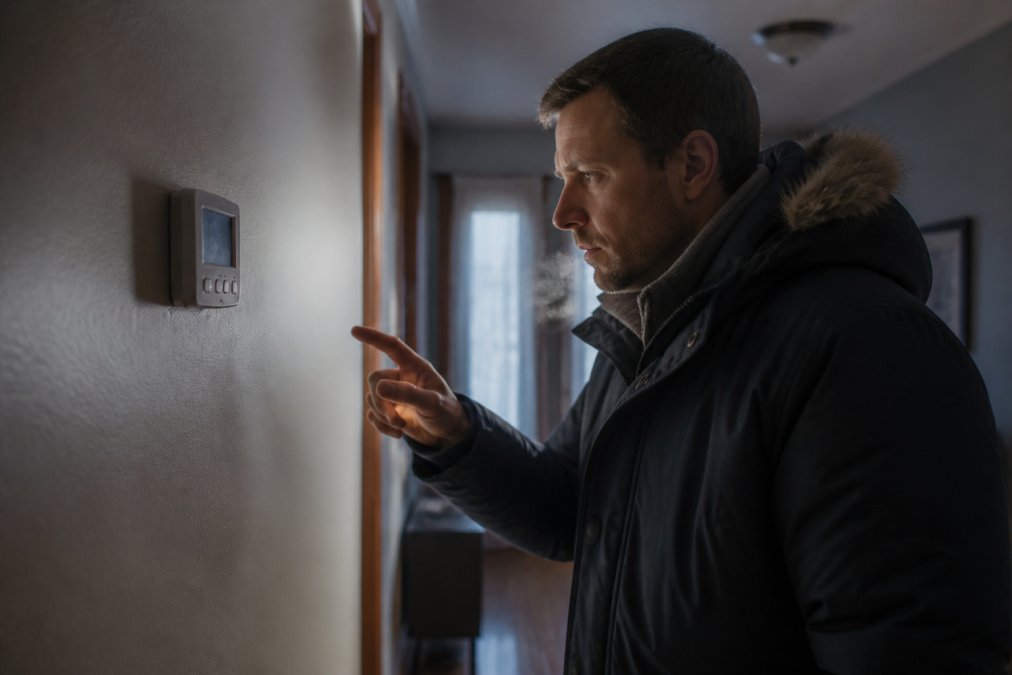
The clearest signs you need emergency HVAC repair right now are safety hazards and total system failures in extreme weather. If you smell gas, hear a flame detector alarm, or see smoke, evacuate and call for help immediately. If the system won't run and it's dangerously hot or cold outside, that's the second category.
Safety Hazards: Gas Smells, Carbon Monoxide, and Electrical Burning
Gas smells, carbon monoxide alarms, and electrical burning odors are always emergencies. These point to a cracked heat exchanger, failed flame detector, refrigerant leak, or electrical fault in the control board. Turn off the system, leave the building, and call a licensed technician and your utility's emergency line.
System Failures That Cannot Wait Until Morning
System failures that cannot wait include complete loss of heating or cooling in extreme weather, water leaking from the unit, and repeated breaker trips. A compressor failure, seized blower motor, or boiler that won't fire in winter all fall here.
Why Is My AC Running Constantly? When It Signals a Real Problem
An AC running constantly is normal on the hottest days and a warning sign the rest of the time. If it never shuts off but the house stays warm, the system can't keep up and is working itself toward a breakdown.
Emergency HVAC Repair Cost: What Drives the Price
The four layers that build an emergency bill:
- Diagnostic or trip fee. Most companies charge a flat fee to roll a truck and diagnose, whether or not you approve the repair. In business hours it's often waived or credited toward the repair; after hours it usually isn't.
- After-hours labor multiplier. Standard practice is a higher hourly rate for evenings, weekends, and holidays, commonly 1.5x to 2x daytime. This is the biggest swing factor between a Tuesday morning and a Saturday-night call for the same failed part.
- Parts markup and availability. A capacitor or contactor is cheap and stocked on most trucks. A compressor, control board, or blower motor is a major part, often marked up, and may need ordering, meaning a second visit and trip charge.
- Refrigerant and specialty labor. Refrigerant is sold by the pound and priced by type. Older refrigerants have been phased down under the EPA's AIM Act, so they cost more per pound and require certified handling. Brazing, evacuation, and recharge add labor hours a simple part swap doesn't.
| Cost Layer | What It Covers | Why It Swings |
|---|---|---|
| Diagnostic / trip fee | Truck roll and fault diagnosis | Often waived in-hours, rarely after hours |
| Labor multiplier | Technician time | 1.5x-2x for nights, weekends, holidays |
| Parts | Failed component | Capacitors cheap; compressors and boards expensive |
| Refrigerant | Charge by pound and type | Older types cost more under phase-down rules |
| Access | Rooftop, attic, cramped closets | Longer labor, sometimes lift or permit needs |
A few practical rules for controlling the number:
- Ask for the diagnostic fee and after-hours rate before you book. A reputable company states both. If they won't, that's information.
- Separate the diagnosis from the repair decision. You can pay for the diagnosis, get the finding in writing, and decide, you're not obligated to approve a same-night repair on the spot.
- Compare repair cost to replacement cost, not to zero. A $900 repair on a 6-year-old system is usually right; the same repair on a 19-year-old unit often isn't.
- Ask whether the part is under manufacturer warranty. Many parts carry a 5- or 10-year warranty even when labor isn't covered, that changes the math significantly.
Because pricing varies so much by job, we quote each repair after diagnosing the actual fault. Air CareSaver provides free estimates and same-day response, so you're not guessing before a technician sees the system. For current pricing on your repair, request a quote directly.
HVAC Repair vs Replace Calculator: Making the Call on Older Systems
An HVAC repair vs replace calculator weighs repair cost against system age, efficiency, and expected remaining life. Common rule: if the repair costs a large share of a new system's price and the unit is past its lifespan, replacement usually wins. If the system is young and the fix is small, repair is the clear call.
Run the numbers on three factors:
- Age: Most systems last roughly 15 to 20 years with regular maintenance. Past that, parts get scarce and efficiency drops.
- Repair frequency: One repair in five years is normal. Two or three in two years signals a system on its way out.
- Efficiency: An older unit running constantly during peak winter or summer costs more to operate than a modern, energy-efficient replacement.
Troubleshooting Steps Before You Call a Technician
Try these steps before you call a technician, but stop immediately at anything involving gas, smoke, or burning smells. Safe troubleshooting can solve simple problems and confirm real ones.
- Check the thermostat. Confirm it's set to heat or cool, the batteries are fresh, and the mode matches the season. A thermostat malfunction is one of the most common "no heat, no cool" causes.
- Check the breaker and the service switch. A tripped breaker or a switched-off service switch will stop the system cold. Reset once; if it trips again, stop.
- Check the air filter. A clogged filter restricts airflow and can cause the system to overheat or run constantly. Replace it if it's visibly dirty.
- Check the outdoor unit. Clear debris, leaves, and snow from around a heat pump or AC condenser. Blocked airflow reduces performance.
- Check for obvious leaks or ice. Water around the indoor unit or ice on the coils points to a refrigerant or drainage issue. Turn the system off and call.
Tenant vs. Landlord Responsibilities for Emergency HVAC Repairs
Tenant vs. landlord responsibilities for emergency HVAC repairs almost always land on the landlord, the mechanism is the implied warranty of habitability, a doctrine recognized in most states requiring landlords to keep rentals fit for human habitation, including working heat and, in many jurisdictions, cooling. The lease cannot waive it. What varies by state and city is how fast the landlord must respond, what temperature triggers a violation, and what remedies a tenant has.
What the law generally requires
- Working heat. Most housing codes set a minimum indoor temperature during heating season, commonly 65-68°F, measured at a specified height and time. A furnace that can't hold that temperature is a habitability violation, not a comfort complaint.
- Working cooling in some jurisdictions. States and cities with extreme summer heat increasingly treat AC as a habitability item, especially for vulnerable occupants. In others, cooling is a lease term, not a legal right, check your lease and local code.
- Prompt repair. Many statutes require repair within a "reasonable time," often defined as 24-72 hours for heat or hot water. Some cities shorten that window during declared heat or cold emergencies.
Tenant escalation path
- Notify in writing the same day. Email or written notice, not a phone call, creates a timestamp. Keep a copy.
- Document conditions. Photograph the thermostat, log indoor temperatures with times, and note any medical vulnerability in the household.
- Send a formal repair demand if there's no response. Reference your state's landlord-tenant statute and give a deadline. Many states require this before any self-help remedy.
- Use the legal remedy your state allows. Options include rent escrow (paying rent to the court until the repair is made), repair-and-deduct (hiring a licensed contractor and deducting the cost from rent, usually with caps and notice requirements), or withholding rent (risky and prohibited in some states). Don't pick one without confirming your state allows it.
- Escalate to the local housing or code enforcement office. A code inspection creates an official record and often moves a landlord faster than a tenant can.
Landlord obligations and protections
A landlord's defense against a habitability claim is a documented, prompt response: acknowledging the report in writing, dispatching a licensed technician within the statutory window, and keeping the invoice and diagnosis on file. A landlord who can show same-day response and a scheduled repair is far stronger than one who can't, even if the part is backordered.
Conclusion
An HVAC failure in extreme weather is stressful, and the wrong call on repair versus replace can cost you twice. Knowing what counts as an emergency, what drives the price, and how to troubleshoot safely puts you in control before the technician arrives.
Frequently Asked Questions
What qualifies as an HVAC emergency?
An HVAC emergency is any situation where the system failure creates an immediate safety risk or makes the home unlivable. This includes no heat when outdoor temperatures drop below freezing, no cooling during a heat advisory, gas odors, carbon monoxide detector alarms, or electrical burning smells. If you are unsure whether your situation counts as an emergency HVAC repair, call a licensed technician and describe what you are experiencing. They can help you decide whether to schedule same-day service or wait until regular business hours.
Can I wait until morning for HVAC repair?
It depends on the temperature and who lives in the home. If outdoor temperatures stay above 60 degrees Fahrenheit and no one in the household is elderly, infant, or medically fragile, waiting until morning is usually safe. But if temperatures are below freezing or above 90 degrees, or if anyone in the home has respiratory or cardiovascular conditions, call for emergency service. Hypothermia and heat exhaustion risks rise quickly when a system fails during peak winter or summer conditions.
How much does emergency HVAC repair cost?
Emergency HVAC repair cost varies based on the type of failure, parts needed, and time of day. After-hours service typically includes an emergency call-out fee on top of standard labor and parts. Compressor failure, refrigerant leaks, and PCB replacements cost more than a thermostat malfunction or clogged drain line. Air CareSaver provides free estimates so you know the price before work begins. Contact us for a quote specific to your system and situation.
What is the HVAC $5,000 rule?
The HVAC $5,000 rule is a general guideline: if the cost of a repair multiplied by the age of your system exceeds $5,000, replacement may be the better financial choice. For example, a $600 repair on a 10-year-old system equals $6,000, which suggests replacement. This rule is not absolute. An hvac repair vs replace calculator can help you weigh repair costs against remaining lifespan, energy efficiency gains, and available rebates before you decide.
What are the signs of a failing HVAC system?
Watch for grinding noises, banging sounds, frequent cycling, uneven heating or cooling, rising utility bills, and refrigerant leaks. A system that runs constantly without reaching the set temperature often points to compressor failure, a refrigerant leak, or an undersized unit. Yellow flames instead of blue on a gas furnace, soot around the burner, or a flame detector that keeps shutting the system down also signal trouble. Addressing these early can prevent a full breakdown during peak winter or summer.
Should I attempt DIY fixes before calling a technician?
You can safely check a few things: confirm the thermostat is set correctly, replace dirty filters, check the circuit breaker, and make sure the outdoor unit is clear of debris. Do not open panels, handle refrigerant lines, or attempt electrical repairs. For temporary relief during extreme cold, use space heaters with proper ventilation and close off unused rooms. During extreme heat, use fans and stay hydrated. These steps buy time but do not replace professional HVAC diagnostics.