 how-to
How to Clean Outdoor AC Condenser Coils (2026 Guide)
Table of Contents
- How to Clean Outdoor AC Condenser Coils: Step-by-Step
- How Often to Clean AC Condenser Coils in Your Area
- The Best Cleaner for AC Condenser Coils (and What to Avoid)
- AC Condenser Coil Cleaning Tools That Make the Job Easier
- Protecting Landscaping and Managing Water Runoff
- When to Stop and Call an HVAC Technician
- Frequently Asked Questions
Last Updated: October 8, 2026
How to Clean Outdoor AC Condenser Coils: Step-by-Step
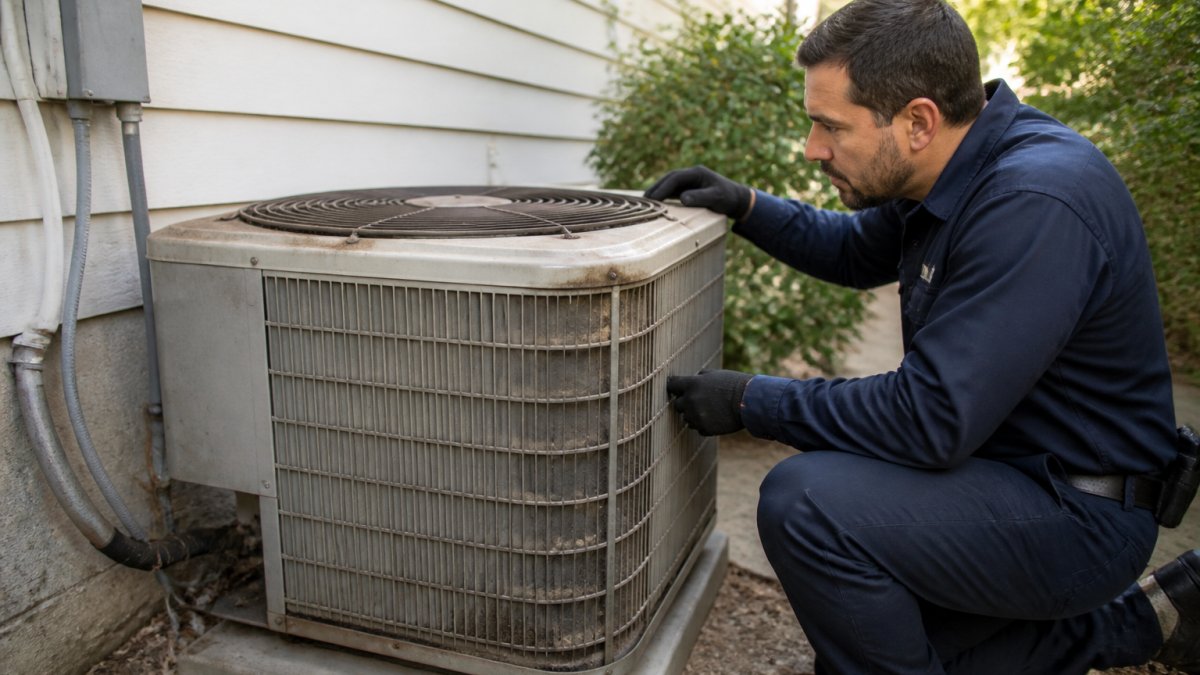
Learning how to clean outdoor AC condenser coils is one of the highest-value maintenance tasks a homeowner can do.
At Air CareSaver, we've spent over 21 years diagnosing cooling problems across the San Gabriel Valley, and clogged condenser coils show up constantly.
- The outdoor unit feels hot and blows warm air
- Energy bills climb without a change in use
Any one of these points to restricted heat transfer. The coil can't release heat, so the whole system strains. If cleaning doesn't fix it, the problem may be refrigerant, a failing compressor, or a bad capacitor, and that's a diagnostic job.
How Often to Clean AC Condenser Coils in Your Area
Most homes need a condenser coil cleaning once a year, ideally in spring before cooling season. But a calendar schedule is a starting point, not a rule. The real driver is what is landing on the coil and how fast it accumulates.
What actually clogs a coil
Condenser fins are spaced only a few millimeters apart. Anything airborne in that gap range will lodge there and stay until it is rinsed out. The main offenders:
- Pollen: Fine, sticky, and seasonal. It coats fins in a thin film that water alone sometimes won't lift.
- Cottonwood and seed fluff: Large, fibrous, and fast. A single windy week near a cottonwood can mat the intake side of a coil.
- Grass clippings and leaves: Blown against the cabinet by mowers and wind, then pulled into the fins by airflow.
- Dust and construction grit: Common in dry, windy areas and near active building sites.
Frequency by condition
| Your situation | Cleaning frequency | Why |
|---|---|---|
| Clean suburban yard, few trees | Once a year | Normal dust and pollen |
| Near cottonwood or heavy trees | 2-3 times a year | Fluff and leaves clog fast |
| Dry, dusty, or windy area | Every 4-6 months | Dust builds quickly |
| Pets or lawn work nearby | 2 times a year | Hair and clippings collect |
| After a wildfire season | Immediately | Ash coats and corrodes the fins |
| New construction within a block | Every 3-4 months | Grit and dust load is high |
How to read the coil instead of the calendar
Check the coil visually every few months. Look at the intake face, the side the fan pulls air through. If it looks gray or matte instead of metallic, clean it, no matter what the calendar says.
A quick test: run the unit on a hot day, then feel the air coming off the top. If it feels only slightly warmer than the outdoor air, the coil is not rejecting heat well.
Seasonal timing that matters
- Spring: Clean before the first sustained cooling demand. This is the single most valuable cleaning of the year.
- Mid-summer: A quick visual check after pollen season and any nearby mowing.
- Fall: Clear leaves and seed pods before they break down into the fins over winter.
- After any major dust event: Wildfire smoke, a nearby demolition, or a windstorm that drops debris against the unit.
The Best Cleaner for AC Condenser Coils (and What to Avoid)
There is no single best cleaner for every job.
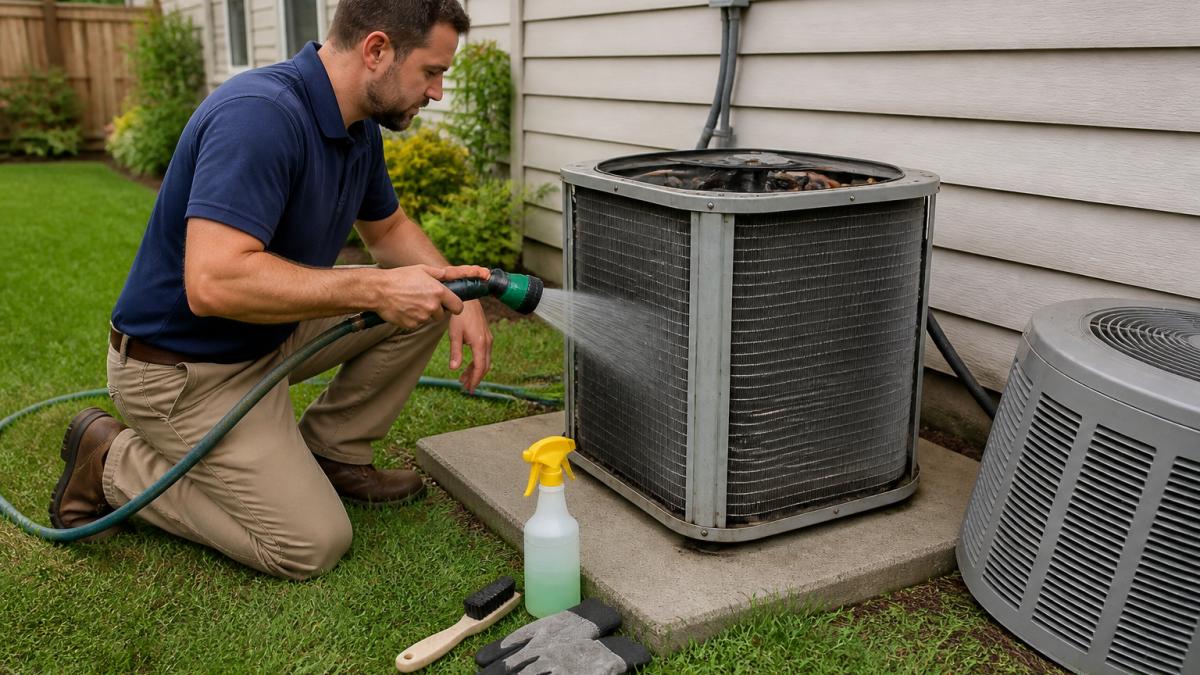
Tier 1: Water only. A garden hose with a gentle fan spray handles light, dry buildup, dust, pollen, and a thin film of grass clippings.
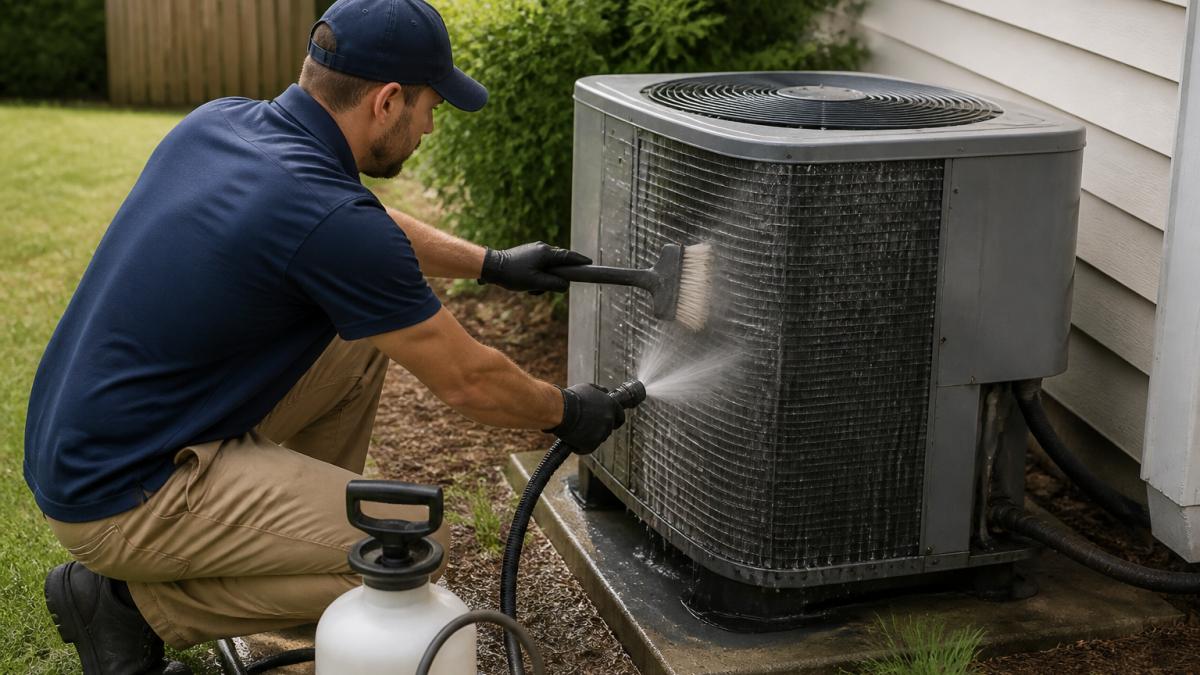
Tier 2: Foaming or self-rinsing coil cleaner. These products are formulated for aluminum condenser fins and lift greasy or sticky grime that water alone won't touch, cooking exhaust, road film, cottonwood sap, and the gray matte film that builds over a season. Two sub-types matter:
- Rinse-off foaming cleaners require a full water rinse after the dwell time on the label. They tend to clean more aggressively but demand more water and more care with runoff.
- No-rinse (self-rinsing) cleaners are designed to let condensate from normal operation carry the residue away. They are convenient but can leave a film if the unit does not run soon after, so many technicians still give them a light rinse.
Tier 3: Professional-grade acidic or alkaline coil cleaners. These are the products a licensed technician uses on heavily fouled or greasy coils. They are not a homeowner product.
When each method is appropriate
| Coil condition | Method | Why |
|---|---|---|
| Light dust or pollen, fins still shiny | Water only | No residue risk, fastest |
| Gray matte film, sticky or greasy grime | Foaming rinse-off cleaner | Breaks down what water can't |
| Heavy grease, years of neglect | Professional-grade cleaner | Homeowner products won't cut it |
| Coil already damaged or corroded | Stop, call a technician | Cleaning can worsen the damage |
What to avoid
- Bleach or harsh acids: They corrode the aluminum fins and can void a manufacturer warranty.
- Car wash soap or dish soap: Residue attracts more dirt and can leave a sticky film that traps debris.
- Straight pressure washing: It bends fins flat and forces water into the fan motor and electrical compartment.
- Mixing cleaners: Never combine products. Some combinations release fumes or attack the coil.
Residue and chemical-damage risk
The most common homeowner mistake is under-rinsing. Foaming cleaners leave a surfactant film if not fully flushed, and that film grabs dust within weeks.
If you're not sure what's safe for your unit, a technician can recommend the right product during a maintenance visit. The cost of a wrong product is a corroded coil, which is a far bigger repair than the cleaning was worth.
AC Condenser Coil Cleaning Tools That Make the Job Easier
The right AC condenser coil cleaning tools cut the job time in half. You don't need a full pro kit, but a few items earn their keep.
- Coil brush: Soft bristles reach between fins without bending them.
- Fin comb: Restores airflow through lightly bent fins.
- Gentle spray nozzle: A fan setting rinses without force.
- Shop vacuum: Pulls loose debris from the base before rinsing.
A toothbrush works in tight corners around the cabinet edges. Keep a dedicated set for AC work so you're not hunting for tools each season.
Protecting Landscaping and Managing Water Runoff
Water runoff carries dirt, coil cleaner, and grime, so plan where it goes. Spray downwind and away from garden beds when possible.
A few simple moves protect your yard:
- Lay a tarp or cardboard under the unit to catch heavy runoff
- Rinse plants nearby with plain water after cleaning
- Keep mulch and soil from piling against the cabinet
- Trim shrubs back so they don't block airflow
When to Stop and Call an HVAC Technician
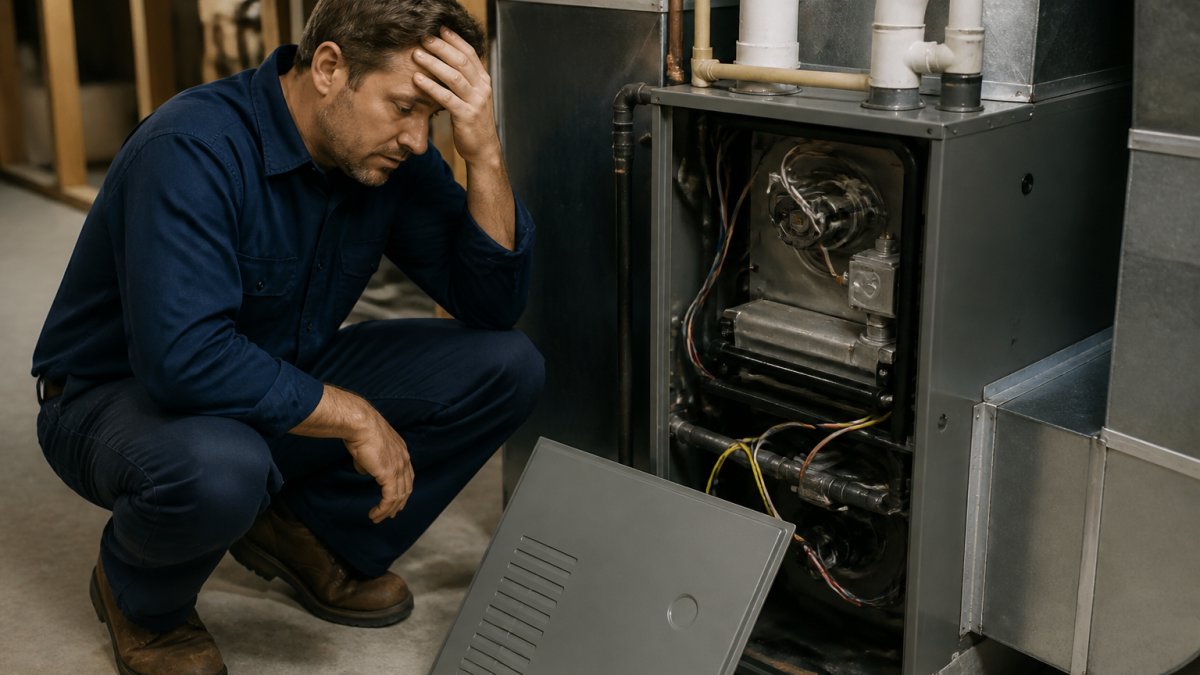
Stop cleaning and call a pro if you find refrigerant leaks, oil residue, scorched wires, or a compressor that won't start. These are not homeowner fixes.
Call a licensed technician when:
- The coil is crushed, cracked, or corroded
- The unit trips the breaker after cleaning
- Cooling doesn't improve once the coil is clean
- You smell burning or see ice that keeps returning
Air CareSaver handles these calls with same-day response and free estimates. Our licensed techs (#1054832) diagnose the real problem, so you're not paying for parts you don't need. If a repair makes sense, we fix it.
Frequently Asked Questions
Can you clean outdoor AC coils with a garden hose?
Yes, a garden hose with a gentle spray nozzle is the safest way to rinse outdoor AC condenser coils. Use low water pressure and spray from the inside out, following the direction of the fins. Never use a pressure washer, which can bend the metal fins and damage the coil. If your hose pressure is too strong, adjust the nozzle or stand farther back.
Should you turn off the power before cleaning an AC condenser?
Always. Locate the disconnect switch near the outdoor unit or shut off the circuit breaker at your electrical panel. This prevents the fan from starting while your hands are near the coil and protects you from electrical components. Wait a few minutes after shutting off power so any stored charge dissipates before you open the cabinet.
What are the symptoms of a dirty condenser coil?
Common dirty condenser coil symptoms include weak airflow from vents, cooling that takes longer than usual, higher energy bills, the outdoor unit running hot or cycling frequently, and ice buildup on the refrigerant lines. If you notice these signs, inspect the coil for dirt, dust, pollen, or cottonwood before calling for service.
What do HVAC technicians use to clean condenser coils?
Technicians typically use a commercial foaming coil cleaner, a soft coil brush, and a low-pressure pump sprayer or hose. They also use fin combs to straighten bent fins and may apply a protective coating in coastal or dusty areas. For stubborn buildup or damaged fins, professional service is safer than DIY cleaning.
A clean condenser coil is the cheapest cooling upgrade you'll ever make. But when symptoms point to something deeper, guessing wastes money and time. Air CareSaver brings 21+ years of licensed experience, accurate diagnostics, and same-day service to homes and businesses across the San Gabriel Valley. We offer free estimates, a 4.9 Google rating from 270+ reviews, and honest answers about repair versus replacement. Get your free quote and keep your system running cool all year.