 how-to
Why Is My AC Running Constantly? Fix It Now
Table of Contents
- What Normal AC Runtime Actually Looks Like vs. a System That Won't Shut Off
- The Most Common Reasons Your AC Is Running Constantly
- Thermostat Troubleshooting Guide: Settings, Calibration, and Smart Data
- Humidity vs. Temperature: Why Your AC Runs Longer Than You Expect
- AC Air Filter Replacement Frequency and Why It Matters
- DIY Checks vs. When to Call an HVAC Technician
- Why Your AC Running Constantly Is Costing You More Than a Repair
- Frequently Asked Questions
Last Updated: August 11, 2026
What Normal AC Runtime Actually Looks Like vs. a System That Won't Shut Off
A healthy AC system typically runs in cycles of 15 to 20 minutes, repeating two to three times per hour under moderate conditions. On extremely hot days, longer run times are expected and normal.
What is not normal: your AC running constantly for hours without the indoor temperature reaching the set point, short cycling that restarts the compressor every few minutes, or a system that runs all night and still can't cool the space below 80°F. These patterns signal a genuine problem with equipment or the home's thermal envelope.
The Most Common Reasons Your AC Is Running Constantly
Most cases of constant AC operation trace back to one of seven root causes. Some are quick fixes; others require a licensed HVAC technician.
Dirty or Clogged Air Filters Restricting Airflow
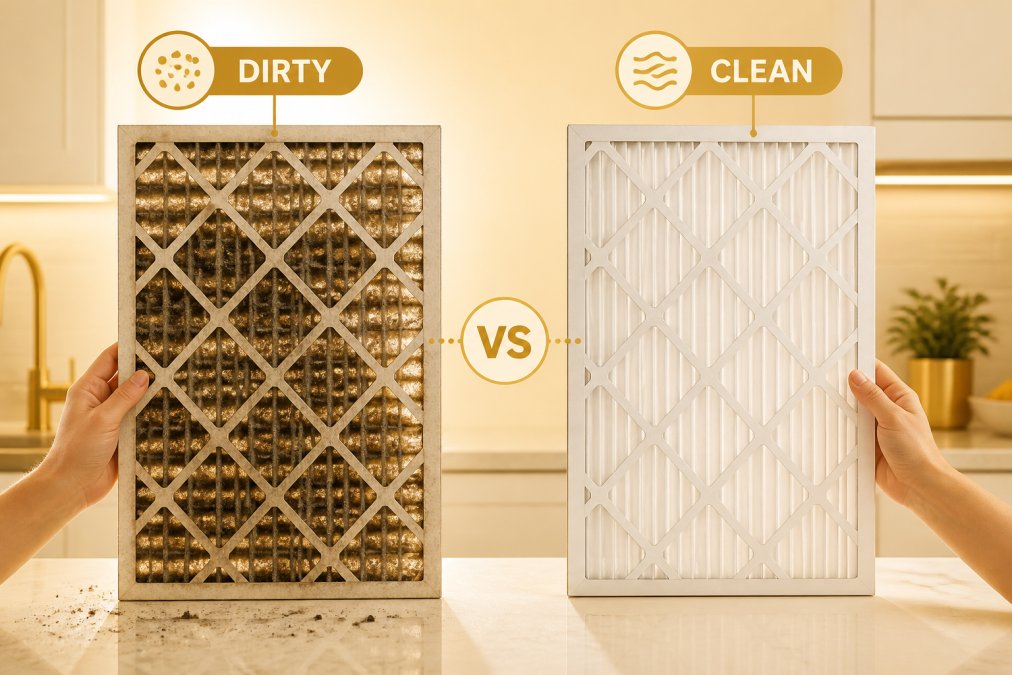
A clogged air filter is the most common and easiest-to-fix cause of continuous AC operation. A dirty filter blocks airflow across the evaporator coil, reducing the system's ability to absorb heat. Check your filter first by holding it up to light. If you cannot see through it, replace it immediately. A fresh filter often resolves the constant-running complaint within the same cooling cycle.
Low Refrigerant or a Refrigerant Leak
Low refrigerant reduces cooling capacity and prevents the system from reaching the set point efficiently. Signs include warm air from vents even when the compressor runs, ice on the evaporator coil or refrigerant lines, and hissing or bubbling sounds near the air handler or condenser. Refrigerant handling requires EPA Section 608 certification, so this is strictly a job for a licensed technician. Adding refrigerant without repairing the leak is only a temporary fix.
Blocked or Dirty Condenser Coils
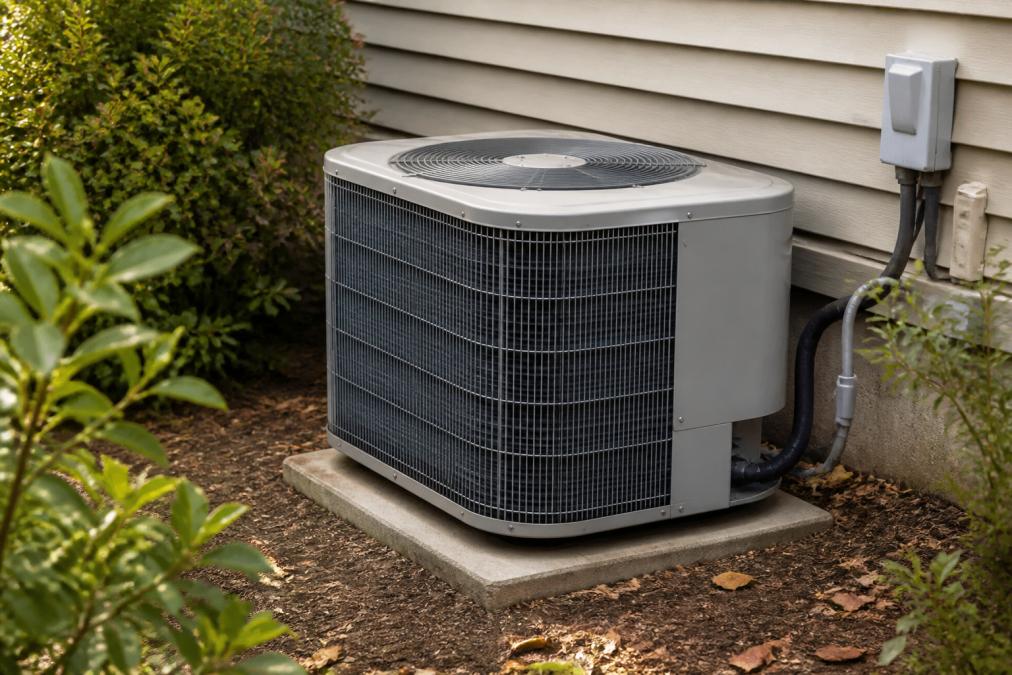
The condenser unit outside releases heat collected from indoors. When coils are coated in dirt, leaves, or debris, heat transfer is impaired and the system runs longer. Visually inspect the unit and gently rinse coils with a garden hose if visibly dirty. Clear at least two feet of clearance around the unit to restore proper airflow.
Faulty Compressor or Failed Capacitor
A failing compressor or bad capacitor can cause the system to run without delivering adequate cooling. The capacitor is an electrical component that starts and runs the compressor and blower motor. When it weakens, the compressor may struggle to start or operate inefficiently. If you hear clicking, humming, or hard-starting sounds from the condenser unit, a capacitor test by a technician is the logical first step. Capacitor replacement is relatively affordable; compressor replacement is significantly more expensive.
Leaky Ductwork Bleeding Cooled Air
Ductwork leakage is a frequently overlooked cause of continuous AC operation. According to the U.S. Department of Energy's guidance on duct sealing, typical homes lose a substantial portion of conditioned air through leaks before it reaches living spaces. When cooled air escapes into unconditioned spaces like attics, the system must run longer to compensate. Symptoms include uneven cooling, high utility bills, and constant AC operation despite a functioning compressor and clean filter.
Poor Home Insulation and Air Leaks Raising Heat Gain
A poorly insulated home loses cooled air faster than the AC can remove heat. The U.S. Department of Energy's insulation recommendations specify minimum R-values by climate zone. Homes with attic insulation below recommended levels will struggle to maintain set points during peak heat, regardless of how well the AC functions.
Undersized AC Unit for Your Home's Square Footage
An undersized AC unit will run constantly because it lacks the cooling capacity for the system load. A proper load calculation, known as a Manual J calculation, determines the correct cooling capacity. If your AC has always struggled on hot days and the system is otherwise in good condition, an undersized unit is likely the problem.
Thermostat Troubleshooting Guide: Settings, Calibration, and Smart Data
Thermostat problems cause more constant-running complaints than most homeowners realize. A miscalibrated thermostat reads temperature incorrectly, so the system never gets the signal to shut off.
Checking Thermostat Calibration and Set Point
To check calibration, tape a reliable thermometer next to the thermostat and compare readings after 15 minutes. A discrepancy of more than 2°F suggests a calibration issue. Also verify the thermostat is set to "cool" mode and "auto" fan setting, not "on." The "on" setting runs the blower motor continuously even when the compressor is off, which homeowners frequently mistake for constant AC operation.
Using Smart Thermostat Data to Spot Short Cycling and Overrun
Smart thermostats log runtime data, cycle frequency, and temperature recovery curves that reveal patterns a manual inspection cannot. Look for cycles consistently exceeding 30 minutes (suggesting capacity or airflow problems), slow temperature recovery (pointing to refrigerant or coil issues), short cycles under 5 minutes (indicating electrical component problems), and overnight runtime without reaching the set point (indicating serious performance deficits). Many smart thermostat apps display this data in the energy history section.
Humidity vs. Temperature: Why Your AC Runs Longer Than You Expect
Your AC does two jobs: it lowers temperature and removes humidity. On high-humidity days, the system runs longer because it is working to remove moisture, not just lower the thermostat reading. If your home feels clammy despite the AC running, humidity is likely the issue.
A hygrometer can confirm this. Indoor relative humidity above 60% is uncomfortable and makes air feel warmer than the thermometer reads. If your system is undersized or has a refrigerant issue, it loses dehumidification capacity first.
AC Air Filter Replacement Frequency and Why It Matters
Most 1-inch standard filters should be replaced every 30 to 60 days during active cooling season. Thicker 4-inch media filters can go 6 to 12 months. Homes with pets, allergies, or dusty conditions need more frequent changes. Most homeowners replace filters far less often than they should.
| Filter Type | Thickness | Recommended Replacement Interval |
|---|---|---|
| Fiberglass (basic) | 1 inch | Every 30 days |
| Pleated (standard) | 1 inch | Every 30-60 days |
| Pleated (high-efficiency) | 2-4 inches | Every 60-90 days |
| Media filter | 4-5 inches | Every 6-12 months |
| HEPA (whole-home) | Varies | Per manufacturer spec |
Set a phone reminder. Filter replacement is the single lowest-cost maintenance action with the highest impact on system performance and longevity.
DIY Checks vs. When to Call an HVAC Technician
Knowing where the line is between what you can safely handle and what requires a professional is about safety and preventing further damage.
DIY-safe checks:
- Replace the air filter
- Check thermostat settings (mode, fan setting, set point)
- Inspect and clear debris from the condenser unit
- Verify all supply and return vents are open and unobstructed
- Check the circuit breaker for the air handler and condenser
- Review smart thermostat runtime data for patterns
- Measure indoor humidity with a hygrometer
Call a licensed HVAC technician when:
- You suspect a refrigerant leak (hissing sounds, ice on lines, warm air from vents)
- The compressor is making unusual sounds or failing to start
- The evaporator coil is frozen
- Airflow is weak even with a clean filter
- Ductwork inspection or sealing is needed
- The system is more than 10 to 15 years old and performance has declined significantly
- You want a Manual J load calculation to verify correct sizing
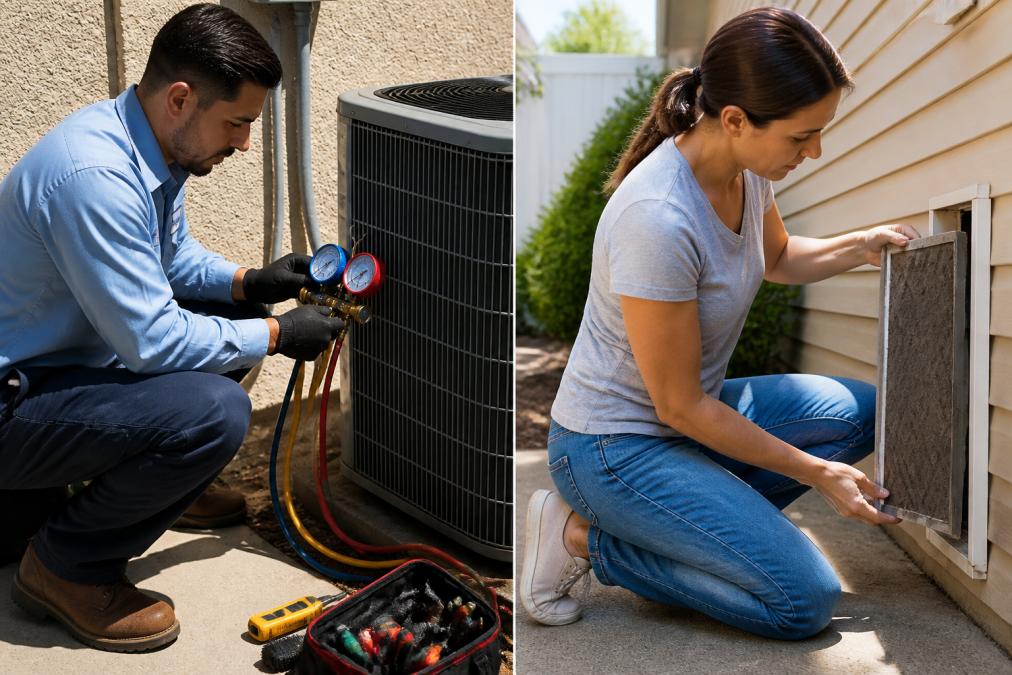
Refrigerant work, electrical component replacement, and ductwork diagnostics are not DIY territory. Attempting refrigerant work without EPA Section 608 certification is a federal violation.
Why Your AC Running Constantly Is Costing You More Than a Repair
An AC running constantly is not just an annoyance, it is a compounding cost problem. Every hour the system runs beyond what it should, electricity consumption and compressor wear increase. According to the U.S. Energy Information Administration's residential energy use data, air conditioning accounts for a significant share of residential electricity consumption during summer months. A system running 40% longer than it should adds proportionally to that bill month after month.
A diagnostic visit and repair cost far less than a compressor replacement, which costs far less than a full system replacement. Preventative maintenance, including regular filter changes, coil cleaning, and annual tune-ups, extends system life and maintains the SEER rating the system was designed to deliver. Addressing the reason your AC is running constantly while the system is still functional is always cheaper than emergency replacement in August.
Air CareSaver has been diagnosing and resolving exactly these situations for over 21 years, with a licensed team (license #1054832) that offers same-day response and free estimates. With a 4.9 Google rating across more than 270 reviews, the pattern is consistent: accurate diagnosis, honest recommendations, no unnecessary parts or guesswork. If your HVAC system is showing signs of overrun, the right move is to get it looked at before it becomes an emergency.
Frequently Asked Questions
Is it normal for my AC to run 20 hours a day?
On an extreme heat day, an AC running 16 to 20 hours is not unusual. However, if your system runs that long even on mild days, or never reaches the thermostat set point, that signals a real problem. Common causes include a dirty evaporator coil, low refrigerant, or an undersized unit. If your AC runs constantly and your home still feels warm, schedule a diagnostic before the issue worsens and energy bills climb further.
Can a dirty air filter cause my AC to run constantly?
Yes, a clogged air filter is one of the most frequent reasons an AC runs constantly. When the filter blocks airflow, the evaporator coil cannot absorb heat properly, forcing the system to run longer cooling cycles just to meet the thermostat set point. In severe cases, restricted airflow causes the coil to freeze, which stops cooling entirely. Replacing the filter every 1 to 3 months is the single easiest step to restore normal system performance.
How do I stop my air conditioner from running constantly?
Start with the basics: replace the air filter, check that all return vents are open and unblocked, and confirm your thermostat is set correctly and calibrated. Inspect the outdoor condenser unit for debris or overgrown vegetation restricting airflow. If those steps do not resolve it, the issue is likely low refrigerant, a failing capacitor, ductwork leakage, or a compressor problem. Those require a licensed HVAC technician to diagnose and repair safely.
Why is my AC not shutting off even when it reaches the set temperature?
If your AC runs constantly despite reaching the set point, the thermostat itself is the first place to check. A miscalibrated thermostat may read the room temperature incorrectly and keep calling for cooling. A faulty relay or stuck contactor in the electrical components can also prevent the system from shutting down. If thermostat troubleshooting does not fix it, a short cycling compressor or refrigerant issue is likely the cause and needs professional diagnosis.
An ac running constantly is a signal worth taking seriously. The causes range from a clogged filter you can fix in five minutes to a refrigerant leak that requires certified repair. Air CareSaver's licensed technicians provide accurate diagnostics, same-day response, and free estimates so you know exactly what is wrong and what it will take to fix it. Get my free quote today and stop paying for a system that is working harder than it needs to.
This article was written using GrandRanker