 listicle
Preventative Maintenance for Commercial Cooling Systems
Table of Contents
- Why Preventative Maintenance for Commercial Cooling Pays Off
- The Core Commercial HVAC Maintenance Checklist
- Preventative vs Reactive HVAC Maintenance: The Real Cost Difference
- How Often Should You Schedule Commercial Cooling System Repair?
- Modern Upgrades: IoT Monitoring and Compliance Standards
- Build a Maintenance Plan That Fits Your Building
- Conclusion: Schedule Your First Preventative Maintenance Visit
- Frequently Asked Questions
Last Updated: September 8, 2026
Why Preventative Maintenance for Commercial Cooling Pays Off
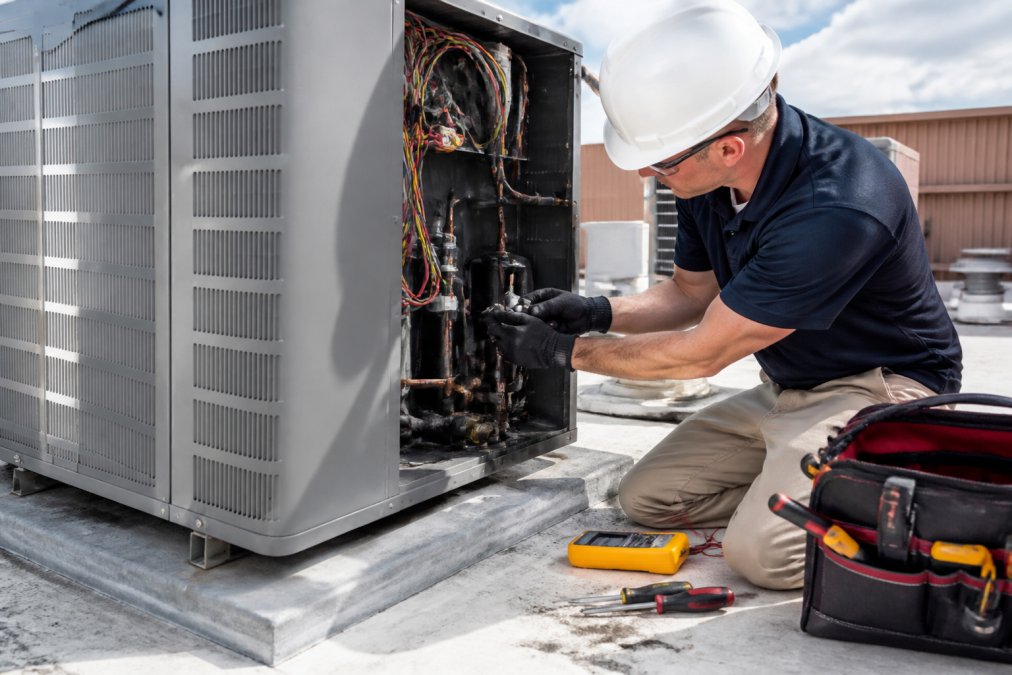
A commercial cooling system that fails mid-July halts operations, threatens inventory, and forces emergency repair costs that dwarf routine service. Preventative maintenance for commercial cooling is the structured practice of inspecting, cleaning, and tuning HVAC equipment on a scheduled basis to prevent failures before they occur. At Air CareSaver, we've spent over 21 years responding to neglected systems, and the pattern is consistent: the buildings that skip scheduled service are the ones calling us for emergency breakdowns.
Emergency calls carry premium rates for after-hours labor, and damage from a seized compressor or frozen coil often requires replacement parts that routine checks would have caught early. An inefficient system with dirty coils or low refrigerant also draws more electricity every day. The real question isn't whether maintenance is worth the cost; it's whether you can afford the downtime that reactive maintenance guarantees.
Below, we'll walk through the core commercial HVAC maintenance checklist, the cost difference between preventative and reactive approaches, and how often to schedule service, plus modern upgrades like IoT monitoring and compliance standards.
The Core Commercial HVAC Maintenance Checklist
Preventative maintenance for commercial cooling breaks down into critical inspection points a qualified technician should verify at every scheduled visit. Each component plays a specific role in system reliability, and skipping any one creates a weak link that can take the whole system down.
Condenser and Evaporator Coil Cleaning
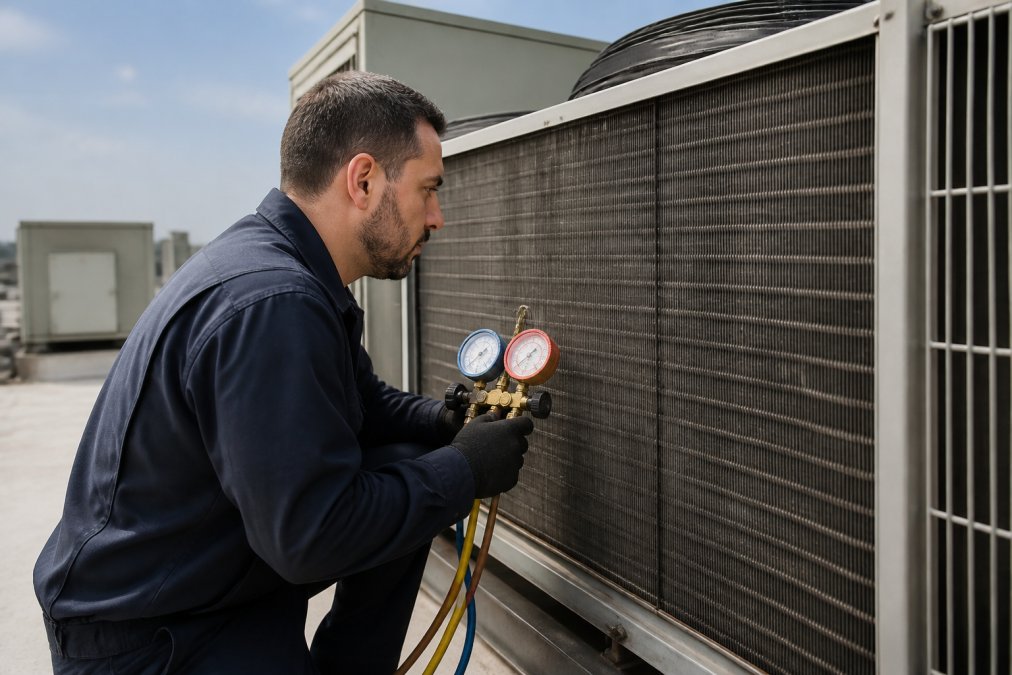
Dirty coils are the single most common cause of reduced cooling capacity and high energy bills. The condenser coil rejects heat outdoors, while the evaporator coil absorbs heat indoors; both accumulate dirt that insulates the metal and blocks airflow. When heat transfer drops, the system runs longer and harder, accelerating wear on the compressor.
A technician should clean both coils at least annually, and more frequently near parking lots, kitchens, or construction sites. A proper coil cleaning goes beyond a simple spray-down. The technician should disconnect power and use a fin comb to straighten bent fins, which can account for significant airflow reduction. A foaming alkaline or acid-based cleaner is applied, alkaline for grease and oil, acid for mineral scale, then rinsed from the inside out. Finally, measure the temperature split across the coil before and after cleaning; a healthy split is typically 15°F to 20°F, while a narrow split confirms the cleaning was necessary.
Refrigerant Leak Checks and Operating Pressures
Low refrigerant is rarely a natural loss; it indicates a leak. A technician should measure suction and discharge pressures against the manufacturer's specifications. If pressures are low, the leak must be located and repaired before topping off the charge, since incorrect refrigerant levels stress the compressor and can lead to premature failure.
A comprehensive refrigerant check involves more than reading gauges. The technician should calculate superheat and subcooling values, which provide a precise picture of the system's charge level and expansion valve operation. Superheat at the evaporator outlet should typically fall between 8°F and 12°F; subcooling at the condenser outlet should be between 10°F and 15°F. Readings outside these ranges point to specific issues, low superheat can indicate a flooded evaporator, while high subcooling suggests an overcharged system. For leak detection, electronic detectors are standard, though larger systems may require ultraviolet dye or nitrogen pressure testing. Under EPA Section 608 regulations, technicians must repair leaks in systems containing 50 or more pounds of refrigerant within 30 days if the leak rate exceeds 15% per year, making accurate leak detection a compliance issue as much as a performance issue.
Gaskets, Drain Pans, and Electrical Connections
The smaller components matter more than most building operators realize. Worn door gaskets on walk-in coolers let cold air escape, forcing the system to run constantly. Clogged drain pans and lines cause water to back up, leading to moisture damage and potential mold growth. Loose electrical connections create resistance that generates heat and can trip breakers or cause intermittent failures.
A thorough inspection follows a specific sequence. For gaskets, perform a visual inspection for cracks or compression set, then use the dollar bill test: close the door on a dollar bill and attempt to slide it out. If it slides out easily, the gasket should be replaced. For drain pans, pour water through the drain line to verify it flows freely, then check for rust or standing water. Electrical inspections should include a thermographic scan of the contactor and disconnect switch to identify hot spots, and a torque check on all lug connections. Loose connections are a leading cause of electrical fires in commercial HVAC equipment, and a simple torque check can prevent a catastrophic failure.
Air Filter Replacement and Airflow Verification
Air filters are the first line of defense for the evaporator coil and indoor air quality. A clogged filter restricts airflow, lowering cooling capacity, causing the evaporator coil to freeze, and forcing the blower motor to work harder. For commercial systems, filter replacement is a monthly task in most facilities. A 2-inch pleated filter in a light-commercial office should be changed every 3 months, but a 1-inch fiberglass filter in a restaurant kitchen may need replacement every 30 days. The technician should verify the filter's MERV rating matches the system's design, too high a rating can restrict airflow as much as a dirty filter. After replacement, measure static pressure across the filter housing to confirm the pressure drop is within the manufacturer's recommended range, typically 0.1 to 0.3 inches of water column.
Motor and Belt Inspection
The blower motor and condenser fan motor are the workhorses of the system, and they fail silently. The technician should check motor amperage against the nameplate rating, a motor drawing more than its rated amperage is under stress, while one drawing less may have a failing capacitor. For belt-driven systems, inspect the belt for cracking, glazing, or fraying, and check tension with a belt tension gauge. A belt that is too loose slips and causes squealing; one that is too tight puts excessive load on motor bearings. Lubricate motor bearings with grease fittings using the manufacturer-recommended type and quantity, over-lubrication is as damaging as under-lubrication, so this is a task for a trained professional.
Preventative vs Reactive HVAC Maintenance: The Real Cost Difference
The choice between preventative vs reactive HVAC maintenance comes down to predictability. A reactive approach means waiting for a breakdown, then paying for emergency diagnosis, expedited parts, and overtime labor. A preventative program spreads costs across scheduled visits, where a technician can address minor issues while they are still inexpensive.
Reactive maintenance carries hidden costs beyond the invoice. Downtime means lost productivity, spoiled perishable goods, and uncomfortable customers or employees, costs that often exceed the repair bill itself. Preventative maintenance focuses on system reliability and equipment longevity, catching small problems before they cascade into major failures.
A reactive mindset also shortens equipment lifespan. Components that run under stress from dirty coils, low refrigerant, or poor airflow wear out years earlier than they should. Replacing a commercial HVAC unit years ahead of schedule is a capital expense no maintenance budget line item comes close to matching.
The ROI Calculation Framework: Justifying the Budget
The challenge for most facility managers is proving preventative maintenance's value to a CFO or budget committee. The most effective way is with a simple return on investment (ROI) calculation comparing the cost of a maintenance program against the cost of reactive failures, giving you a defensible number to present.
Step 1: Calculate your annual preventative maintenance cost.
This is the easiest number to obtain. If you have a service contract, it is the annual contract price. If building an in-house program, sum labor hours, parts budget, and software or tool costs. Pricing depends on the number of units, system complexity, and the scope of the service agreement. Contacting a licensed local provider for a free estimate is the best way to get accurate pricing for your facility.
Step 2: Estimate your annual reactive repair cost.
Review your maintenance records for the past 12 to 24 months. Total up every emergency service call, including overtime labor, after-hours dispatch fees, and expedited parts, excluding planned replacements. If you lack records, consider that reactive repair calls often cost more than a scheduled preventative visit, due to the emergency premium and the likelihood that a minor issue has escalated into a major component failure.
Step 3: Quantify the cost of downtime.
This is the number most maintenance proposals miss, and it is often the largest. For every hour your cooling system is down, what does it cost your business? For a restaurant with walk-in refrigeration, it is the value of perishable inventory discarded. For a data center, it is server downtime. For a retail store, it is lost sales from customers who leave because the store is hot. Even a single failure can cost more than an entire year of preventative maintenance for several units.
Step 4: Calculate your ROI.
The formula is straightforward:
ROI = (Cost of Reactive Repairs + Cost of Downtime) − (Cost of Preventative Maintenance) ÷ (Cost of Preventative Maintenance)
Here is a realistic example. A small commercial building with three RTUs has an annual preventative maintenance cost. In a reactive year, that building experiences emergency calls for issues like a failed condenser fan motor or a refrigerant leak that led to a compressor failure. The building also loses hours of cooling during a failure, costing an estimated amount in lost productivity. The ROI calculation can demonstrate a significant return on the maintenance investment.
Step 5: Factor in equipment lifespan extension.
A well-maintained commercial RTU typically lasts 15 to 20 years; a neglected unit often fails at 10 to 12 years. Extending the life of just one unit by 5 years represents a deferred capital expense, a compelling separate line item in your budget justification.
The Hidden Cost of Reactive Maintenance: Equipment Lifecycle Impact
Beyond the immediate repair invoice, reactive maintenance accelerates equipment aging measurably. A compressor running with a 10% refrigerant undercharge operates at higher discharge temperatures, degrading motor winding insulation. Industry data indicates that every 10°F increase in operating temperature above the design limit can halve motor insulation life. Similarly, a dirty condenser coil raising head pressure by 20% increases the compressor's compression ratio, forcing it to work harder and consume more energy. Over a single cooling season, these conditions can reduce compressor life by 2 to 3 years. Include this lifecycle impact as a qualitative factor supporting the quantitative ROI numbers.
How Often Should You Schedule Commercial Cooling System Repair?
The ideal commercial cooling system repair frequency depends on your equipment type, usage intensity, and environment. As a general rule, schedule a professional inspection at least twice per year: once before the cooling season and once before the heating season. Facilities with heavier loads, such as restaurants, data centers, or manufacturing plants, should move to quarterly inspections.
Here is a practical seasonal breakdown:
- Spring (pre-cooling): Clean condenser coils, check refrigerant charge, verify cooling operation, and inspect electrical connections before the first heat wave.
- Fall (pre-heating): Check heating components, clean evaporator coils, verify airflow, and inspect belts and motors for wear.
- Quarterly (high-use facilities): Perform a shortened version of the full checklist, focusing on coil condition, drain pans, and operating pressures.
Modern Upgrades: IoT Monitoring and Compliance Standards
Traditional preventative maintenance relies on periodic human inspection, meaning problems can develop between visits. IoT-based monitoring closes that gap by tracking system performance continuously. Sensors monitor operating pressures, temperature differentials, and energy consumption, sending automated alerts when readings drift outside normal ranges, allowing a technician to address a developing issue before it becomes a failure.
Regulatory compliance is another reason to formalize your maintenance schedule. Facilities using refrigeration systems containing certain refrigerants must comply with EPA leak repair requirements under the Clean Air Act. Keeping detailed maintenance logs, including refrigerant charge amounts and leak check results, is essential for demonstrating compliance during an inspection.
The EPA's refrigerant management compliance guidance outlines specific obligations for commercial refrigeration operators. Building operators should also reference the Better Buildings Solution Center's HVAC best practices for standardized preventive maintenance planning templates and energy efficiency optimization guides. These resources provide a framework for documenting your maintenance activities and benchmarking system performance against industry standards.
Build a Maintenance Plan That Fits Your Building
A preventative maintenance plan should be tailored to your specific equipment and operational demands. Start by inventorying every cooling unit on your property, including rooftop units, walk-in coolers, and split systems, noting the age, model, and manufacturer recommendations for each. From there, establish a service calendar that aligns with your seasonal usage patterns and compliance obligations.
The table below summarizes the core maintenance tasks, their recommended frequency, and the primary benefit of each:
| Maintenance Task | Recommended Frequency | Primary Benefit |
|---|---|---|
| Condenser/evaporator coil cleaning | Annually or semi-annually | Restores heat transfer, lowers energy use |
| Refrigerant leak check and pressure test | Every service visit | Prevents compressor damage, ensures efficiency |
| Gasket and door seal inspection | Quarterly | Prevents cold air loss, reduces runtime |
| Drain pan and line clearing | Quarterly | Prevents water damage and mold growth |
| Electrical connection and motor check | Semi-annually | Reduces fire risk, prevents unexpected failure |
For building operators managing multiple sites, digital maintenance management platforms like OxMaint's HVAC maintenance software can automate scheduling and centralize maintenance history. These tools reduce manual paperwork and help ensure no unit falls through the cracks. However, software only schedules the work; a qualified technician still needs to perform the physical inspection.
Conclusion: Schedule Your First Preventative Maintenance Visit
The case for preventative maintenance for commercial cooling is not complicated. Scheduled service keeps equipment running efficiently, extends lifespan, and prevents the operational chaos of unexpected breakdowns. The alternative, reactive maintenance, guarantees higher costs and unpredictable downtime.
At Air CareSaver, our licensed technicians bring over 21 years of experience to commercial properties in the Walnut and San Gabriel Valley communities. We build customized maintenance plans around your specific equipment, and our accurate diagnostics mean honest recommendations without unnecessary parts or guesswork. With same-day response and free estimates, starting a preventative program has never been easier.
Get started with Air CareSaver and protect your commercial cooling investment before the next heat wave arrives.
Frequently Asked Questions
What is the recommended preventative maintenance checklist for commercial refrigeration?
A thorough checklist covers cleaning condenser and evaporator coils, checking refrigerant levels and operating pressures, inspecting gaskets and door seals, clearing drain pans and lines, and verifying electrical connections and motor performance. For glycol units, test the fluid concentration. Many building operators follow a quarterly inspection schedule for filters and belts, with a more detailed annual maintenance visit. Following a structured commercial HVAC maintenance checklist keeps system reliability high and catches small issues before they cause system downtime.
How often should a commercial HVAC system be serviced?
Most commercial cooling systems need professional service at least twice a year, typically before the cooling season and again before heating season. Facilities with heavy usage, such as restaurants or data centers, often benefit from quarterly inspections. Your commercial cooling system repair frequency depends on equipment age, hours of operation, and local climate. A licensed technician can recommend a schedule based on your specific needs, ensuring compressor health and energy efficiency are maintained throughout the year.
How does preventative maintenance improve energy efficiency in cooling systems?
Dirty condenser and evaporator coils force the compressor to work harder, raising energy consumption by as much as 30%. Preventative maintenance keeps coils clean, refrigerant levels correct, and airflow unobstructed. This reduces strain on the system, lowers operational costs, and maintains thermal performance. Regular checks also catch issues like faulty electrical connections or worn belts before they cause a breakdown, helping you avoid the higher costs of reactive maintenance.
What is the average cost of preventative maintenance for commercial HVAC systems?
Pricing depends on the number of units, system complexity, and the scope of the service agreement. Most providers offer tiered maintenance plans that bundle inspections, cleaning, and priority service. Contacting a licensed local provider for a free estimate is the best way to get accurate pricing for your facility. Compared to the cost of emergency repairs and system downtime, a scheduled preventative maintenance program is a cost-effective investment.
What are the benefits of a commercial HVAC maintenance contract?
A maintenance contract provides predictable scheduling, priority response times, and often discounted labor rates. It shifts your approach from preventative vs reactive HVAC maintenance, ensuring issues are caught during routine inspections rather than during a mid-summer emergency. Contracts also document your maintenance history, which helps with compliance and extends equipment longevity. Building operators find that a contract reduces operational costs by improving energy efficiency and preventing costly, unexpected failures.