 how-to
Is Same-Day HVAC Guaranteed? What You Need to Know
Table of Contents
- What Is a Same-Day Service Guarantee?
- The Fine Print of HVAC Guarantees
- Emergency HVAC Repair Cost and What Affects Pricing
- How to Find Reliable HVAC Technicians You Can Trust
- Understanding the HVAC Repair Diagnostic Process
- DIY Troubleshooting Before You Call for Emergency Service
- Factors That Determine Same-Day Availability
- Frequently Asked Questions
Last Updated: August 30, 2026
What Is a Same-Day Service Guarantee?
A same-day service guarantee means an HVAC company commits to arriving at your home or business within a defined timeframe, typically the same day you call, when your heating or cooling system fails. This covers arrival and initial diagnosis, not necessarily full repair completion.
When your AC dies in July or your furnace fails in January, you need someone to assess what's wrong quickly. Some companies extend guarantees to parts availability and completion, but that depends on what's broken and whether components are in stock. Air CareSaver operates on this principle: same-day response for emergency calls, paired with accurate diagnostics so you understand exactly what needs fixing before you're charged for unnecessary work.
The Fine Print of HVAC Guarantees
A same-day HVAC guarantee sounds ironclad until you read what it actually covers.
Geographic limitations top the list. A company promising same-day service in the San Gabriel Valley might define their service area narrowly. If you live on the outer edge of their territory, "same-day" could mean 6 PM instead of 2 PM. Always ask: does the guarantee apply to your specific address?
Time windows are the second trap. "Same-day service" typically means a 4-6 hour window, often 12 PM to 6 PM or 2 PM to 8 PM. If your system fails at 7 AM on a Saturday, you might wait until Monday for a technician, even with a same-day guarantee.
Seasonal capacity affects real-world guarantees. During peak summer or winter, even reliable companies struggle to meet same-day commitments. Reputable companies are transparent about this upfront.
Parts availability is critical. A technician can diagnose same-day, but if the repair requires a compressor or heat exchanger, completion might take days. Some guarantees only cover diagnosis; others promise same-day completion for simple fixes like capacitor replacement or refrigerant recharge.
Exclusions for preventative work matter too. Most same-day guarantees apply only to emergency repairs, not maintenance calls or system upgrades.
Read the guarantee terms before you need them. Ask what happens if parts aren't in stock, what the actual service window is, and whether your address falls within their guaranteed coverage area. Air CareSaver's commitment to same-day response comes with transparent expectations.
Emergency HVAC Repair Cost and What Affects Pricing
Emergency HVAC repair pricing varies depending on what's broken, the time of day, and your location.
Service call fees are your first cost. Most HVAC companies charge a diagnostic fee to send a technician to your home. This typically ranges based on complexity and urgency. Some companies waive the diagnostic fee if you proceed with repairs; others don't.
The repair itself depends on what failed. A capacitor replacement costs far less than a compressor swap. The technician's assessment determines the actual repair cost, not the emergency status.
Labor costs increase for after-hours calls. A repair at 3 PM on Tuesday costs less than the same repair at 11 PM on Saturday. Emergency premiums are standard across the industry.
Parts inventory affects total cost and timeline. If the technician has the part on the truck, you're done quickly. If they need to order it, you're waiting days and paying delivery charges.
System age influences repair economics. An 8-year-old unit might need a simple fix. A 20-year-old system might require complete replacement to be cost-effective.
For accurate pricing, get a free estimate from a licensed technician who can assess your specific system. Air CareSaver provides free estimates so you understand costs before committing to repairs.
How to Find Reliable HVAC Technicians You Can Trust
Finding trustworthy HVAC service requires looking beyond promises and checking credentials.
Licensing is non-negotiable. Every HVAC technician should hold a state license (the EPA). Ask for the license number and verify it with your state's licensing board. A licensed technician has legal accountability; an unlicensed one doesn't.
Insurance and bonding protect you if something goes wrong. A properly insured company carries liability insurance and workers' compensation (osha.gov). Always ask for proof of both before letting anyone into your home.
Experience matters, but context matters more. Ask specifically about experience with your system type. Relevant experience beats raw years.
Reviews and references reveal patterns. Check Google reviews, Better Business Bureau ratings, and ask for customer references. Real companies provide them; scammers avoid scrutiny.
Transparent pricing is a trust signal. Legitimate technicians diagnose first, then quote. They break down costs clearly: service fee, parts, labor, taxes. If someone won't provide an itemized estimate, walk away.
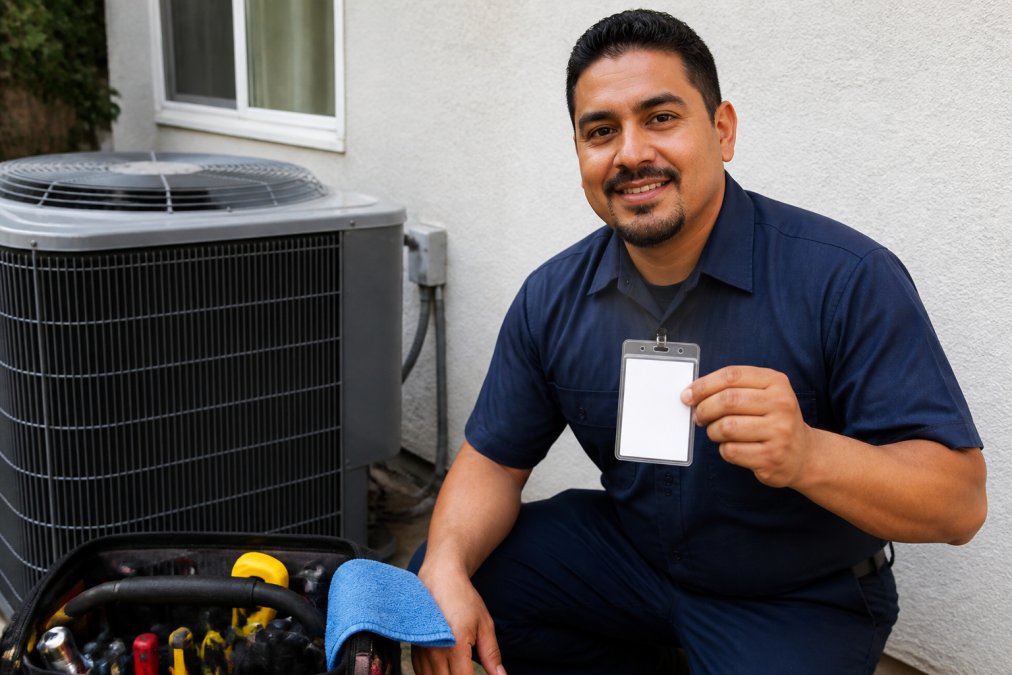
Red flags to watch for: pressure to replace your entire system during a diagnostic call, vague pricing, reluctance to provide references, and promises that sound too good to be true.
Air CareSaver's 21+ years of licensed operation (#1054832) and 4.9 Google rating from 270+ reviews reflects the kind of track record that builds trust. When you're choosing who touches your HVAC system, experience and accountability matter more than marketing promises.
Understanding the HVAC Repair Diagnostic Process
The diagnostic process is where accurate HVAC service begins.
A proper HVAC diagnostic starts with your description of the problem: no cooling, weak airflow, strange noises, or high energy bills. The technician then checks the indoor unit, outdoor condenser, ductwork, and thermostat for obvious issues like disconnected wires, frozen coils, or leaking refrigerant.
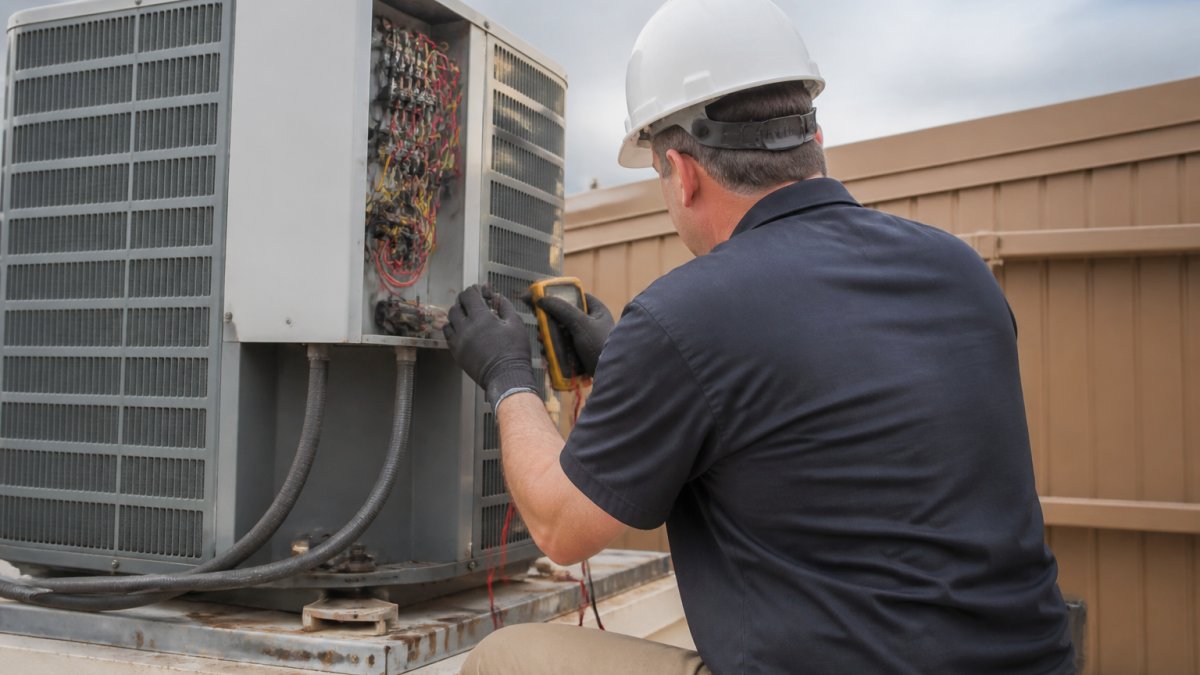
Diagnostic tools come next. A qualified technician uses gauges to measure refrigerant pressure, a multimeter to test electrical connections, and sometimes a thermal imaging camera to detect temperature anomalies. Pressure readings tell you whether refrigerant levels are correct. Electrical tests reveal failed capacitors or compressor issues.
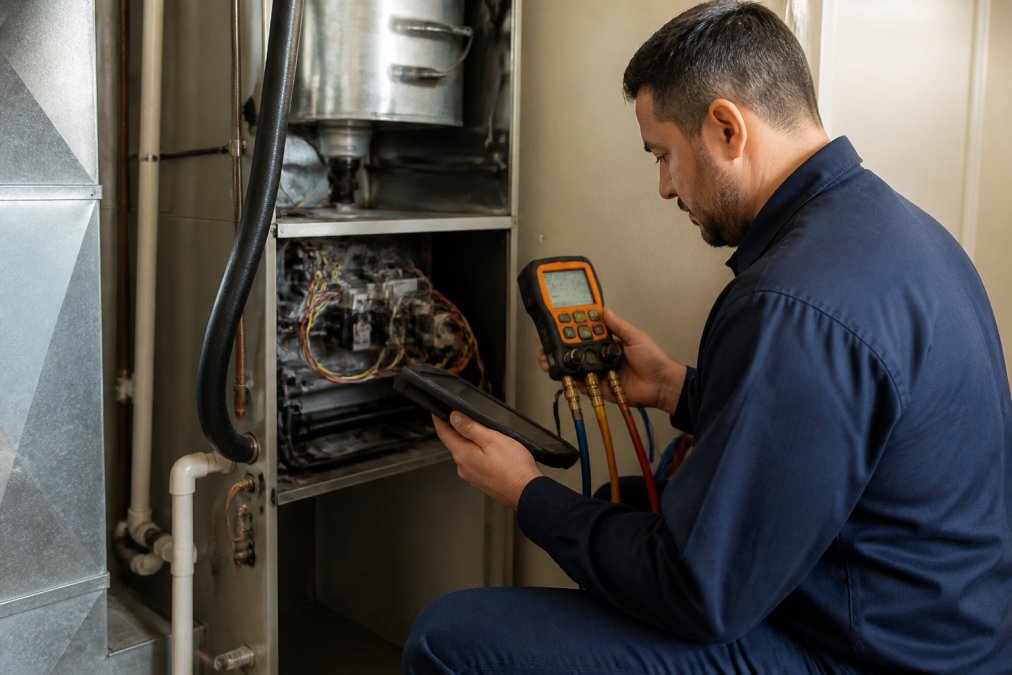
The technician should explain findings as they go. If refrigerant is low, they should explain whether it's a slow leak or a major one. If the compressor isn't running, they should identify why.
Documentation matters. A thorough technician provides written findings: what they tested, what the results showed, and what repairs they recommend. This protects you and prevents disputes if problems persist.
The diagnostic fee varies, but it's worth paying for accuracy. A diagnostic that identifies the real problem beats a free diagnosis that leads to unnecessary repairs costing thousands.
DIY Troubleshooting Before You Call for Emergency Service
Before you pay for an emergency service call, a few quick checks might identify simple issues.
Check the thermostat first. Is it set to cool or heat? Is it actually on? Is the battery dead if it's battery-powered? Set the thermostat 5 degrees below the current temperature and wait 5 minutes. If the system kicks on, the problem might be a thermostat setting or battery.
Inspect the air filter. A clogged filter restricts airflow and can trigger safety shutoffs (energy.gov). If your filter is dark and clogged, replace it. This is a 5-minute fix that costs under $20 and solves weak airflow problems regularly.
Look for obvious blockages. Is the outdoor condenser unit buried in leaves, snow, or debris? Clear away anything blocking airflow. Is the return air vent inside your home blocked by furniture? Move it. Restricted airflow is one of the most common problems and one of the easiest to fix.
Listen for specific sounds. A grinding noise suggests a mechanical failure. A clicking sound might indicate an electrical issue. A hissing sound suggests a refrigerant leak. These require a technician. A humming sound from a capacitor is normal.
Check for visible leaks. Water pooling around the indoor unit suggests a clogged condensate drain. Refrigerant leaks show as oily residue around connections and require a professional.
Reset the system. Turn off power to your HVAC system for 30 seconds, then turn it back on. Some electronic glitches clear with a reset.
These checks take 10 minutes and might save you an emergency service call.
Factors That Determine Same-Day Availability
Not every HVAC emergency gets same-day service, even with a guarantee.
Time of day matters significantly. A call at 10 AM on a Tuesday is far more likely to result in same-day service than a call at 10 PM on a Friday. Most technicians work standard business hours.
Seasonal demand is the biggest factor. During peak cooling season (June-August) or peak heating season (December-February), HVAC companies are overwhelmed. During mild seasons, same-day availability is nearly guaranteed.
Your location affects response time. A call from a house 5 minutes from the technician's base gets faster response than one 45 minutes away.
System complexity influences scheduling. A simple capacitor replacement might be squeezed into the same day. A complex diagnostic might require scheduling when the right technician is available.
Parts availability determines whether a same-day guarantee extends to completion. If the needed part is on the truck or in stock locally, same-day completion is possible.
Your preparedness affects response time. Have your address clearly marked, remove obstacles blocking access to your HVAC unit, and be home when the technician arrives.
Air CareSaver's commitment to same-day response is backed by local expertise in the San Gabriel Valley, allowing faster arrival and more reliable scheduling. Knowing these factors helps you understand whether same-day service is realistic for your specific situation.
Same-day HVAC service guarantees sound reassuring until you need them. The difference between a guarantee that actually works and one that doesn't comes down to transparency: clear terms about what's covered, honest assessment of what's possible, and technicians who explain problems and solutions clearly.
When your heating or cooling system fails, you need someone who arrives quickly, diagnoses accurately, and fixes the real problem without unnecessary upsells. Air CareSaver's 21+ years of licensed experience and commitment to free estimates ensures you understand costs upfront and get honest answers about what your system needs. Get your free quote today and know exactly what to expect when emergencies happen.
Frequently Asked Questions
Q: Is same-day HVAC repair actually guaranteed by most companies?
A: Same-day service is rarely guaranteed in absolute terms. Most companies offer same-day response or same-day arrival windows, not guaranteed completion. Availability depends on technician schedules, the complexity of your repair, parts availability, and your location within their service area. Legitimate providers distinguish between emergency dispatch and guaranteed same-day repair, read the fine print carefully. Many companies promise same-day response but may schedule the actual repair for the next available slot.
Q: What factors influence the availability of same-day HVAC service?
A: Several factors control same-day availability: technician workload and current appointments, the type of repair needed, whether parts are in stock, your geographic location relative to the service area, the time of day you call, and seasonal demand. Summer and winter typically see higher call volumes, reducing same-day slots. Systems requiring specialized parts or complex diagnostics may not be completed same-day even if a technician arrives quickly. Ask specifically about appointment windows and realistic completion timeframes when you call.
Q: How can I tell if my HVAC issue qualifies as a true emergency?
A: True HVAC emergencies include complete system failure during extreme temperatures (above 95°F or below 32°F), safety hazards like refrigerant leaks or gas odors, or situations affecting vulnerable household members. Non-emergencies include minor performance drops, unusual noises without system failure, or issues in mild weather. Emergency dispatch typically costs more and reserves same-day slots for urgent cases. Before calling for emergency service, verify your system is actually off, check your thermostat settings, and confirm your air filter isn't clogged, these simple checks often resolve perceived emergencies.
Q: What should I ask an HVAC technician to ensure transparent pricing and reliable service?
A: Ask for the diagnostic fee upfront, whether it's waived if you proceed with repairs, and what the total repair cost will be before work begins. Request an explanation of what's wrong and why it needs fixing, reliable technicians welcome questions. Confirm the technician is licensed and ask for proof. Inquire about warranty coverage on parts and labor, and get everything in writing. Ask whether they recommend immediate repair or if the issue can wait, and request a preventative maintenance plan to avoid future emergencies. Transparent providers answer these questions directly.
This article was written using GrandRanker