 ultimate-guide
How to Lower High Utility Bills: A 2026 Guide
Table of Contents
- How to Lower High Utility Bills: Start With a Home Energy Audit Checklist
- Stop Vampire Power Consumption From Draining Your Budget
- Thermostat Settings, HVAC Efficiency, and Weatherization
- Appliance Habits That Lower Utility Bills Fast
- Seasonal Maintenance Checklist to Prevent Expensive Breakdowns
- Energy Efficiency Tax Credits Available to Homeowners
- Low Income Energy Assistance Program (LIHEAP) and Utility Subsidies
- Frequently Asked Questions
Last Updated: August 13, 2026
How to Lower High Utility Bills: Start With a Home Energy Audit Checklist
Most homeowners pay for energy they never use. Drafty windows, inefficient appliances, and aging HVAC systems quietly add hundreds of dollars to annual costs. A home energy audit checklist is the foundation, before changing settings or buying products, you need to know where your kilowatt-hours are actually going.
According to the U.S. Department of Energy's home energy audit guide, a thorough home assessment can identify significant energy savings opportunities at no cost when done yourself. Below is exactly what to check, how to read your bill, and which fixes deliver the fastest payback.
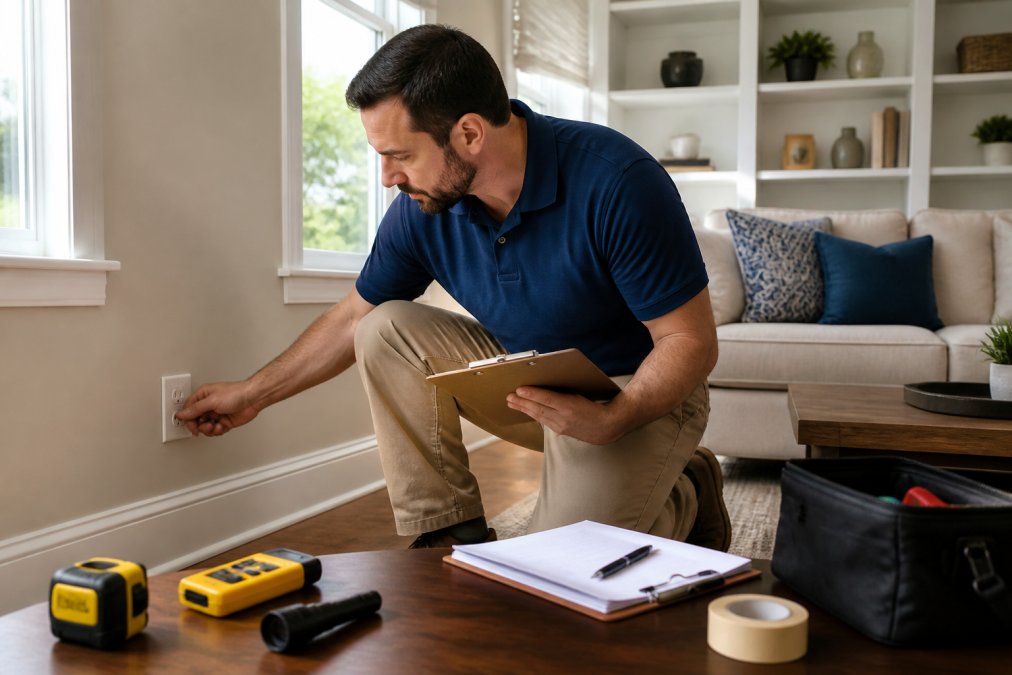
What to Inspect Room by Room
A two-hour room-by-room walkthrough reveals more than most homeowners expect.
Kitchen and laundry: Check refrigerator door seals (a dollar bill should resist when closed on it) and clean dust-clogged coils. Confirm the dryer vent is clear of lint.
Living areas and bedrooms: Feel around window frames and exterior wall outlets for cold air infiltration. Check ceiling fixtures for air leaks into the attic.
Basement and attic: Inspect exposed ductwork for gaps or disconnections. Check attic insulation depth, inadequate insulation is a common cause of high heating costs.
Garage and exterior: Confirm garage door bottom seals make full contact. Note foundation cracks or siding gaps where outside air enters.
Reading Your Utility Bill Statement
Your utility bill contains a utility bill breakdown that reveals far more than the total due. Look for:
- Kilowatt-hour (kWh) usage: Your actual energy consumption
- Tiered or time-of-use rates: Higher charges above baseline thresholds or during peak hours
- Baseline allowance: The quantity of kWh billed at the lowest rate
Comparing kWh usage month over month (not dollar amounts, which fluctuate with rate changes) shows whether conservation efforts are working.
Stop Vampire Power Consumption From Draining Your Budget
Standby power refers to electricity devices draw when appearing off, televisions in standby mode, phone chargers left plugged in, gaming consoles waiting for voice commands. A typical home has dozens of devices drawing standby power simultaneously. The Lawrence Berkeley National Laboratory's Standby Power research confirms standby power accounts for a meaningful share of residential electricity use.
The practical fix costs almost nothing:
- Plug entertainment systems into a smart power strip that cuts power to peripherals when the main device turns off
- Unplug phone and laptop chargers when not actively charging
- Use smart plugs with scheduling features to cut power to home office equipment overnight
- Enable "energy saving" or "eco" mode on every device that offers it
Older cable boxes, desktop computers on sleep mode, and large-screen televisions are typically the biggest offenders.
Thermostat Settings, HVAC Efficiency, and Weatherization
HVAC efficiency is the single largest lever for reducing energy consumption. Heating and cooling typically account for the largest share of home energy use, making small changes here produce the biggest results.
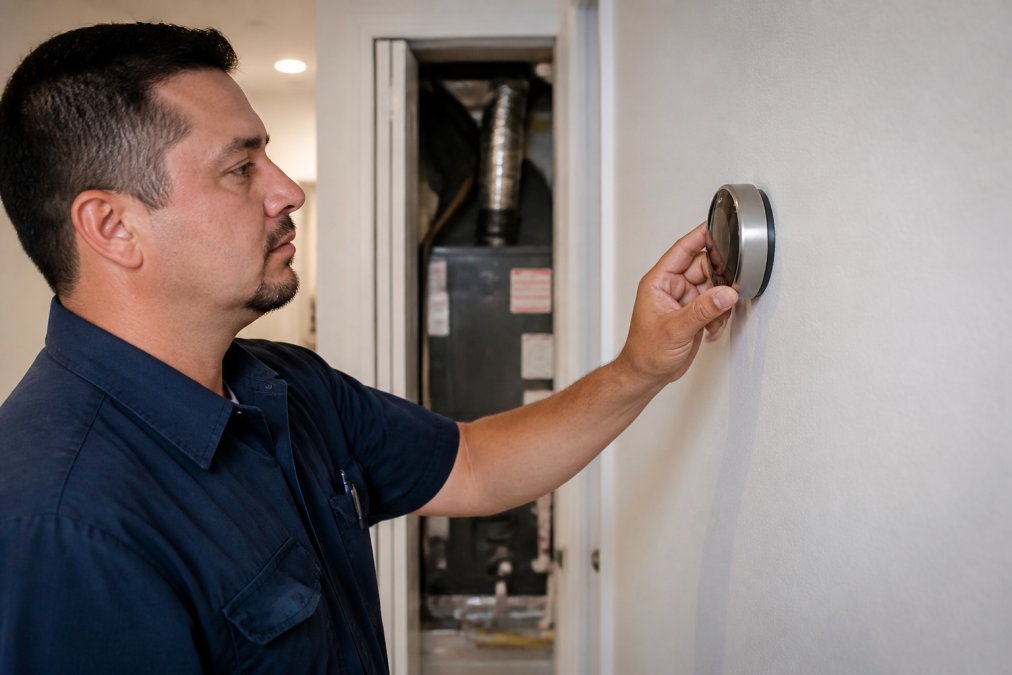
Optimal Thermostat Setpoints for Heating and Cooling
According to the U.S. Department of Energy's thermostat guidance, optimal setpoints are 78°F when home and cooling, 85°F when away in summer, and 68°F when home and heating, with a setback of 60°F when sleeping or away in winter. A programmable or smart thermostat automates this. Most households see measurable reductions in cooling and heating costs within the first billing cycle.
| Season | Home & Awake | Away / Sleeping |
|---|---|---|
| Summer (Cooling) | 78°F | 85°F |
| Winter (Heating) | 68°F | 60°F |
Smart thermostats with geofencing start cooling before you arrive home, avoiding recovery spikes that waste energy.
Sealing the Thermal Envelope: Weather-Stripping, Door Sweeps, and Insulation
The thermal envelope separates conditioned air inside from unconditioned air outside. Every gap costs money.
Weather-stripping on doors and windows is the fastest fix, installing in under an hour. Check existing weather-stripping annually as it compresses and degrades.
Draft reduction at the attic level matters equally. Air seal around recessed lights, plumbing penetrations, and attic hatches before adding insulation. For forced-air systems, duct sealing in unconditioned spaces prevents significant conditioned air loss.
Appliance Habits That Lower Utility Bills Fast
Behavioral changes cost nothing and compound quickly. Run the dishwasher and washing machine only with full loads. Use cold water for laundry, modern detergents work effectively in cold water, and the heating element is the most energy-intensive part. Air-dry dishes instead of using the heated dry cycle.
Avoid running large appliances during peak demand hours (typically mid-afternoon to early evening on weekdays). Many utilities charge higher rates during these windows. Shifting dishwasher and laundry cycles to evenings or early mornings is called load shifting and reduces bills even without reducing total kWh consumption.
Lighting Upgrades and Smart Bulbs
LED lighting is now the baseline. If incandescent bulbs remain, replacing them with LEDs is the highest-return, lowest-effort upgrade. LEDs use a fraction of the wattage and last many times longer.
Smart bulbs and motion sensors ensure lights never stay on in unoccupied rooms. Motion-activated switches in hallways, bathrooms, and garages are particularly effective for spaces frequently left lit unintentionally.
Water Heater Temperature and Off-Peak Load Shifting
Most water heaters are factory-set above what households need. The U.S. Department of Energy recommends 120°F as optimal, hot enough for effective use and sanitation without unnecessary heating.
If your utility offers time-of-use rates, a timer on your water heater restricts heating cycles to lower-rate periods. Wrapping older water heaters with an insulating blanket reduces heat loss if the tank feels warm to the touch.
Seasonal Maintenance Checklist to Prevent Expensive Breakdowns
Preventative maintenance prevents systems from running at reduced efficiency. Use this checklist at the start of each season:
Spring / Pre-Cooling Season:
- Replace HVAC air filter (every 1-3 months)
- Clear debris from around the outdoor condenser unit
- Test cooling operation before the first hot week
- Clean condenser coils if accessible
Fall / Pre-Heating Season:
- Replace air filter
- Test heating operation before the first cold week
- Check and replace weather-stripping on exterior doors
- Inspect attic insulation depth
Year-Round:
- Clean refrigerator coils every 6 months
- Check dryer vent for lint accumulation
A system receiving annual professional maintenance runs more efficiently, maintains its Energy Star rating performance, and lasts longer.
Energy Efficiency Tax Credits Available to Homeowners
The federal government offers meaningful financial incentives for qualifying energy efficiency upgrades. The Inflation Reduction Act established and expanded several credits available through the end of the decade.
The Energy Efficient Home Improvement Credit (IRS Form 5695) covers a percentage of costs for qualifying improvements including insulation, exterior windows and doors, heat pumps, and central air conditioning systems meeting efficiency thresholds. Confirm current amounts with the IRS Energy Efficient Home Improvement Credit guidance before filing.
Key points homeowners frequently miss:
- Credits apply to the tax year when improvements are placed in service, not when purchased
- Equipment must meet specific efficiency ratings to qualify
- Keep all receipts, manufacturer certification statements, and contractor invoices
- Some improvements have per-category annual limits that reset each tax year
State and local utility rebates often stack on top of federal credits. Check your utility provider's website for current rebate programs.
Low Income Energy Assistance Program (LIHEAP) and Utility Subsidies
The Low Income Energy Assistance Program (LIHEAP) is a federal program administered through states that helps eligible households manage home energy costs. LIHEAP provides assistance with heating and cooling bills, energy crisis intervention, and in some cases weatherization support.
Eligibility is based on household income relative to federal poverty guidelines. Find your state's LIHEAP contact through the U.S. Department of Health and Human Services LIHEAP program page.
Other utility subsidies and assistance programs include:
- LIHEAP Weatherization: Some states use LIHEAP funds for insulation and air sealing
- Weatherization Assistance Program (WAP): DOE-funded no-cost weatherization for income-eligible households
- Utility Low-Income Rate Programs: Most utilities offer discounted rates for qualifying customers
- California Alternative Rates for Energy (CARE) / Family Electric Rate Assistance (FERA): State-level programs for California utility residents
These programs are underutilized. Many eligible households don't know they exist. A phone call to your utility's customer service line confirms what programs you qualify for.
| Strategy | Difficulty | Estimated Impact | Cost |
|---|---|---|---|
| Thermostat setpoints | Low | High | Free |
| Vampire power control | Low | Moderate | Low (smart plugs) |
| LED lighting upgrade | Low | Moderate | Low |
| Weather-stripping / door sweeps | Low | Moderate-High | Low |
| Water heater setpoint | Low | Moderate | Free |
| Duct sealing | Medium | High | Moderate |
| Attic air sealing + insulation | Medium-High | High | Moderate-High |
| HVAC professional maintenance | Low | High | Moderate |
| LIHEAP / utility subsidies | Low | High | Free (assistance) |
Utility bills don't spike without reason, but finding the actual cause requires a systematic approach. If your HVAC system is running inefficiently, that single factor can undermine every other conservation effort. Air CareSaver provides free estimates and same-day response for homeowners who suspect their heating or cooling system is contributing to high energy costs. With over 21 years of licensed experience and accurate diagnostics, our team identifies real problems and real solutions. Get My Free Quote and find out exactly what's driving your bill.
Frequently Asked Questions
What runs up your electric bill the most?
Heating and cooling typically account for the largest share of a home's energy consumption, often 40-50% of the total bill. After HVAC, water heating, large appliances like dryers and refrigerators, and standby power from electronics (vampire power) are the next biggest contributors. An HVAC system that hasn't been serviced recently or has dirty filters works harder per kilowatt-hour, which drives costs up faster than almost any other factor in the home.
Are there government programs available to help with high utility costs?
Yes. The Low Income Home Energy Assistance Program (LIHEAP) is a federally funded program that helps qualifying households pay heating and cooling costs. Applications go through your state or local agency. Separately, the Inflation Reduction Act extended and expanded federal energy efficiency tax credits, allowing homeowners to claim credits on qualifying upgrades like insulation, heat pumps, and ENERGY STAR-rated equipment. Check EnergyStar.gov and benefits.gov for current eligibility details.
Does keeping the thermostat at a constant temperature save money?
No, setting the thermostat back when you're away or asleep saves more energy than holding a constant temperature. The DOE estimates that adjusting your thermostat 7-10°F for 8 hours a day can reduce annual heating and cooling costs noticeably. A programmable or smart thermostat automates these setbacks so you don't lose comfort when you're home. Holding a constant setpoint makes the HVAC system run more total hours, which raises your kilowatt-hour usage.
How does home insulation impact monthly utility expenses?
Insulation slows heat transfer through walls, attics, and floors, which means your HVAC system runs less often to maintain the same indoor temperature. Homes with inadequate insulation lose conditioned air continuously, and the system compensates by cycling on more frequently. Adding or upgrading insulation to recommended R-values for your climate zone can reduce heating and cooling costs substantially. Pair insulation improvements with air sealing, weather-stripping, door sweeps, and caulking, to maximize the impact on your monthly bill.
This article was written using GrandRanker