 how-to
Emergency AC Repair: DIY Checks & When to Call
Table of Contents
- Is Your AC Problem Actually an Emergency?
- AC Troubleshooting Guide: What to Check First
- When to Replace vs Repair AC: Making the Right Call
- Emergency HVAC Repair Cost: What Affects Your Bill
- Same-Day Service: What to Expect and How to Prepare
- Common Mistakes That Make AC Emergencies Worse
- Preventative Maintenance: Stop Emergencies Before They Start
- Conclusion
- Frequently Asked Questions
Last Updated: September 1, 2026
Is Your AC Problem Actually an Emergency?
Not every AC malfunction requires immediate attention. A true emergency happens when your system completely stops cooling, poses a safety risk, or fails during extreme heat. If your home reaches unsafe temperatures during a heat wave, or if you smell burning or see refrigerant leaking, that's urgent. Many AC problems feel like emergencies but aren't, a system running but not cooling well, a minor noise, or a thermostat issue might be fixable without emergency service fees.
The first step is honest assessment. Does your AC produce no cool air at all, or is it just underperforming? Is the problem creating an unsafe environment, or is it uncomfortable but manageable? These distinctions determine whether you need same-day service or can wait for a regular appointment.
AC Troubleshooting Guide: What to Check First
Before calling for emergency HVAC repair, run through these basic checks. Many problems resolve without professional service, and the ones that don't will be easier for technicians to diagnose once you've gathered information.
Thermostat Settings and Power
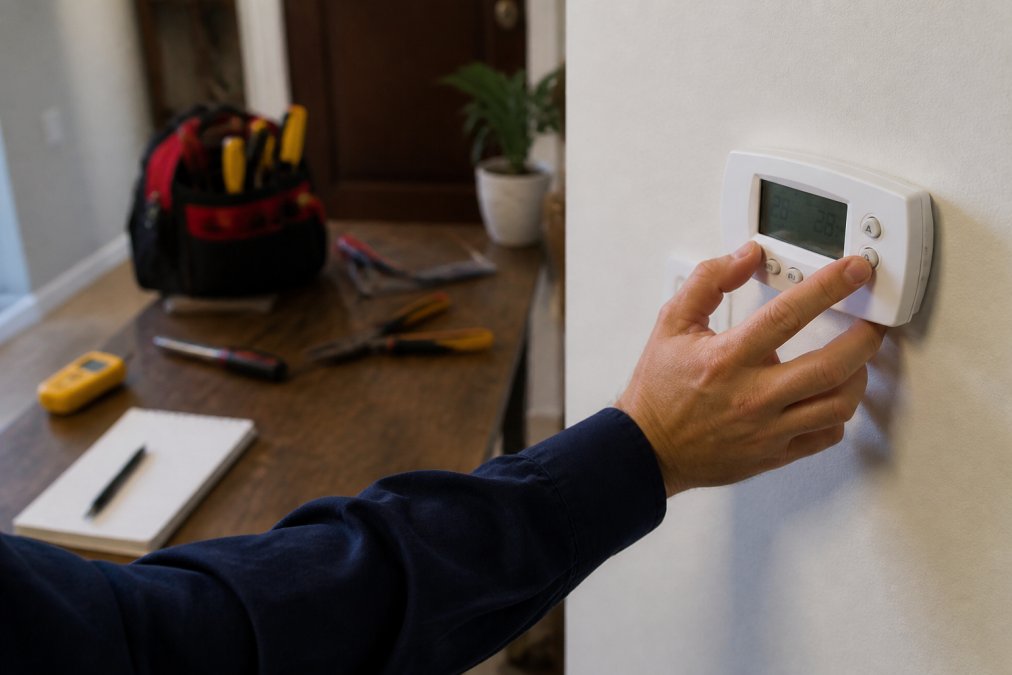
Start with the thermostat because it's the most common culprit. Check that it's set to cooling mode, not heating or off. Verify the temperature setting is below the current room temperature. Replace the batteries if your thermostat is wireless, a dead battery is one of the fastest ways to lose AC function without any actual system failure. If the display is blank, check the breaker that controls the thermostat circuit.
Look at the thermostat location. If it's in direct sunlight, near a heat source, or in an unusually warm room, it might read higher than actual house temperature and prevent the system from running.
Air Filter and Airflow
A clogged air filter restricts airflow and reduces cooling efficiency dramatically. Check your filter; if it's gray or brown with visible dust buildup, replace it. Most residential systems need new filters every 30 to 90 days depending on pets, allergies, and dust levels.
After replacing the filter, feel the air coming from your vents. Weak airflow even after a new filter suggests a deeper problem. Check that all vents in your home are open and unblocked by furniture or curtains. Listen for the blower fan, you should hear it running when the AC is on. If the compressor outside runs but no air moves inside, the blower motor may have failed, requiring professional service.
Outdoor Unit and Circuit Breaker
Walk outside and look at your outdoor AC unit. Debris like leaves, branches, or grass clippings block airflow and reduce efficiency. Clear away any visible blockages within a foot of the unit on all sides.
Check that the outdoor unit is actually running. You should hear the compressor and see the fan spinning when AC is on. Locate your electrical panel and check the breaker labeled for AC or HVAC. If it's tripped (switched to the middle or off position), flip it back to on. If it trips again immediately, stop, this signals an electrical fault requiring professional diagnosis.
Verify the outdoor unit's disconnect switch, usually a gray box near the unit, is in the on position.
When to Replace vs Repair AC: Making the Right Call
This decision hinges on age, repair cost, and system efficiency. If repair costs exceed 50% of replacement cost, replacement often makes financial sense. However, a 12-year-old system with a failed compressor might cost $4,000 to repair or $8,000 to replace, the repair might extend its life another 5-7 years, making it worthwhile. A 15-year-old system facing the same repair is different because replacement cost is spread over fewer remaining years of service.
Most AC systems last 15 to 20 years with proper maintenance. If yours is past 15 years and requires major repair, replacement becomes attractive because you're likely to face another major failure within a few years anyway. Newer systems are also more energy efficient, lowering cooling bills and reducing environmental impact.
Energy efficiency ratings have improved substantially. A system installed in 2012 or earlier is significantly less efficient than current models. Current models often rate 16 SEER or higher, while older systems might be 10 SEER or less. During peak cooling season, the energy savings from a new high-efficiency unit might justify replacement.
Consider your home's cooling demands. If you run AC heavily during hot months or if your home struggles to maintain comfortable temperatures, a more powerful or efficient replacement system might solve problems that repairs can't address.
Warranty coverage also influences the decision. Repairs typically come with 1-year warranties on parts and labor. New systems include manufacturer warranties (often 5-10 years on compressors) plus contractor warranties. If you plan to stay in your home long-term, the warranty protection on a new system provides peace of mind that repairs don't offer.
Emergency HVAC Repair Cost: What Affects Your Bill
Several factors determine what you'll pay for emergency AC repair. The time of service dramatically affects cost. Same-day emergency repair during business hours costs less than evening, weekend, or holiday service. Many HVAC companies charge premium rates for calls outside standard business hours because technicians receive overtime or on-call premiums.
The specific problem determines parts and labor time. A simple fix like replacing a capacitor takes 30 minutes and costs significantly less than replacing a compressor, which requires several hours and specialized equipment.
Diagnostic fees vary by company. Some charge separately for diagnosis, while others waive the fee if you proceed with repair. Ask upfront whether diagnosis is separate or included.
Your system's age and type affect repair availability and cost. Parts for older systems sometimes cost more because they're less common. Refrigerant type matters if recharging is needed, older systems use R-22 refrigerant, which is being phased out and costs significantly more than newer R-410A refrigerant.
Location and accessibility affect labor time. A rooftop unit takes longer to service than one on the ground. Systems in attics or tight spaces require more time for technicians to work safely.
Same-Day Service: What to Expect and How to Prepare
When you call for emergency AC repair, knowing what to expect helps you prepare and accelerates the service process. Call early in the day if possible, morning calls get faster response because technicians haven't filled their schedule yet.
Have your system information ready when you call. Know your unit's model number (usually on a label on the outdoor unit) and age if possible. Describe the problem specifically: is there no cooling, weak cooling, strange noises, or error codes?
Prepare your home for the technician's arrival. Clear a path to your outdoor unit and ensure the technician can access your indoor equipment safely. Remove pets from work areas so technicians can focus without distraction.
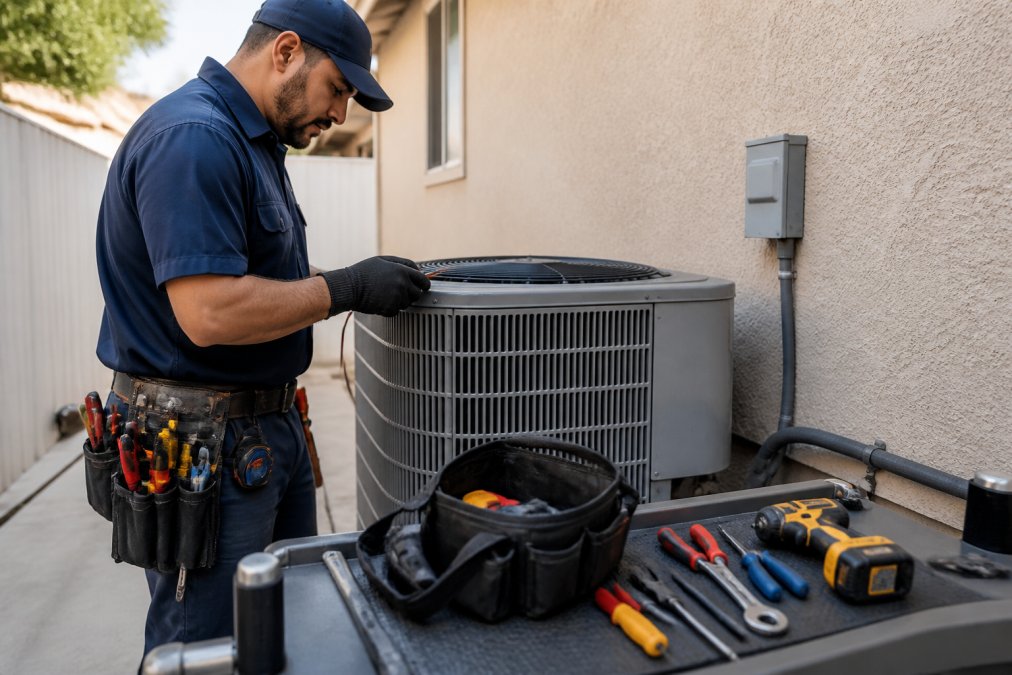
Expect the technician to spend 30 minutes to several hours depending on the problem. A simple diagnosis might take 30 minutes. Complex repairs requiring parts ordering or multiple system checks can take 4-8 hours. Ask questions about the diagnosis, a competent technician explains what's wrong, why it happened, and what options exist.
Common Mistakes That Make AC Emergencies Worse
Ignoring warning signs is the biggest mistake. Strange noises, weak cooling, or higher than normal electric bills often precede complete system failure by weeks or months. Addressing these issues early through routine maintenance prevents emergency situations.
Running the system continuously when it's not cooling properly accelerates damage. If your AC isn't producing cold air, shut it off after 15-20 minutes and let it rest. Continuous operation of a struggling system can damage the compressor, the most expensive component to replace.
Attempting DIY repairs on refrigerant systems is illegal and dangerous. Refrigerant handling requires EPA certification. If you suspect refrigerant issues, call a professional immediately.
Ignoring maintenance schedules is how most emergencies develop. Systems that receive annual tune-ups rarely fail suddenly. A technician checks refrigerant levels, cleans coils, inspects electrical connections, and identifies wear before it becomes critical.
Closing vents in unused rooms harms your system. Closing vents forces the system to work harder and can damage the compressor. Modern systems are designed to operate with a certain airflow pattern.
Delaying repairs when your system is underperforming is another expensive mistake. If cooling is weak but the system runs, the problem is usually something simple like a clogged filter or low refrigerant. Addressing it immediately prevents the system from struggling to the point of failure.
Preventative Maintenance: Stop Emergencies Before They Start
The best emergency AC repair is the one you never need. Preventative maintenance prevents most cooling failures and extends system life significantly.
Schedule annual tune-ups before cooling season starts, ideally in spring. A technician checks refrigerant levels, inspects electrical connections, cleans the evaporator coil, and ensures the blower works properly. This one-hour service catches problems before they become emergencies.
Replace air filters every 30 to 90 days depending on your home. Keep your outdoor unit clean and clear, trim vegetation back at least two feet from all sides and hose off dust and debris monthly during cooling season.
Check your thermostat batteries twice yearly if it's wireless. Have your ductwork inspected every few years if you suspect leaks. Leaky ducts force your system to work harder and waste cooling.
Consider a maintenance plan with your HVAC service provider. These plans typically include annual tune-ups, priority service scheduling, and discounts on repairs. Air CareSaver offers preventative maintenance plans that include regular inspections and priority same-day response if problems develop. Customers with maintenance plans rarely face emergencies because issues are caught during routine service.
Conclusion
Emergency AC repair happens when systems fail during peak cooling demand, but many emergencies are preventable. Running through basic troubleshooting checks, thermostat settings, air filter condition, and outdoor unit status, resolves many problems without service calls. When professional help is needed, understanding repair versus replacement economics and knowing what to expect from same-day service reduces stress and prevents overpaying.
The real solution is maintenance. Systems that receive annual tune-ups and regular filter changes rarely fail suddenly. Air CareSaver's 21+ years of experience in the San Gabriel Valley has shown that homeowners and business managers who commit to preventative maintenance avoid the costly emergencies that others face. Our licensed technicians (#1054832) provide accurate diagnostics without unnecessary upselling, energy-efficient repairs that lower cooling bills, and same-day response when problems do occur. Get My Free Quote today and learn how maintenance plans prevent the emergencies that disrupt comfort and drain budgets.
For guidance on emergency HVAC situations, the U.S. Department of Energy's home cooling efficiency guide provides recommendations for managing cooling systems during heat events. Information about refrigerant regulations and proper handling can be found through the EPA's refrigerant management resources. For homeowners seeking to understand HVAC system components and common failures, the American Society of Heating, Refrigerating and Air-Conditioning Engineers technical standards offers detailed specifications and best practices for system maintenance and repair].
Frequently Asked Questions
Q: What should I check before calling for emergency AC repair?
A: Start with your thermostat: confirm it's set to cool mode and the temperature is set below the current room temperature. Check that the power is on and the display is lit. Next, inspect your air filter, a clogged filter blocks airflow and can shut down your system. Look at your outdoor unit to ensure nothing is blocking it, like debris or vegetation. Finally, check your electrical panel to see if a circuit breaker has tripped. These simple checks resolve many emergency AC calls and save you service time.
Q: How much does emergency HVAC repair cost?
A: Emergency HVAC repair costs depend on the specific problem, your system's age, parts needed, and whether you need service outside standard business hours. Diagnostic fees, refrigerant leaks, compressor failures, and installation of new components all affect the final bill. Rather than guessing, contact Air CareSaver for a free estimate, we provide transparent pricing so you know exactly what you're paying for before work begins, with no hidden charges or unnecessary upsells.
Q: When should I replace my AC instead of repairing it?
A: Replace your AC if it's over 10-15 years old and requires expensive repairs, if repair costs exceed 50% of a new system's price, or if it fails repeatedly within a short period. Older systems also consume more energy, driving up utility bills. However, a newer unit with a single fixable problem, like a refrigerant leak or thermostat issue, is usually worth repairing. A professional technician can evaluate your specific situation and recommend whether repair or replacement makes financial sense for your home.
Q: How quickly can a technician arrive for emergency AC repair?
A: Same-day response depends on current demand and your location within the service area. Air CareSaver offers same-day emergency HVAC service with rapid arrival estimates so you're not left guessing. When you call, provide your address and describe the problem, this helps dispatch schedule the fastest arrival window. During peak heat waves or late afternoons, response times may vary, but we prioritize emergency calls to restore your cooling as quickly as possible.
This article was written using GrandRanker