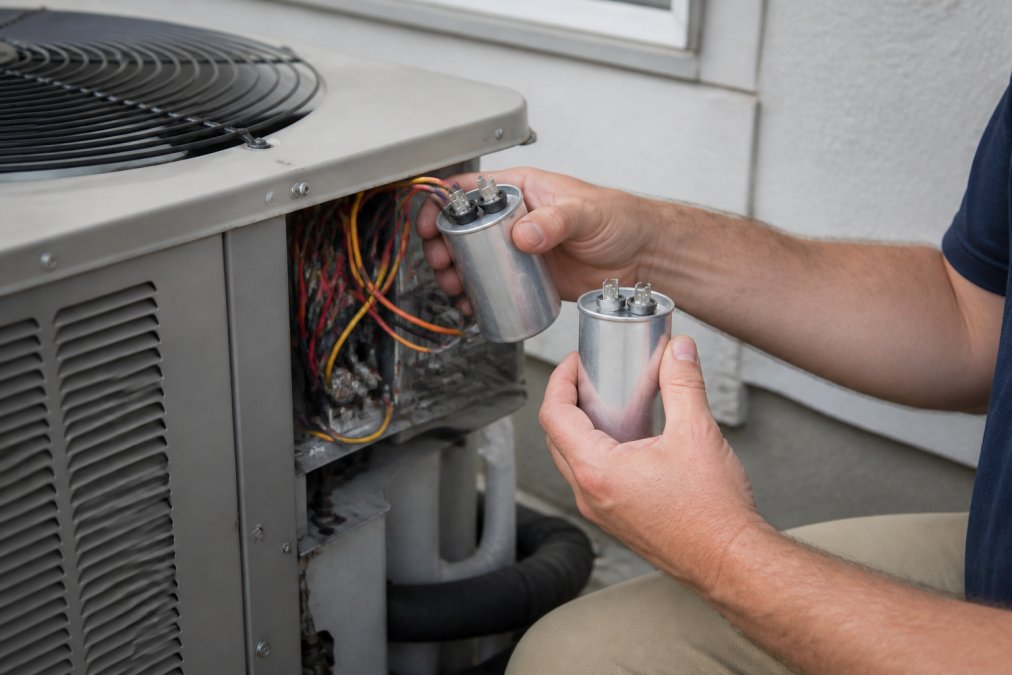
 comparison
AC Capacitor Replacement vs Repair: Cost & Safety Guide
Table of Contents
- What Is an AC Capacitor and Why It Matters
- Signs of a Bad AC Capacitor
- Average Lifespan of an AC Capacitor
- AC Capacitor Replacement Cost Breakdown
- DIY AC Capacitor Replacement Risks and Safety Warnings
- Professional Replacement vs DIY: What You Need to Know
- Why You Should Choose Professional AC Capacitor Replacement
- Frequently Asked Questions
Last Updated: September 17, 2026
What Is an AC Capacitor and Why It Matters
An AC capacitor is an electrical component that stores and releases energy to help your air conditioning system start and run efficiently. Found in your outdoor condenser unit, capacitors come in two main types: start capacitors, which provide the initial power surge to get the compressor running, and run capacitors, which keep the system operating smoothly during cooling cycles.
Understanding what your capacitor does matters because it's one of the most common failure points in HVAC systems. When a capacitor fails, your entire AC unit stops working, even if everything else is fine. The good news: replacing a failed capacitor is usually straightforward and far less expensive than replacing a compressor or other major components.
At Air CareSaver, we've diagnosed thousands of AC failures, and capacitor issues account for a significant portion of emergency service calls. Most homeowners don't realize how critical this small component is until their system won't turn on during a heat wave.
Signs of a Bad AC Capacitor
A failing capacitor sends clear warning signals before it completely dies. Recognizing these signs of a bad AC capacitor early can save you money and prevent uncomfortable downtime.
The most obvious sign is that your AC won't start at all. You'll flip the thermostat on, but the outdoor unit remains silent. Another common indicator is a humming sound from the condenser without the compressor actually running. This hum means the capacitor is trying to provide power but failing.
You might also notice reduced cooling performance. Your system runs but doesn't cool as effectively as it should. In some cases, the capacitor bulges visibly at the top or leaks fluid around the base, clear visual indicators of failure. A burning smell near the outdoor unit is another warning sign that demands immediate attention.
If your AC cycles on and off frequently without reaching your desired temperature, the capacitor may be weakening. This short-cycling behavior strains other components and signals that professional diagnosis is needed. Don't wait for complete failure; these early warning signs are your opportunity to address the issue before it becomes an emergency.
Average Lifespan of an AC Capacitor
Most AC capacitors last between 10 and 20 years, depending on several factors. Climate plays a major role, units in hotter climates work harder and experience shorter lifespans. Humidity, frequent power surges, and how often your system cycles all affect capacitor longevity.
Quality matters too. Some manufacturers produce more durable capacitors than others, which is why professional HVAC technicians often recommend higher-grade replacement parts. Regular maintenance helps extend capacitor life by keeping your system running efficiently without unnecessary strain.
If your home's AC system is over 15 years old and you haven't replaced the capacitor, it's worth having a professional inspect it. Even if it hasn't failed yet, an aging capacitor becomes increasingly unreliable. Replacing a capacitor proactively before it fails costs far less than dealing with an emergency breakdown during peak cooling season.
AC Capacitor Replacement Cost Breakdown
The total cost of replacing an AC capacitor depends on whether you hire a professional or attempt a DIY replacement. Professional service typically includes a diagnostic fee, the capacitor part itself, and labor charges. Pricing for a complete professional replacement varies by region and service provider.
The capacitor part alone can be purchased from an electrical supply retailer. However, this price doesn't account for the diagnostic work required to confirm the capacitor is actually the problem, or the labor involved in safely removing and installing the component.
A diagnostic fee may apply, depending on whether the technician charges separately for the inspection or credits it toward the repair if you proceed with service. Some companies offer free estimates and diagnostic assessments, which eliminates this upfront cost.
Labor charges for professional installation vary based on the complexity of your specific unit and local service rates. Emergency or same-day service calls often include additional fees beyond standard pricing.
| Cost Component | DIY Approach | Professional Service |
|---|---|---|
| Part cost | $8-$50 | $8-$50 |
| Diagnostic fee | $0 (you assume risk) | $0-$150 (often waived) |
| Labor | $0 (your time) | $150-$300 |
| Tools required | Multimeter, safety gear | Included in service |
| Total estimated cost | $8-$50 | $200-$400 |
How to Read a Capacitor Label and Select the Correct Part
If you're considering DIY replacement, identifying the correct capacitor specification is non-negotiable. Installing the wrong capacitor will damage your compressor or fan motor. Capacitors are labeled with two critical ratings: microfarads (µF or MFD) and voltage (V).
Microfarads indicate the capacitor's energy storage capacity. A run capacitor might be rated 45 µF, while a start capacitor could be 88 µF. These numbers must match your original capacitor exactly, even a 5 µF difference can cause compressor strain or failure.
Voltage is the maximum electrical pressure the capacitor can handle, typically 370V or 440V on residential AC units. Using a capacitor rated below your system's voltage will cause it to fail prematurely; using one rated above is generally safe but unnecessary and more expensive.
To find your capacitor's specifications:
- Locate the capacitor label on your outdoor condenser unit. It's a cylindrical or oval component mounted near the compressor.
- Read the printed label on the capacitor body. Look for markings like "45 µF 370V" or "88 µF 440V."
- Note if it's a dual capacitor (two capacitors in one housing). Dual capacitors are labeled with two sets of microfarad ratings, such as "35 µF + 5 µF 370V."
- Take a photo of the label before purchasing a replacement to ensure exact matching.
Common residential AC capacitor ratings include:
- Start capacitors: 88-150 µF at 370V or 440V
- Run capacitors: 35-50 µF at 370V or 440V
- Dual capacitors: 35 µF + 5 µF or 45 µF + 5 µF at 370V or 440V
If you purchase a capacitor with even slightly incorrect specifications, you risk compressor failure, a repair that far exceeds the original professional replacement cost. This is why professional technicians verify specifications before installation: they have access to manufacturer databases and understand which capacitor variants work with specific HVAC models.
DIY AC Capacitor Replacement Risks and Safety Warnings
Attempting to replace an AC capacitor yourself carries serious electrical hazards that shouldn't be underestimated. Capacitors store electrical charge even when power is disconnected, which means they can deliver a dangerous shock long after you've turned off the system. This electrical discharge can cause severe injury or death if you're not properly trained.
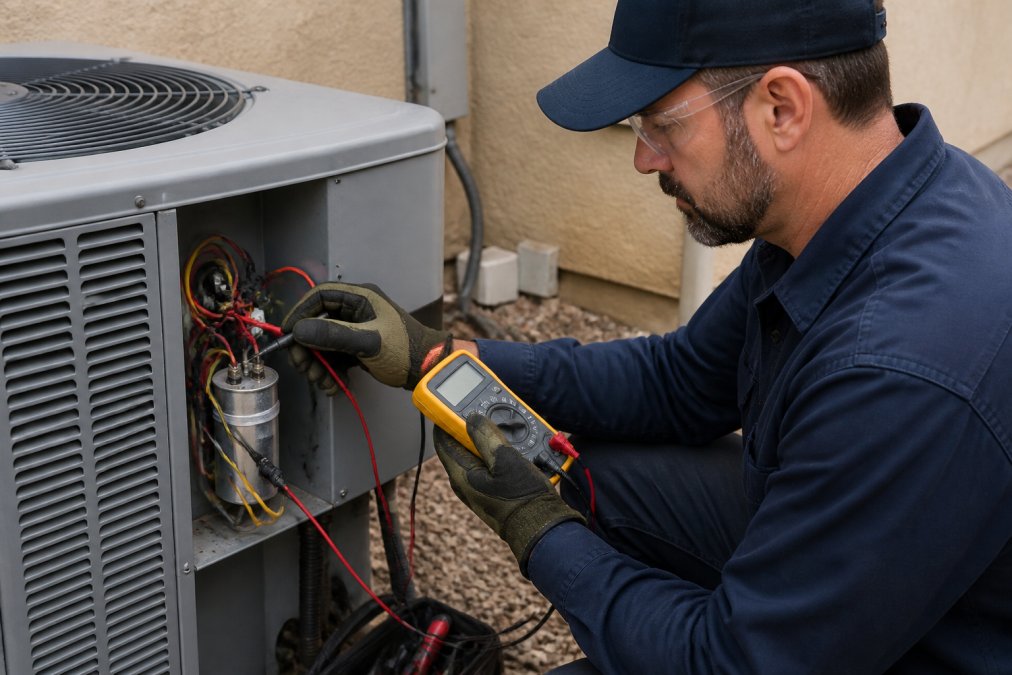
Improper handling introduces multiple risks beyond electrical shock. Selecting the wrong capacitor specification, even slightly, can damage your compressor or fan motor, turning a $200 repair into a $1,500+ replacement. Capacitors are rated in microfarads and voltage; installing one with incorrect ratings will cause system failure.
Warranty Voidance: The Hidden Cost of DIY Repair
One of the most overlooked consequences of DIY capacitor replacement is warranty voidance. Most HVAC manufacturers explicitly require that repairs be performed by licensed technicians to maintain warranty coverage. This requirement appears in fine print on manufacturer warranties but carries enormous financial implications.
If you perform a DIY capacitor replacement and your system experiences a secondary failure within the warranty period, the manufacturer can deny coverage entirely. For example, if a DIY installation causes a compressor failure six months later, you lose all warranty protection on that component.
Safety Protocols and Remaining Hazards
Safety protocols for DIY work include discharging the capacitor with an insulated screwdriver before touching it, wearing protective gloves, and using a multimeter to verify the charge is gone. Even with precautions, the risk remains substantial for someone without electrical training. The time saved by avoiding a service call isn't worth the potential for serious injury or expensive equipment damage.
Professional Replacement vs DIY: What You Need to Know
Choosing between professional service and DIY replacement comes down to weighing cost savings against safety, warranty protection, and peace of mind. A professional HVAC technician brings diagnostic expertise, proper safety equipment, and the ability to identify whether the capacitor is truly the problem or if other components are failing.
Why You Should Choose Professional AC Capacitor Replacement
Professional AC capacitor replacement protects your investment in your HVAC system and your family's safety. Licensed technicians carry proper insurance, follow electrical safety protocols, and use diagnostic equipment to verify the problem before recommending any repair.
Frequently Asked Questions
How much does an AC repairman charge to replace a capacitor?
Professional AC capacitor replacement costs vary based on your location, system type, and whether it's a start or run capacitor. Diagnostic fees may apply, and the total service call including parts and labor depends on your specific HVAC system and local market rates. Air CareSaver offers free estimates so you can understand the exact cost before committing to the repair.
What is the average lifespan of an AC capacitor?
Most AC capacitors last between 10-20 years, depending on climate, usage patterns, and system maintenance. In hotter climates or systems running continuously, capacitors may fail sooner. Regular preventative maintenance helps identify failing capacitors before they cause a complete system breakdown, avoiding more expensive emergency repairs.
Can I replace an AC capacitor myself to save money?
DIY AC capacitor replacement carries serious electrical hazards. Capacitors store high-voltage electrical charge even when power is off, and incorrect handling can cause severe shock or death. Misidentifying the part or selecting the wrong microfarads or voltage rating can damage your compressor or fan motor. Professional technicians have the training, safety equipment, and diagnostic tools to ensure correct replacement without risk.
What are the signs of a bad AC capacitor?
Common signs include your AC unit failing to start, the outdoor fan not running, weak cooling output, or a burning smell near the condenser unit. You may also notice a bulging or leaking top on the capacitor itself. If your system won't respond to the thermostat or makes unusual humming sounds, a failing capacitor is often the culprit. A professional HVAC technician can diagnose the issue with a multimeter test.
Choosing professional AC capacitor replacement protects your safety, preserves your warranty, and ensures accurate diagnosis. Rather than risk electrical shock, incorrect part selection, or warranty voidance through DIY work, professional service delivers peace of mind and reliable results. Contact Air CareSaver for a free estimate and same-day response to get your cooling system running again with expert technicians who prioritize your comfort and safety.